Wednesday, October 17, 2012

Trey R. Barker: BOTH BARRELS


                                                            Looking For Mr. Good Boy
                                                        By Trey R. Barker

I heard the murmurs in the hallway, the half-uttered statements at the water cooler. 
“…corruption….”
“…election fraud….”
“…retaliation….”
“…dirty sheriff….”
Eleven years ago, I moved to north central Illinois and got a job at the local newspaper.  The Sheriff’s resignation and guilty pleas had ended just a few months earlier so tongues still wagged with the white-hot intensity of a blow torch.
Bah…yawner. 
Because I grew up in Texas, where we grow dirty sheriffs the size of skyscrapers, where corruption is not just embedded in our DNA…it is our DNA, where election fraud and retaliation ain’t nothing but another day.
A corrupt sheriff?  Boooorrring….
That entire story was yesterday’s headlines, baby.  Yeah, The New Yorker had done stories and the AP had been all over it; the Chicago Tribune had had reporters trolling north central Illinois for months and the Illinois Attorney General had investigated everyone that sheriff had ever talked to, ever arrested, ever slept with, ever even breathed on for crap’s sake.
Boooorrring….
Besides, I was chasing down the details of a different cop story. (http://www.chicagomag.com/Chicago-Magazine/September-2002/The-Bully-of-Toulon/ ). 
In that one, a young officer had tried to serve an arrest warrant on a two-bit bully in a tiny town just outside’a Nowheresville.  The officer ended up dead and the murderer killed another couple in front of their young daughter before blasting it out with cops in a shoot-out that left the murderer with a bullet in his face but somehow alive.
With the exception of trial, the mechanics of that story had played out, but I was tracking down details.  I had a friend who’s fiancée was law enforcement.  The fiancée thought maybe, if I showed the right kind of interest, the cops involved might talk to me.  Not about the shots and the deaths, but about the adrenaline, about the thoughts and pounding hearts.  About what it was like to taste death.
So while my newspaper colleagues were talking about the local sheriff, my interest was miles and miles away.
Up until the water cooler talk shifted.
“…what about the broken gloves…?”
“…and the letter….”
“…no way you can prove intent….”
            “…doesn’t matter…murder is murder….”
            Whoa…hang on.  Murder is a whole different thang, baby. 
            This wasn’t the sheriff’s re-election campaign trying to raffle off a $12,000 Harley Davidson but not selling enough tickets to pay for it so choosing a ‘winner’ who didn’t actually exist (and said winner’s name might have been…might have been…the name the dirty sheriff used when he was undercover on the drug task force) before destroying all the remaining tickets and most of the records.  This wasn’t billing the county for more than 200 cell phone calls made from Illinois to his girlfriend in Texas (Lubbock, in fact, where at the time the sheriff was calling her, I was attending Texas Tech University…how is that for some fucked up synchronicity?).  This wasn’t lying to a grand jury.
            This was murder; Cain and Abel stuff.
            That caught my attention.
            From Estate of Sims v. County of Bureau (7th Cir. #01-2884)
            “In 1999 TMS suffered a fatal heart attack in her home in Tiskilwa, Illinois.   The only person present at the time was Bureau County Sheriff, whose alleged campaign fraud was the subject of a story S was investigating for the local newspaper.”  
            Not the paper I worked for, but one in another county.  And why was another county covering election fraud rather than the local boys?  Because the local boys were scared of retaliation…from the sheriff.
            Then again, so was she.     
            “She had expressed concern to others that [the sheriff] might retaliate against her for writing the story.” (7th Cir.)
            So the sheriff types up a letter and takes it to the post office for bulk mailing to the reporter’s entire hometown.  That letter accused the reporter’s husband of “…past and current felonious criminal conduct.” (7th Cir.)
            I never knew exactly what bullshit the letter was slinging, but there were rumors….
            Whatever it was, it was harsh enough and horrible enough to give the reporter a heart attack.  She was a big woman with a well-known heart condition and when the family sued, they said the sheriff knew the letter would give her a fatal heart attack.  That part is bullshit.  The sheriff didn’t know what the reaction would be.  Yeah, the odds played in his favor, but he didn’t know for sure.
            “At approximately 12:30 p.m., S did suffer a fatal heart attack. [The sheriff] radioed for an ambulance at 12:47 p.m., but by the time the paramedics arrived at 12:54 p.m., S was not breathing and did not have a pulse.” (7th Cir.)
            Now let’s take a look at that right there.  Heart attack at 12:30, he radioed for help at 12:47.  Seventeen minutes, roughly, of watching her gasp and wheeze and clutch her chest and arm.  Did she beg for help?  Was she even able to talk? 
            Before he radioed for help, he called the post office to ask about possible criminal penalties for bulk-mailing defamatory letters and whether or not those letters could be traced back to the person who mailed them.
            Dude was worried about the Feds sniffing around on his post office beef and while he sorted that out, she lay at his feet fucking dying.
            When the inevitable investigation got rolling, when the questions came fast and furious at this sheriff who suddenly found himself under siege, he told everyone he’d wanted to save her by performing CPR…but his rubber gloves kept breaking.
            Not that one broke and he didn’t have any others, but that they kept breaking.  In other words, he replaced them and they broke and he replaced them again and they broke…and again and again.
            (As a quick aside, I now work in law enforcement and I’ve got an entire box of latex gloves in my squad car.  Probably 200 gloves in that box.  The thing is?  I’ve never broken a single glove.  I’ve searched houses and cars, people and even animals wearing bandannas and sweaters.  Never broken a glove.)
            So this was the story, and not even all of the story, there are lots more incidents that came to light during the investigation.  But ultimately, in a deal with the Attorney General’s office, the sheriff pleaded to felony campaign fraud.
Honestly, I’m not sure causation could ever be proven between him and her fatal heart attack, but circumstantially it was fairly straight up.
So the why a man would – allegedly – go to these lengths to head off a story about low-rent campaign fraud rolled around in my head for ten years.  I never really thought about doing anything with it literarily, but I did study on it from time to time.
Then along came Ron Earl.  Sent me an email saying, roughly, write me a story or I’ll blow your balls off with a really small gun so that it doesn’t actually kill you but takes you a while to bleed to death.
How can I turn down an invite like that?
So I started a story.  And it blew.  And I started another.  And it blew worse.  For whatever reason, I couldn’t write squat.
In frustration, I decided to tell Ron Earl to eat my shorts.  I couldn’t get anything working for him so he should move on.  I put the project outta my head and kept working on the new novel (Exit Blood, available next March from Down and Out Books, if you can dig it!).
But while I worked the novel, my brain percolated around the sheriff and the next damn thing I knew, the story “A Good Son” was done.  Obviously some of the details are different, but I did follow out the rumors of what I’d heard was in the letter.
Other than the sheriff showing a letter to a large woman and standing by while she died, nothing in my story happened.
As far as you know, anyway.  And I won’t tell you any different unless you buy really good whiskey…
…and lots of it.

Tuesday, October 16, 2012

What If God Had a Girlfriend?: Simon Rich


Forgotten Movies: HIGH AND LOW


This is a brilliant, thrilling film made by Kurosawa in 1963. An executive is poised to take over a company on the brink of financial disaster when his chaffeur's son is kidnapped by men who mistakenly believe it to be his son. The great Toshiro Mifune plays the executive. The train scene is one of the best ever.
This is based on an Ed McBain novel, KING'S RANSOM but Kurosawa and his writers have made some choices of their own. This is an exciting film about a moral dilemma. It was recently remastered.

Monday, October 15, 2012

Great Movie Themes: THE GREAT ESCAPE


Is Daphne DuMaurier A Lesser Writer Than ???

In an article in the Guardian, Daphne Du Maurier is compared unfavorably to Anthony Powell, Evelyn Waugh and other writers. Her writing is called flabby, overwrought. She is judged to be  a near equivalent to Barbara Cartland (no insult intended--I have never read Ms. Cartland).

Now when was the last time you heard anyone say they were reading Powell, I ask you. If a book continues to draw in readers 75 years later, can the writing really be sub-par?Mustn't it have some qualities that are to be admired? Some enduring positive traits?

 REBECCA and MY COUSIN RACHEL astounded me once again when I read them a few years back. They have a power, a pull,  that many other novels of that era did not. Some of DuMaurier short stories are brilliant too. (Don't Look Now, The Birds).

This becomes a tiresome argument, but what other writers have been consigned to second ratedom and continue to be read rather than just talked about in articles like this one? 

Who deserves more respect than they get?


Saturday, October 13, 2012

The Most Universally Liked/Admired U.S. Book


More than sixty years after its publication, TKAM is still 500 on Amazon and of the more than 2500 reviews, the majority are 5 star. It is very rare for people to agree so completely about a book that most of us read as teenagers. I read it again a few years ago and liked it even more.

What other books are almost universally admired? What books are people most passionate about? What book never gets the cold shoulder?

How I Came to Write This Poem/Story

I wrote "Hushed" this past February, after Thomas Pluck invited me to contribute to the PROTECTORS anthology. The poem is narrated by an older cousin who is jealous of a younger one until he sees bruises on the boy's arm.

It was sparked by a years-old memory of seeing bruises on my own cousin's arm. When I asked him how the bruises happened, he wouldn't tell me, and he was very scared I might tell someone else. I had heard rumors his father was abusive, but unless he admitted to the beating, no one would believe me--especially since our relationship as children was contentious.

My cousin and I are on good terms now. He's married, has a good job, and owns his own home. If the rumors I still hear about his father are true, I would have turned my back, but my cousin is more compassionate, so his father remains an albatross.

I'm glad to turn this bad experience into a poem that will go to protect children. I'm also glad to tell you how my cousin is doing now. Thank you, Patti.


Gerald So


In Dreams was lifted from the MFA thesis I’m writing, a fictional memoir currently titled The 2nd Coming.  It has been edited down and names have been removed.  As best I can remember it, it is a true story.  I never considered writing about this particular experience until I began writing the fictional memoir for school last semester.  I had already changed my thesis twice after two semesters.  Although I had tried many times to write about some of the more painful issues from my past, especially in theatre form, I could never sustain anything long enough to feel comfortable continuing.  After reading Bright Lights, Big City, by Jay McInerney, I tried second person and found I could finish what I had started.  It remains a work in progress, but much more developed with each passing opportunity to settle in and write.  I’ve already gone beyond the word count requirements for my thesis, but why let that stop me (said the SOB arrogant enough to title a memoir, fictional or otherwise, The 2nd Coming)?  It is nothing profound, that’s for sure, but there’s a nuthouse stay and some unfortunate family dynamics that are sometimes sad and often funny.  The fictional memoir will cover birth to a first wedding at the age of twenty-one, with occasional projections into the future.  It touches on the influence of religion in a somewhat irreverent family, growing up in the racial hotbed Canarsie was during the late 60’s/early 70’s, a Mob influence within family, and ultimately the collapse of family.  And, yes, the current title is as ironic as it reads.
Charlie Stella


CHECK OUT MY REVIEW OF THE MASTER at Crimepree Cinema.

Friday, October 12, 2012

Beautiful Women of the Silver Screen: Lana Turner


The Summing Up, Friday, October 12, 2012


Thanks for all the great reviews today. I had to leave the house at noon so I will add others later.

The Summing Up, Friday, October 13, 2012

Patti Abbott  Peril at End House
Sergio Angelini  Unfinished Portrait
Yvette Banek, So Many Steps to Death                                                                                       
Joe Barone, Hercule Poirot's Christmas
Brian Busby, Crazy to Kill, Ann Cardwell
Bill Crider, A Talent to Deceive: An Appreciation of Agatha Christie, Robert Barnard
Ed Gorman, Body in the Library
Dorothy Hayes, A Sketch of Anna Katherine Green and her ties to Agatha Christie
Jerry House, Akhnaton
Randy Johnson , The Case of the Perfect Maid, Poirot and the Regatta Mystery
Nick Jones, Christie Dust Jackets of Interest
Lois Karlin, A Tribute to Agatha
George Kelley, The Tuesday Club Murders
Rob Kitchin, Death in the Clouds
B.V. Lawson, The Labours of Hercules
Steve Lewis, TV movie of Murder in Mesopotamia
Todd Mason, Sancutary and SPY: THE FUNNY YEARS edited by Graydon Carter & Kurt Andersen
Jeff Meyerson,The ABC Murders
Neer, Sparkingf Cyanide
J.F. Norris, The Hound of Death
Patrick Ohl-see Kevin Tipple, The Murder at the Vicarage
Richard Pangburn , A Chess Problem
Deb Pfeifer, Endless Night
James Reasoner, The Secret Adversary
Richard Robinson, The Clocks
Kerrie Smith, Agatha Christie Reading Challenge
Prashant Trikannad, The Secret Adversary


And other Forgotten Books
Scott Cupp, Wind Angels, Leigh Kennedy
Martin Edwards, Nightmare, Lynn Brock
Curt Evans , The Affair in Death Valley, Clifford Knight
Nick Jones, The Big H, Bryan Peters
Evan Lewis , Ready to Burn, Carroll John Daly
Richard Pangburn, The Eighth Circle, Stanley Ellin
Ron Scheer, The Lost Cabin Mine, Frederick Niven
Michael Slind,You'll Die Next, Harry Whittington
TomCat, Blind Drift, Cyde Clason

Friday's Forgotten Books, October 12, 2012-AGATHA CHRISTIE

Need we say more. The most published author in history save Shakespeare and the Bible. The first grandmaster of the genre. She is responsible for two of the best known sleuths in the business with Hercule Poirot and Miss Jane Marple. Most of us crime fiction lovers went right from Nancy Drew and the Hardy Boys to Dame Agatha Christie.I vividly remember buying one book after another the summer I was nineteen.I read them on the beach and don't think I noticed the ocean in front of me.

Check out her numbers on Amazon today and she is still outselling most contemporary writers. But I doubt I need to tell any of you this.

Kerrie Smith (below) extends an invitation to link reviews to her caravan this month. Read her link to see how. 

Endless Night by Agatha Christie 

(Review by Deb)

About me:  After being a technical writer for the better part of twenty years, I was a stay-at-home mom for a while.  About ten years ago, I went back to work in the public school system.  I currently work in a special ed classroom with severely-autistic students.  It's challenging work, but also very rewarding.  I love to read across all genres, but mysteries are my favorite.

I realize how improbable it would be to know Agatha Christie solely through this one novel, first published in 1967; but, in the unlikely event that you were only aware of Christie as the author of ENDLESS NIGHT, you would be hard-pressed to connect her with the creator of Miss Marple, Hercule Poirot, and the village "cozies" with which her name is most often associated.  ENDLESS NIGHT is atypical for Christie, a novel in which frank sexual passion is a driving force and a vague supernatural menace permeates the atmosphere.  It is the closest thing to noir that Christie ever wrote.

In first-person narration, we meet Michael Rogers, a twenty-something working-class drifter who has held multiple jobs, always losing them because of his inability to control his restless, impulsive nature (today he'd certainly be diagnosed with ADD/ADHD).  Despite his poverty, Michael is a man who enjoys the finer things and has a great eye for art, although he obviously cannot afford the abstract canvases that move him.  He spends money when he has it (sometimes by betting on long shots at the track) and has no desire to follow his mother's admonition to settle down at one job and start saving for the future.

While he is working as a chauffeur in Europe, Michael meets Rudolf Santonix, a world-famous architect.  Despite the gulf between their backgrounds and professions, an unexpected friendship springs up between the two because of Michael's innate understanding and appreciation of Santonix's artistic vision--which, Santonix freely admits, requires a great deal of money to implement.  Later, while working in Devon, Michael becomes enchanted by a piece of land known as "Gipsy's Acre."  According to local lore, the land was cursed by the band of gypsies who were driven off it years before.  In the passages describing Gipsy's Acre, Christie's powers are in full effect--allowing us to discern something ominous and unsettling in the mysterious wind-swept beauty of the land. 

During a subsequent visit to Gipsy's Acre, Michael encounters a young American woman named Ellie and they strike up a conversation.  This leads to several dates, although they meet secretly to avoid interference from Ellie's protective and disapproving family.  As soon as Ellie comes of age and into a large inheritance, she and Michael marry.  There are some interesting scenes as Michael discovers the extent of Ellie's wealth and meets the people it takes to manage such a vast amount of money, particularly Ellie's urbane lawyer, Andrew Lippincott. 

Michael also has to navigate the tricky move from English working-class to upper-class (noticing, for example, that the shabby clothes and broken-down vehicle of a neighbor, Major Phillpot, do not prevent him from being the community's de facto social leader).  Despite the class snobbery that was often apparent in Christie's books, here she lets us feel some sympathy for the fish-out-of-water Michael as he attempts to come to grips with who he is in the society he has entered as a result of his wife's money.  I would guess that Agatha Christie chose to make Ellie an American in part to leave Michael alone in dealing with these issues; being an American, Ellie is less aware of the difficulties of transcending the English class structure.

Knowing Michael's love of Gipsy's Acre, Ellie purchases the land for them and hires Rudolf Santonix to build their dream house on the site.  But things start to go wrong:  A local woman repeatedly warns Ellie that she will suffer if she stays on Gipsy's Acre; Michael argues constantly with Gretchen, Ellie's bossy best friend who has come to stay for an open-ended visit; Andrew Lippincott asks Michael enigmatic questions about his background and acquaintances; and anonymous acts of vandalism are committed, all of which seem aimed at driving the couple out of their home and off Gipsy's Acre. 

Amid this turmoil, a death occurs: a tragic accident--or is it something more sinister?  I really can't say much beyond this without giving away the rest of the plot, especially a very surprising (to me, at least) twist.  Some readers who are more perceptive than I may guess the "shocking revelation" before it is explained, but I must admit I was caught off guard the first time I read it.  This is one of those books that makes you want to start rereading immediately after finishing to see how Christie makes excellent use of what Robert Barnard calls her "talent to deceive" as misdirection and casually-dropped clues (not to mention a few red herrings) lead us away from what is actually happening.

So, if you're in the mood for a Christie where the solution to the crime does not involve missing buttons, broken shoe buckles, or clocks being turned back ten minutes (not that there's anything wrong with that), ENDLESS NIGHT is the book for you.

Incidently, there was a fairly good movie adaptation of ENDLESS NIGHT made in 1972, featuring Hywel Bennett, Hayley Mills, Britt Ekland, and George Sanders (in one of his last roles).  It is available for instant viewing on Netflix, but I would strongly recommend not watching it until you've read the book.


PERIL AT END HOUSE, Patti Abbott

This is an excellent book in which to find a prime example of the plotting that made Christie a master of a certain type of mystery. Her ingenuity and puzzle- master mind is on display in aces at PERIL AT END HOUSE.

Detective Hercule Poirot and Captain Arthur Hastings are spending a weekend at a hotel in a seaside town in Cornwall. Poirot is once again claiming to his friend that his days as a detective are at an end when they meet the novel's central character. Nick Buckley is a young woman who can ill afford the house that looms in the distance, End House. She confesses to Poirot that she has met with three near misses lately and Poirot immediately decides these incidents are not accidents but attempts on her life. Nick's wealthy, aristocratic inner circle comes under immediate scrutiny and a distant cousin is brought to End House to provide Nick with protection. Before very long, Maggie, the cousin, mistaken for her Nick, lies dead. There are letters, wills, eavesdropping, addicts and all the classic tropes the classic British mystery excelled in. END HOUSE is a wonder in its plotting.  What it lacks in character, it makes up for in its ability to keep you guessing and interested. Oh for a tenth of her ability to plot.


Agatha Christie, THE ABC Murders (1936) Jeff Meyerson
I had a tough time deciding which Christie book to write about today.  Should it be the first I'd read, And Then There Were None (certainly a fine choice) or her first novel, The Mysterious Affair at Styles (1920) or one of her most famous, The Murder of Roger Ackroyd or Murder on the Orient Express?  Or perhaps I should go with one of the short story collections.  I read most of these a very long time ago.  We first went to London on our belated honeymoon in April of 1971 and while there we saw The Mousetrap (then in its 19th year!) and bought two of her books more or less at random, the late Poirot book The Clocks and the better Miss Marple The Body in the Library.  I've read over 80 of her books, mostly in the first half of the 1970's.  In the end I decided on this one.
The ABC Murders is not your typical Poirot book, despite the presence of his Watson, Captain Hastings, and Inspector Japp.  For one thing, there are different points of view, including Hastings, the unknown serial killer, and a man who seems to be the prime suspect, Alexander Bonaparte Cust.  A series of murders takes place, each in alphabetical order, first Alice Ascher in Andover.  Each has a copy of the ABC railway guide by the body.  And Alexander Bonaparte Cust (initials ABC), a traveling salesman prone to blackouts, was in each of the places on the day in question.  Could he be the "madman" who is sending Poirot taunting notes?
[I suppose I should give a SPOILER ALERT here for those who haven't read it.]
Naturally, Poirot figures out that the killer isn't Cust or a random madman but a very clever (if not quite clever enough) killer with a definite motive.  If you've watched any television crime shows I can guarantee you've seen the ABC pattern used over and over again, and an astute reader and viewer will be able to spot it.  I am not claiming Christie invented it (I have no idea who did) but she did perfect it here.  And I think I will stop here before further spoiling a book you should definitely read.
Christie wrote a number of classics during her long career and this is definitely one of them.  Her books do not need to be read in order but if you're picking out a few to try, put this on your list. Jeff Meyerson

THE BODY IN THE LIBRARY, Ed Gorman
Ed Gorman is the author of the Dev Conrad and Sam McCain series of crime fiction books. You can find him right here.


Some of the reviews of this novel, written at the time of its publication, will make you smile. Replace Poirot with an old woman named Miss Jane Marple? How"unrealistic" she is as a detective. As if Poirot is an exemplar of hardbitten realism. (I've always preferred Jane to Hercule.)  

This is my favorite Christie novel for three reasons. First she obviously set out to ransack the cliche set-up of the mysterious body found in an unlikely place, in this case the library of an upright, upper class couple whose social reputation is beyond question.  

Second because in looking into the background of the dead young woman Christie examines both the class system--not only is the young woman's corpse a problem, so is her lower order upbringing, as disturbing in its way as death itself--and the show business life she lead. 

Which leads into point number Three. Suspects include people at a nearby posh hotel where the dead woman was (among other duties) a substitute dancer in the nightly cabaret. Christie's social eye and ear are as good for the realm of lower order performers as they are for pompous upper class members who pay to see them.

But Christie being Christie she has to do a little trashing of the moderne which takes the form of a young Londoner who uses his home here for wild assignations and parties. He is connected to the film industry which makes him a fitting target for Christie's satiric side.  Film industry? You mean boorish idlers who deflower naive young women and plunder otherwise happy marriages?

As I mentioned some of the initial reviews knocked the novel for its unrealistic detective (Jane Marple) and plotting. I ran across a quote from that most excellent writer Robert Barnard that  makes the case for the book very well.  "Bravura performance on a classic situation. St Mary Mead regulars figure in the case, pleasantly diversified by fashionable seaside hotel guests and the film crowd. If you think what happens to the body after death is unlikely, try the more 'realistic' P.D. James' An Unsuitable Job for a Woman."
                                                                                                                                                                        
Sergio Angelini                                                                                               
Yvette Banek
 Joe Barone
Bill Crider
Dorothy Hayes
Jerry House
Randy Johnson 
Nick Jones
Lois Karlin
George Kelley
Rob Kitchin
B.V. Lawson
Steve Lewis
Todd Mason
Neer
J.F. Norris
Patrick Ohl-see Kevin Tipple
Richard Pangburn
James Reasoner
Richard Robinson
Kerrie Smith
Kevin Tipple
Prashant Trikannad


And other Forgotten Books
Brian Busby
Scott Cupp
Martin Edwards 
Curt Evans 
Nick Jones
Evan Lewis 
Richard Pangburn
Ron Scheer
Michael Slind 
TomCat

Thursday, October 11, 2012

My Life at the Theater: Dubliners


This was performed at the Gaiety Theater in Dublin two weeks ago. It was an amazing production where more than half of the stories in Joyce's  DUBLINERS were magically brought to life almost solely through his words and a few changes of costume. Seeing it in the city of Dublin was just terrific.

Adapted by Michael West and Annie Ryan
. Four performances of this classic were not nearly enough. I have to assume it will play elsewhere. It would be a travesty if it were not.

Ireland

Cong, the village where THE QUIET MAN was made.

Arthur Day-everyone gets a free Guiness at 6:59.

Abbey in Howth
Oscar Wilde
Connemara
Kylemore Castle Gardens
Kylemore Castle/Abbey
Kylemore Castle
Connemara Pony

How I Came to Write This Story: Nigel Bird


                                                      The Rhythm Of Life -BOTH BARRELS


The story behind the story

Shotgun Honey has a reputation that’s grown quickly in a fairly short space of time. 
I have no doubt that this is due to the editorial prowess of the team involved, but it’s difficult to pinpoint exactly what their secret might be.
The stories are always well-written and engaging as you might hope, but for me there is an invisible thread that stitches work together as part of the Shotgun Honey banner.  It has to do with the emotional power that’s generated and the subtle ways it is expressed in such a short space – remember that the stories weigh in at around the 600 word mark.
When I was invited to submit to the anthology Both Barrels I was excited, honoured and more than a little intimidated. 
For me I felt the need to pull something out of the bag that told a story but carried that emotional engagement.  Whether I achieved it or not isn’t for me to say, though the feeling I was hoping to project was one I felt during its writing.
The story combines 2 strands of ideas.
The first relates to a hitch-hiking holiday I had in northern France when I was 19.  My friend, Gareth, and I had a wonderful time where the richness of experience has never really left me.  Among the things that have stuck around is a love for fountains.  It seemed that in every town there was a fountain that would become our focal point for lunching or reading or passing the evenings.  The sound of the water and the position in the towns made them the perfect places to sit. The French have so many more fountains than we do in Britain and I’ve celebrated that every time I’ve been over there since.  A fountain, then, was something I wanted to bring in to this work.
Now, fountains being one of my favourite things doesn’t suggest much in the way of crime fiction.  If anything my feelings would be more in line with the writing of a romantic piece – in some ways it is a romance story  – but something more was needed.
Enter strand 2.
There’s a thing that some children do that I find fascinating.  They spend an age painting a wonderful picture or creating a lovely drawing or writing a story or building with blocks and then they destroy it.  Completely trash the thing – throw the paint, scribble, rub out – just get rid of it as if it didn’t exist.
I suppose we call it self-destruction when we apply this to adults, something I know quite a lot about.
And there was the story.  Along comes a young man to a fountain and find a beautiful girl reading a book.  The weather’s great and there’s a Technicolor wash over it all.  It’s almost perfect, yet all the young man can do is admire the scene and then scribble all over the thing until none of it is visible any more.
That’s the story.  They’re the things behind it.  That’s what I was thinking.  If you read it, I’d love to know whether it works for you or not.
I’m proud to be part of this one and I wish the Shotgun Honey team all the best with their future efforts.

Wednesday, October 10, 2012

Wednesday Night Music: Edward Sharpe and the Magnetic Zeroes


How I Came to Publish This Book: COME EASY-GO EASY/ IN A VAIN SHADOW


                            Upon Publishing James Hadley Chase by Greg Shepard, Stark Press

I first encountered James Hadley Chase when I was a teenager. The book was Dead Ringer, published in the U.S. by Ace Books in 1969. A woman in a dark bikini and vivid blue eyeliner sprawls across the cover. Blonde, dead and alluring. There’s a quote at the top of the page: “Far and away the best writer of thrillers in the English language.” The back cover suggests that the reader would be well served to check out Chase’s previously published No Orchids for Miss Blandish, which is precisely what I did. It hit me like a raw-boned fist.

A few years pass. By now I had collected quite a few of the old British Panther and Corgi editions of Chase’s books, with those slightly cheesy pin-up-girl covers. Also by now, Chase had become one of my guilty pleasures. I knew he wasn’t considered in the same realm as Chandler or Hammett, nor even mentioned in the same breath as MacDonald and Thompson. But by god, whenever I picked up one of his books, I was always hooked from the first page, and I always raced to the end, through all of Chase’s twists and turns, to see if the “hero” gets away with it this time. He hardly ever did.

Usually the Chase hero is a hapless scheming schmuck who gets what he deserves, but he usually has to go through hell to get there. Yeah, a real noir kind of a hero.

But Chase is something of an anomaly in the States. The author’s real name is René Brabazon Raymond, and he’s quite thoroughly British. However, he decided at the outset of his career to write American hardboiled thrillers. So, armed with a dictionary of slang, he cranked out books like Kiss My Fist, I’ll Get You for This, You’re Lonely When You’re Dead and Strictly for Cash. By the end of his career in 1985, he had only visited the U.S. a handful of times, mostly the East Coast.

In fact, one of the things that puts off certain American readers is the occasional British term amidst all that hardboiled talk. Chase set most of the books in areas like Florida and Los Angeles, so when you encounter a “boot” being opened in a “car park,” it jars you a little. But these little slips never get in the way of the story. They’re just there to remind you that Chase is not the American hardboiled writer that he seems.

Anyway, more years pass and it had been a long time since I had read one of my James Hadley Chase books. They just sat there on the shelf, tempting me, but there was always something else to read first. As the publisher of Stark House, I had been corresponding with a reader who turned out to be quite a Chase fan. He emailed me an annotated list of some of his favorites and suggested that if I hadn’t read them yet, I would be in for a treat. So I went on a quest of rediscovery. And discovered that he was right. There were some killer stories here, all of them out of print. Chase had written close to 90 books—perhaps I should consider reprinting two of them.

I got my Associate Editor, Rick Ollerman, fired up about it. He, too, turned out to be a Chase fan. Tracking down the agent who represented the Chase Estate turned out to be as simple as writing to House of Stratus, who had reprinted a bunch of Chase books in England. Chase’s son controlled the estate, and his literary agent was happy to consider my proposal.

So, what books to publish? A daunting task. It seemed too easy to reprint No Orchids and its sequel, The Flesh of the Orchid. I never seem to go for the obvious choices anyway. I toyed with the notion of bringing back some of the really obscure titles like Miss Callaghan Comes to Grief, Lady—Here’s Your Wreath or Blondes’ Requiem. But I finally decided to settle on one of my personal favorites from 1960, Come Easy—Go Easy, and pair it with one of Chase’s rare British mysteries, In a Vain Shadow, to offer a broad perspective of Chase’s work.

Pocket Books had made an attempt to popularize James Hadley Chase in the U.S. back in the 1970’s, and Come Easy had actually been reprinted by Pocket back in 1974. But those Pocket editions have become fairly rare. And In a Vain Shadow, originally published under the Chase pseudonym “Raymond Marshall,” had never been published here at all, with its last Corgi paperback edition dating from the late 1970’s.

The set-up for Come Easy—Go Easy is deceptively simple as any con-on-the-run story. A fellow gets involved in a botched theft, and is sent to a horrible chain gang prison. But he’s got a plan, and soon finds himself involved in a late night prison break. After the horrors of that situation, after our hero Chet has successfully escaped, he needs some place to hide out. He comes across an old guy who owns a diner and gas station in Nevada on the last stop through the desert. The old guy hires Chet as his assistant. But wait, Chase is only getting warmed up. Because the old guy has a sultry wife—well, of course he does—who seems to resent the hell out of Chet’s presence, and goes out of her way to be rude to him. And so it goes from there. I don’t want to give the whole book away, but suffice to say, the dust never settles on Chet for long. There’s a hell of a lot of conniving to come.

In a Vain Shadow involves a character named Frank who takes on a job as a bodyguard but is all the time trying to figure out how he can rip off a cache of diamonds from the guy he’s protecting. This one’s got a femme fatale, too. And nothing goes right for Frank. We read the story from his point of view and there’s always one piece of the puzzle that’s missing. There’s always something that keeps Frank from the treasure he feels should be his. Because try as he might, he can’t quite stay ahead of that femme.

And this is what I enjoy so much about Chase’s thrillers. He keeps me guessing. He keeps shifting the action around and taking it in a new direction. George MacDonald Fraser, author of the Flashman series, said once about Chase, “He just keeps me reading.” The critic for The Observer called him “insanely readable” and the New Statesman considered Chase the “master of the art of deception.”

The new Stark House edition of Come Easy—Go Easy / In a Vain Shadow was published in April of 2012 with a new introduction by Rick Ollerman and a complete bibliography of Chase’s 90+ works. There is also a great James Hadley Chase website at http://www.hadleychase.co.nr, manned by a die-hard fan named Dr. P. C. Sarkar. It’s filled with information and comments on all the individual books, and I recommend it to anyone with more than a passing interest. This is where I discovered that Chase had written a play called Last Page, which was turned into an excellent Hammer film, Man Bait, featuring Peter Cushing. And yes, it too will keep you on the edge of your seat.
--October 2012
Stark House Press
www.starkhousepress.com


Tuesday, October 09, 2012

Tuesday Night Music: The Smiths


What the Internet Has Brought to Me.

We just spent some lovely time with Rob Kitchin and his wife, Cora, in Maynooth, Ireland, home of the National University of Ireland. Phil was the keynote speaker at a conference Rob arranged on the American election and the high point for me was spending two lovely evenings talking most crime fiction with Rob and Cora. 

I have been rather aggressive about trying to meet people I know via the blog community and this meeting worked out well for Phil as well since Rob is a university professor with many common interests. I have met many, many people at crime fiction conferences that I exchanged a few words with, but I especially treasure the people I have been able to spend more than a few minutes with.

Friends like Terrie Moran who made us so welcome in Florida when we were considering spending a winter there a few years back. Terrie is a person we struck an immediate rapport with-who wouldn't?

Or Sandra Scoppettone who traveled for hours to meet me for lunch in New York a few years ago. She has continued to give me advice and succor ever since.

People like Naomi Johnson who took an afternoon off to show me Columbus and take me to lunch. The same goes for Margot Kinberg and Barrie Summy out in San Diego.

Or Bonnie Lawson who shared coffee and book talk with me in D.C. 

George Kelley and his wife, Diane, have met us at Niagara on the Lake for a play and bookstore visits and had dinner with us twice. Jeff and Jackie Meyerson have done that too as well as being our companions on trips to New York. A great tour of Brooklyn was part of the fun.

Cullen Gallagher has met up with us in New York and Philadelphia and is as charming as he seems online. Kieran Shea has exchanged Ocean City, New Jersey memories with me on more than one occasion.

Bryon and Becky Quertermous had us as guests at their lovely wedding and went to a play at the Purple Rose Theater in Chelsea with us. Vicki Hendricks shared a trip to the infamous Mutter Museum in Philadelphia as well as a dinner at the Mummer Museum at the last NoirCon. It was there we also met Scott Cupp.

We met Brian Busby last summer in Stratford and got a tour of his lovely B &; B in a neighboring town.

Megan's events in Michigan have introduced us to Heath and Kim Lowrance, Tribe and Carrie Roca, Mike White and a few others who names are eluding me now.

It is not my intention here to mention everyone I have met at every conference (or hunted down at other times) but just to point out the strange function the Internet has served. I would have met none of these wonderful people in the years predating the Internet. I would never have attended a conference if I didn't think I had a few friends there to spent time with.

Beware Internet friends. I may show up at your door next. 


And Rock Could Sing and Dance


Forgotten Movies: Seconds

This movie got a second life a few years back when it was briefly rereleased in arthouses. A very untypical outing for Rock Hudson and perhaps one of his best. It's a science fiction flick and a very good one.

When  man grows tired of his humdrum life, he is approached by a group called THE COMPANY who offer to give him a new one: new body, friends, wife, profession, etc. Rock plays the new character and his  new life at first seem like a good fit. Of course, things begin to go awry pretty quickly. This film was made in 1965 and directed by John Frankenheimer, based on a book by David Ely. I saw it not long ago and was impressed with its style and substance.


Monday, October 08, 2012

Movie Music Themes: Cider House Rules


What Movie Disappointed You Most?

THE PHANTOM MENACE didn't just disappoint those of us who saw the original movies when they debuted in the late seventies and early 80s. It will disappoint children for decades to come. It will make them think, this came first since it's chronologically first.

How could the team that put this mess together go so wrong?

What movie disappointed you as much?

NOTHING MATTERS by Steve Finbow-Free

And read Brian Lindenmuth's thought about it here. Snubnose is trying to do what traditional publishers don't do with this one: publish noir poetry. Isn't this what we thought ebooks might be about?

Friday, October 05, 2012

Friday's Forgotten Books


One week to Agatha Christie Week.

Check with Todd Mason for today's links.

Thursday, October 04, 2012

My Life at the Theater: THE SALT WOUND


We saw this in Edinburgh at the fringe festival in 1994. The play is by Stephen Greenhorn and deals with a fishing community and the trials and tribulations such families live through.

The Edinburgh fringe festival prides itself on showing small and experimental plays that could not get major productions. I see this one has been produced again. And that Mr. Greenhorn is still writing for the stage and screen.

Wednesday, October 03, 2012

Opening Credits: Crime Story

First Wednesday Book Review Club: State Of Wonder


State of Wonder, Ann Patchett

I cannot say I found this an entirely successful outing for one of my favorite writers. This is the story of a trip by a female scientist to a primitive part of the world. And the best part of the book is the evocation of that world. How alien it seems to us. And to Dr. Singh. Snakes, rats, cannibals, disease, drugs that are almost as difficult as the problems they solve. It is part of her assignment.

When a scientist for a pharmaceutical company disappears, his death is assumed, and another employee is sent to check on the details. The company is investigating the ability of a group of natives to both resist malaria and to have babies into their seventies. The second ability has the most cache for the company. Dr. Singh meets up with an early nemesis--the doctor who presided over her failure as a gynecologist. Now she is part of the research taking place in this remote place.

I found much of this book interesting, but I have to say the characters seemed more like voices for the moral quandary the doctor finds herself in than fully fleshed out characters. There is far too much discussion of the morality of scientific research to fully engage the reader. And yet, I finished the book so it had to have something. Maybe you will find it too.

Shotgun Honey Presents: Both Barrels

Shotgun Honey brings out its first collection of stories: BOTH BARRELS. Lots of fun with my story "How to Launder a Shirt."

Tuesday, October 02, 2012

Tuesday Night Music: Angus and Julia Stone

New Pank Magazine

Edited by Court Merrigan. And I have a story. http://www.pankmagazine.com/pulp-from-the-special-issue-editor/

Thanks!!

Forgotten Movies: Cat Ballou


Cat Ballou starred Jane Fonda and Lee Marvin in a movie that seemed more fun back in the sixties. Catherine's father is killed and she hires Kid Shaleen to gun down his killer, Tim Strawn (Lee Marvin plays both parts). There are hangings, robberies, gun play, horses, and music by Nat King Cole and Stubby Kaye, but it's sort of a silly movie And not clever enough to call itself parody.

Lee Marvin won an Oscar for this and he deserved it because he is the sole character of interest. Too bad he didn't win one for any of his far better movies.


Monday, October 01, 2012

Yes, Virginia There Are Still Vintage Movie Theaters

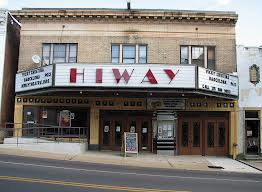
Some of my favorite movie theater that still do it the old way: Suttons's Bay, MI; Jenkintown, PA; Redford, MI Oxford, MI, Traverse City Michigan, Chevy Chase, MD, Plymouth, MI. No better experiences for me.