Of course racism exists and is a serious problem but it seems like it's being used as a shield, as a defense.

It wasn’t until he knew she’d been murdered did he realize how much he missed her, and how terribly fast that came to him. There it was, right in front of him, in the paper. It was a freak story, or else there wouldn’t’ve been a reason for the wire report to be carried from one city/suburban cluster to another, every city has its share of routine murder, young men (usually young men, not always either) drunk on despair and testosterone and whatever substance was supposed to make things easier right then, angry spousal equivalents, payback abuse or just abuse.
He hadn’t seen her in years, hadn’t corresponded (if that’s what one did with email) in months, maybe as much as a year. He knew she was happy, in a way he was quite sure she’d never been when they were together, a way she probably couldn’t be with him. She’d gone through several changes, was settling into a new job, she loved her husband the way you’d want to be loved if you were him. An off-duty police officer who’d developed a habit of pulling over women of a certain age managed to home in on her one night as she was driving home from the night class. Officer Friendly made sure he was the last to see her alive. She was the sixth of seven they knew about. He’d really gotten sloppy by the seventh.
Sitting there staring at the paper, seeing her name there, knowing there was no reason for authorities to contact him (maybe a call from Officer Friendly’s best buddy in the Academy or at the local land-grant school,, or maybe his ex partner), didn’t make him feel any less clobbered. Her husband might’ve, but he’d’ve had his own version of real-time hell to cope with, not this sudden smack after the fact. Cold print. Gasping. Cold, blind rage. Officer Friendly had been called Davy by his family. David Miller. Pillar of the community.
He sat staring at the paper and weighed his options. He could go to the trial, try to find a way to kill Davy Miller or at least introduce him to some small measure of what the wire story didn’t detail too closely of what he’d done to at least seven women. He could go to the trial, in that other big city up north a bit, and try to get some satisfaction out of his Twinkie defense, the slam-dunk the prosecutor would have, the life imprisonment with the hope of a shiv in an ex-cop’s back .He’d never have another conversation with her, he’d never get a card from her again at year’s end, she wasn’t at least walking around somewhere else nor laughing nor thrusting her hips just so as she came, nor rolling her eyes just so at some weak joke someone else would make (she’d wiggle her eyebrows to let you know she knew how weak her joke was, if it was). He wouldn’t know that she was fine. She never would be fine again. His impotence in the face of that fact wasn’t as hard to bear as the thought of her loss, but was no more reassuring.
He sat and thought about what he would do, what he was worth, how little David Miller was worth, what she…had been. He couldn’t completely catch his breath, he wasn’t yet ready to cry, if that was coming. Maybe on his trip north.
Whatever he was going to do, he need to gather a few things, make a few calls. And he needed to know when the services were. And the trial. And whatever came afterward.
And, if so, why? Was it her negatives that sealed her fate? Would the voters have been satisfied with Clinton as a candidate if Obama hadn't come along? Was it his exceptional charisma or would other candidates have achieved the same thing? If Al Gore had entered the race, would he have pushed her off the podium too? Was it Obama's unique message of hope and transformation? Was it his race, which took the expected constituency of African-American voters away from her. Did she seem like old hat? Like we were electing her for a third time?
This picture reminds me of The Wire, one of the few shows we really look forward to. This year the showdown between Omar and Marlo has completely dominated the hour for us. Although I look forward to watching Gus Haynes (City Editor on the Sun) bring Templeton to his knees, and watching whether a alcohol-fueled McNulty will end up murdering someone to get police funding to investigate last year's "bodies in houses" story, it's the dynamics of the Street that holds my interest. It's playing out like a Shakespearean tragedy. How about you? Will Omar or Marlo persevere?


P.S. Thanks to the ten people who offered me aid on the query letter. You rock!


It's strange how a movie many people liked can just elude you. I'm not sure that when I reached the end I even got the point. That it's better to be crazy and impassioned than sane and passive? I guess that's it. I expected the movie to be humorous--it seldom was. It was grim, slow and overly fond of Molly Shannon's face. Truly this obsession with closeups is getting on my nerves, too. Why must everything be pitched at less than three feet? I'd give it a C.
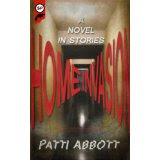
Just heard about a fellow Detroiter who's published a dynamite book of stories about Detroit and the woods of northern Michigan. It was a finalist in the 2007 USA Today contest in the short story collection category. The stories sound like our kind of thing even if they're not traditional crime stories. Check it out. I will. I added his link to the right if you want to know more about him.
Back home and there's three weeks worth of magazines to read. I love the luxury of piling them up and going through them over the next few days. We get a lot of magazines. Some I never get to. The pile included The New Yorker (3), The New York Review of Books (2), Real Simple, Bon Appetite, Cooks Illustrated, EW (2), Atlantic Monthly, Newsweek (2), Vegetarian Times (no, we're not but Megan is). We also get Crimespree, Deadly Pleasures, a gardening magazine or two and more I'm probably forgetting. (Those cooking and gardening magazines are my husband's.)
Does this kid rock or what?
Trying to come up with the right name for a character, I realized all the names I never use because they have too much baggage associated with them. This can apply to famous fictional names or famous real names. Name someone Stella and how can you not remember Stanley Kowalski hollering for her in the street? Though young'uns may not have the same association. I'd never use a host of names too closely associated with one character/person.
in the novel No Country for Old Men, Anton Chigurh was a full-bodied villain, somwhat if not fully explained. Perhaps the reader was given insight into the reasons he'd become a killing machine. But the movie was content with portraying him as merely relentless -no explanation necessary. I think this is a current fad and perhaps reflects the society we live in, but I prefer my villains more along the lines of Norman Bates, with at least some half-baked pscychological reason attached to him. The best villains, at least the ones who are not completelety insane, have some humanity attached to them-only if it's only the love for fine food.
Exiting the theater, the guy ahead of us in a soldout show said it was the haircut that made it work. He had a point. It was both the haircut and the weapon. This was one of the most violent movies I've ever seen and it was combined with a humor, which sometimes make the violence even less palatable. Laugh now, hide your eyes later. And I did hide them a lot. I don't know what the body count was. Some ungodly number. Did I like it? You bet. Great acting, great diaglogue, great cinematography. I can't remember a bar of music. Was there any? It wasn't exactly fun, but it was great. Does that make any sense?
The first thing I do every day is go to Pat Dostine's blog to see if a new picture is up. Pat does his painting after his three tiny children are in bed at night and after a long day as a policy analyst in Detroit. This is one he did recently. He has kindly given me two and I bought a third at a ridiculously low price for my daughter.
Wow! I loved this book. I also loved Pickup but it's hard to belive it's the same author, even if many years separate the two novels. Pickup could have been written by William Kennedy. It barely feels like a crime novel-it's about down on their heels drunks, stumbling through life. It's heartbreaking, tragic.
This was a good film yesterday when I saw it. Since then it has risen to a very good film. What I like most about it is that it is not just about a heist gone wrong. It's about a family gone wrong that leads to the heist. Hawke does more with his face than I would have thought possible. His slitty eyes convey weakness and limited intelligence in the subtlest way. His mouth twists with indecision. And Hoffman's always amazing. He breaks your heart but infuriates you in the same frame. He's as out of shape as Marisa Tomei who plays his wife is in shape. Lovely but still playing the slutty wife. Why doesn't someone hire her to play a musician or a missionary?
I will desist from writing a travel narrative after this, but I found the celebration of the Day of the Dead at my daugher's agency Union Settlement in East Harlem so interesting I had to share. These little babies, and they are tiny, are sculpted from sugar and last indefinitely. The celebration also included a mariachi band, an altar with a skeleton, flowers, candles and incense, dancers. poetry and speeches. Whole families turned out to participate. If I had kept up my Spanish, I could have followed it more closely.