Does anyone find themselves buying a reprint of a book they already have because they like the cover? Besides George, that is? I am tempted to get these two. The covers are so much better than the ones on my copies. And can you ever have too much Woodrell? I think not.
Click icon for more book review blogs @Barrie Summy
A COLD DAY IN PARADISE, Steve Hamilton
Alex McKnight owns a small group of cabins in Michigan's Upper Peninsula. His cabins are rented by hunters, hiker and those passing through. A former Detroit police officer, he's escaped north after a nasty case that saw his partner killed by a lunatic. Alex's testimony helped to put the felon behind bars at Jackson State prison.
Reluctantly, he is persuaded to do a little detective work by an old friend. He's also helping to protect another friend from the demon hold of gambling. This situation is complicated by a brief affair between Alex and the gambler's wife.
Two bookmakers die.
These story lines along with the possibility that the felon, called Rose (and leaving hints for Alex that he's in Paradise), is coming after him make for a suspenseful story.
Especially good is the evocation of the UP in Michigan and the creation of a likable yet realistic series hero. He has his own demons, his own reason for hiding out in the middle of nowhere.
Hamilton won several awards for this, his first book. He's gone on to write more novels about McKnight and recently a standalone. Highly recommended. Especially for those from the midwest who will relate to the setting.
Titles are a real chore. Oh, sure, once in a while, one comes to mind immediately, perfectly summing up the story. But more often-- not. For me at least.
What titles have jumped off the shelf at you? What titles perfectly captured the story? What are your favorite book titles in other words? Now I guess it is possible to love the title but not the story, but the two seem like a matched set.
Hemingway seemed to have a knack for it--or perhaps Max Perkins titled them. THE SUN ALSO RISES, A FAREWELL TO ARMS, A MOVABLE FEAST, THE OLD MAN AND THE SEA, FOR WHOM THE BELL TOLLS. But those titles connote an awfully large canvas, don't they.
And Flannery O'Connor-A GOOD MAN IS HARD TO FIND, EVERTHING THAT RISES MUST CONVERGE, WISE BLOOD. Or is it our memory of these books that makes the titles sing.
Dana King mentioned that my story below didn't end the way he expected. Interesting to contemplate how I might have ended it differently. But with this story for me, it was the only ending possible. Most people are not capable, for one reason or another, to exact revenge. In the story, the father is weak and sees his fate tied to Jimmy's presence. The daughter is a child and not competent to work out a way to exact punishment.
If you care to think about it, how would you end this story? It would interest me to see what others might do with the same set of circumstances--if you care to say. Would a stronger daughter have pushed harder at her father to at least go to the police? Would she have gone herself? I can see those endings working, too.
This was written for Daniel O'Shea's flash challenge to write a story set in a church. In truth, it was reduced from a 7000 word story which appeared on Shred of Evidence a few years back-and is only the better for the loss of 6000 words (gulp). There are some indenting issues I couldn't resolve midway down.
For more stories, go here.
"Fishers of Men"
By Patricia Abbott
“Why don’t you help out with the Martha Circle,” her father said.
Lillie’s mother had taken off a few weeks earlier, sending them a postcard from Philadelphia with nothing on it but an address. A photograph of a church shaped like a fish was on its front. Congregants seem to enter through the gills.
“Why Philadelphia?” her father wondered, rotating the postcard in his hands.
Later at their own dingy church, Lillie heard the thunderous voice of Jimmy Hart practicing his sermon. It boasted the usual hellfire and damnation.
“Yes, yes,” the congregation agreed every Sunday, their voices rising as one. Life seemed pale after that.
Jimmy Hart heard her at the door. “Who’s that?”
“Lillie Wist.”
Jimmy stepped into the light. His face was damp; perspiration necklaced his shirt. Holding the door open, he fanned himself.
“Guess I missed the Martha circle.”
“Come and gone.”
“My father said …”
“Lester’s over in Dearborn, right?” he interrupted. “Hunting down lighting fixtures.” Jimmy sat down and opened a paper sack. “Like roast beef?” he asked, pulling out a sub.
“Not really ....”
“Keep me company.”
She sat down.
“I skipped breakfast and my stomach’s begging me to pay attention.” Oil slid down his chin and his gray, flannelly tongue caught it. “Doesn’t all that hair get hot in summer?”
He reached for a handful, but she pulled back. “I’m used to it.”
“Your daddy tests me, Lillie.” Shaking his head, Jimmy pulled out a thermos, pouring a half-cup of coffee. “Most people have somethin’ they’re good at, but Lester—well, I haven’t found his talent. Thought once I got him off the sauce things would change.”
“Hasn’t had a drink in months.”
“So you say. Don’t know how long I can keep payin’ a man with so little to recommend him.”
“He’ll be expectin' me.” Lillie rose.
Groaning and holding his back, Jimmy got up and walked her to the door. As Lillie’s hand went for the knob, his arms encircled her, his pulpy lips pressed against her neck. While one of his hands threw the lock on the door, the other urged her down.
“Your Daddy said you didn’t do things like this,” he whispered, “but I thought otherwise.”
“Get off me right now,” she spat out, struggling to rise.
Laughing lightly, he forced her down again. “Your Daddy won’t find it easy to get another job, Lillie Wist. And your mama ain’t here to help him no more.”
The world retreated to the wild panting of the man above her, the dank blackness of the vestibule, the desperate scratching of her left hand on the metal door. Suddenly, her thighs were wet and sticky.
“Double damn! Should’ve known what would happen lying down with a Wist.”
Lillie scrambled to her feet, trying to clean herself up with her shorts.
“Grab somethin’ from them care boxes over there.” He pointed to the row of soggy boxes lining the back wall. “And that little poke don’t count for nothing neither.”
She stepped into a pair of slacks and started for the door, her yellow shorts balled up under an arm.
“Now, just you wait a blessed minute,” Jimmy bellowed, dropping to his knees again. “Get down here with me, girl.”
Lillie fell to her knees as if fired on. “Merciful God,” Jimmy said “Forgive this girl for temptin’ me. Her Daddy’d be saddened to know what she did. In Jesus’ name. Amen.”
“That you in there, Lillie?” Lester stood outside the bathroom door. “Why you taking a bath in the afternoon?”
The water was pure cold, though she hadn't noticed. “Be right out.”
In the kitchen, Lester sat with an assortment of electrical supplies, “Wish I knew more about this stuff,” he said. “Like to burn the place down foolin’ with it. Your mother….”
“Gotta to tell you somethin’.”
“Hair’s dripping wet. Didja lock the church door?” Lester’s eyes returned to the socket in his hand. “Sure made these directions hard to figure.”
“Jimmy Hart was practicing his sermon.” The words rushed out. “When I tried to leave, he—he—raped me.”
Lester sat there. “Do you know what that word means—a girl youn’ as you?”
“Put his thing in me.”
You could see Lester's Adams' apple travel like an elevator, and he let out a cry. Tears worked their way down his scarred cheeks. “I’m taking care of this right now.”
“I’ll go with you?” Her mama would have.
“Better if you don’t.” Lester continued to sit staring at the electrical parts. Finally, he took his Tiger hat from the table and left.
Much later. “Lillie. You ‘wake?”
It was dark except for a shard of light from the street lamp illuminating his knees. “Look, I can’t do it. Stood outside his place for hours.”
“Go tell the cops.”
“You don’t understand. What’ll become of me after? I’ll start drinkin’ again. Jimmy’s the only person in the world can save me. Your mama….”
“He wants you to think that.” Lillie felt empty, flat, unreal. Parts of her burned, others were cold.
“Know he did something pretty bad, but you’re okay now. Didn’t beat you, right? Just got carried away. Don’t wanna show any doctors or policemen your—parts--do you?”
“Have to show them… that?”
He nodded. “No nice girl would. Maybe it’d be better if you went to visit your mama in Philadelphia.”
“Now?”
“Maybe it’d be best.”
“He’s quicker than a snake in the bushes”
Lester nodded. "Seen it myself."
Next morning, her bags were packed.
“Don’t have to wait with me,” she told Lester at the bus station. "Get on to your church and Jimmy Hart."
“Get you a candy bar? Or a Pepsi. How ‘bout some cheese crackers?”
Lillie shook her head, and Lester picked up a newspaper section from the bench and read the weather report for Philadelphia. It was planning to rain. “But not in Detroit,” he told her. “It’s not gonna rain here.”
The bus was on time, and she sat near the front, next to an older woman knitting a yellow baby’s sweater. “You’re always safe with yellow,” the woman told Lillie with a tired smile.
My husband has the larger desktop computer. As soon as he scoots, I head into his room to take advantage of the larger screen. I leave myself little notes on his desk-stick-ems. They accumulate. He keeps buying me tablets to use for my notes, but still I grab those 2x3s to put book titles and such on. Now we can't remove the stick'ems from his desk entirely (already thought of that solution) since he uses them to mark off pages he's going to write about.
After a few days, and I swear they grow even if they're not fed, there are dozens. Fridays are especially bad--guess why.
Okay, what drives the person you live with crazy about you? Or vice-versa. (Phil never met a drawer that needed closing).
Joe Barone, The Chinese Parrot, Earl Derr Biggers Paul Bishop, Marked Man, Mel Stein Bill Crider, If the Coffin Fits, Day Keene Martin Edwards, Spells of Evil, Pierre Boileau and Thomas Narcejac Ray Foster, The Sentinel Stars, Louis Charbonneau Leighton Gage, The Light of Day, Eric Ambler Ed Gorman, The Inner Circle, Jonathan Fast Jerry House, A Likeness to Voices, Mary Savage Randy Johnson, Tales of Well Fargo, Frank Gruber George Kelley, Preferred Risk, Edson McCann (Lester del Ray & Frederik Pohl) Rob Kitchin, Old Flames, John Lawton B.V. Lawson, Voice Out of Darkness, Ursula Reilly Curtis Evan Lewis, Dead and Done For, Robert Reeves Steve Lewis (Frances Nevins) The Campion Books, Margery Allingham Brian Lindenmuth, Tapping the Source, Ken Nunn Todd Mason, Rita Rudner: I STILL HAVE IT...I JUST CAN'T REMEMBER WHERE I PUT IT (2008) and Dick Gregory: FROM THE BACK OF THE BUS (1965) Eric Peterson, The Zoot Marlowe Books, Mel Gilden James Reasoner, Abu-The Dawn-Maker, Perley Poore Sheehan Brian Ritt, The Gangland Sagas of Big Nose Serrano, Anatole Feldman Rick Robinson, Sherlock Holmes by Gaslight, Philip A. Shreffler, editor Kerrie Smith, The Case of the Chinese Boxes, Marele Day Dave White, The Last Night of the Yankee Dynasty, Buster Olney
THE GANGLAND SAGAS OF BIG NOSE SERRANO, VOL. 1: SERRANO OF THE STOCKYARDS by Anatole Feldman Bio: Brian Ritt thanks Patti Abbott for posting his review on her blog. &n bsp; **************************** Serrano Of The Stockyards,the first novel in The Gangland Sagas Of Big Nose Serrano, is Anatole Feldman’s blend of Edmond Rostand’s play, Cyrano de Bergerac, with the gangland pulp tales of prohibition-era Chicago during the height of that city’s brutal and bloody gang wars.
In brief, Rostand’s Cyrano de Bergerac is a masterful poet, wit, and swordsman. He is courageous and adheres to a strict code of honor. He also, to his shame, has a grotesquely enormous nose. Cyrano’s insecurity about his looks keeps him from declaring his love for Roxane, a beauty who is both intelligent and sincere. Baron Christian de Neuvillette is a handsome soldier who also loves Roxane, but who lacks the ability to articulate his feelings. Cyrano teams-up with Christian, and composes a series of poetic love letters to Roxane, allowing Christian to sign his name. The play is set agains t the background of the wars between France and Spain.
In Feldman‘s Serrano of the Stockyards, which first appeared in the pages of the pulp Gangster Stories, Cyrano becomes Big Nose Serrano, Roxane is now Annie (Will Murray, in his introduction, is rightfully stymied over how Feldman missed using the name “Roxy”), and Christian de Neuvillette sports the moniker Chris Webber. The battles between France and Spain are now the battles of the booze barons.
*************************** Here lies the remains of Bull La Rue &nb sp; A lousy rat and yellow too. He cracked too wise about my nose So now he’s turning up his toes.
"The year is 1930, and after blasting his way into Chicago’s underworld only two years ago, Big Nose Serrano has already gained a legendary reputation." Rival gang bosses all want him on their side, but he is, “the lone wolf of gangdom, standing alone, shooting alone; asking help from no one but giving it frequently.” He has risen to power through a combination of “the might of his gun, courage, wits, and brawn.” But he has a peculiar quirk. Rather than blasting his enemies at first sight or planning an ambush, Serrano, “through some romantic and chivalrous distortion of his brain”, always issues a formal challenge before he fights his foe, and names the time and place they are to meet. A 1920’s gangland version of a duel, in other words.
As for Serrano’s protruding proboscis? His sniffer? His sneezer? His snout? His snoot? He is of two minds about it. At one point in the story, while looking in a mirror, he calls it, “A noble nose, a Roman nose, a nose so sacred that all men bow their heads and avert their eyes when it passes; a nose so ferocious that all men tremble when it is mentioned.” (Paging Dr. Freud!) But with his next breath: “God, you’re an ugly mutt, Serrano.”
Chris Webber is a young cannon looking to “crash the elite of Chicago’s underworld.” But he has two obstacles. One: Webber needs to distinguish himself from a large number of young, eager, and ruthless competition all vying for a spot in the top gangs. His second problem? The poor sap’s fallen in love. And love is “bad business when one is young and ambitious,” even though the jane he’s tumbled for is “the classiest, swankiest, most desirable bit of perfumed fluff that ever played a sap for a sucker or rammed a rod into a rat’s ear.” Her name is Annie.
Annie and Chris initially meet at the speakeasy of a gang boss named LeBrett. Annie likes Chris’s good looks and nerve, but for her to tumble for a guy, he’s got to have more: “He’s got to tell me things. Pretty things. He’s got to have a heart and a soul. He’s got to have more than the ability or guts to pull a gat and pump lead.”
Big Nose Serrano is also in love with Annie, but is too insecure about his looks to let his ardor be known.
Annie asks to privately meet with Serrano at LeBrett’s headquarters, whose mob he has recently joined. Annie confides in Serrano: she’s in love with Chris Webber. But she knows Chris is young and inexperienced and she asks Serrano a favor: keep an eye on Chris, befriend him, protect him. Serrano--downhearted that he is not the object of Annie’s affection, but remaining her loyal friend--agrees.
Serrano runs into Webber at a local speakeasy. He tells Webber of Annie’s love. She knows a local gang boss named Gilley is gunning for Chris and wants him to lay low, but wants him to write to her. Chris confides in Serrano. He has no gift of gab. He gets tangled up in words. Serrano’s proposes a solution: he’ll write the letters, Webber will sign his own name.
At the story’s climax, LeBrett’s gang (which now includes both Serrano and Webber) fight a hell-for-leather shooto ut with Gilley and his gang. Serrano and Webber both play central roles in the bullet barrage. One lives, one dies, and a confession is made.
**************************
According to Will Murray’s introduction, Anatole Feldman was an unsuccessful playwright during the early 1920’s. In 1929, Feldman started selling stories to two of the earliest gangster pulps, Underworld and The Dragnet Magazine. Feldman wrote twelve Big Nose Serrano “novels” (as the pulps typically called their feature stories, though they were really much closer to novelettes) over a five-year period. Serrano’s initial appearance, which I reviewed here, appeared in the May 1930 is sue of Gangster Stories. Serrano appeared in four more issues of that pulp, in three issues of Greater Gangster Stories, and his final appearance was in the May 1935 issue of The Gang Magazine. Off-Trails publication of THE GANGLAND SAGAS OF BIG NOSE SERRANO, VOL. 1 contains four novels.
Regarding Feldman’s writing, I had great fun reading his handling of 1920’s gangster slang. Also, the story really moved: windows crash, lead splatters, and gats bark (although they don’t sneeze or cough, like the roscoes of my favorite pulp character, Dan Turner). In other words, fast-paced action and tough-talking dialogue aplenty.
Serrano's hardboiled verses were always amusing. When I flipped through the other three stories in the volume, I found that Feldman scaled back on the verse for stories two and three, but then not only increased the amount for the fourth story, but also adde d a parenthetical note at the end of each verse, such as: From The Complete Works of Serrano, From the Precepts of Serrano, From the Rubaiyat of Serrano, From The Unexpurgated Edition of The Sonnets of Serrano, etc. The other three novels in Vol. 1 are The Gang Buster, The Gunless Gunman, and Dames, Dice, and the Devil.
Will Murray’s introduction notes that in later stories, Serrano evolves into more of a Robin Hood-type character, helping the depression-era poor and fighting political corruption. In “Stockyards”, Serrano is definitely a larger-than-life, invulnerable super-gangster. I see him as a pre-pre-precursor to the men’s action-adventure characters of the 1970’s like The Executioner, The Butcher, The Death Merchant, etc.
My only major disappointment was that I didn’t get to see a rendering of Serrano’s stupendous schnozzola. The cover speaks for it self, and the facsimile illustrations from the original story shows Serrano’s nose with only a slight bump near the bridge. I would have preferred either no illustrations, leaving the look of his nose completely to my imagination, or at least a good old college try at drawing the profound pickle-puss.
Overall rating: five sneezes.
Ed Gorman is the author of TICKET TO RIDE and assorted other fabulous novels and stories. You can find him here. The Inner Circle by Jonathan Fast
This novel came along shortly after the books of Stephen King launched the horror boom. If its storyline owes anything to a classic horror writer it's Robert Bloch. A) Because it concerns a diabolical plot that spans most of the last century and B) Because it's steeped in Holywood lore, this time circa 1979.
Louis Pinkle is a Los Angeles magazine writer who is peddling a screenplay every chance he gets. When his old friend and mega TV star Tony Valenti shows up at his apartment one night pleading to stay and insisting that somebody is trying to kill him, Pinkle manages to ease him out the door. Pinkle wakes up to read in the paper of his wealthy friend's death in an automobile accident. He of course believes that it was no accident at all.
Why I've enjoyed reading this book several times since its publication is not so much the plot, which works very well, but rather its grace notes, its rich human observations and the way Fast makes loopy LA architecture a real part of the story.
"There's a malady I call Dr. Chauvinism that everybody suffers from: my Dentist is The Best Dentist in New York City; the surgeon who did my uncle Murray's surgery is the best Surgeon on the East Coast..."
"I was going through a dry spell at the time, six or seven months without a woman. Celibacy in the East isn't isn't so bad, but out here in the West where the sun superheats your skin and the women walk around half or three-quarters naked, and every billboard displays vast vistas of flawless flesh, it's worse."
"Once he said to me, `Kitty, are you scared of dying?' And I said, `Yes, I suppose I am. I've never thought about it much.' And he said, `Kitty, that's why I write so much. I think if I leave enough paper with my name on it, people will have to remember me after I'm dead.'"
Then there's a beautifully done scene when a detective visits the badly beaten Pinkle in the hospital. Now there are a lot of ways to write this scene but I've never read one like this before.
"I'll make this as brief as possible, Mr. Pinkle."
Asks him name, birth date, profession. After profession, cop says: "What do you think of Saul Bellow?"
"Bellow?"
"What's your opinion of his work?"
"I...I like it."
"But don't you think the Nobel prize should have gone to Graham Greene?"
"Maybe." His voice became animated and he began to gesture with his hands, enormous hands with black hairs on the back.
"What I mean is, Bellow is basically a photographer like Roth and many of the other modern Jewish writers. His prose is marvelously descriptive, but does he have anything to say?"
"I don't know. Does he?"
(Turns out the cop is in a writing class and offers to "share" his short stories with Pinkle.)
I was laughing out loud when I read this because when we were in a clinic one day waiting for the results of a test a doc came in with said results but decided that since I'd written writer for my occupation we'd do a little book chatting first. Carol finally said: "How did the test come out?"
I just like this book. I like the voice and I like the slant on life and I like the people. Fast wrote a number of science fiction novels in addition to this and then gave up fiction for teaching. Our loss. He had the touch.
Stanley Withers is an insignificant adman about to lose his third job within five years. Rasputin is a cat who has gone through some 2000 life cycles and is currently enjoying the easy life; he had been sent by a local coven to help Stanley get his last job. Neither realizes that Jessica, Stanley's preternaturally ageless wife, is a witch. But, then again, Jessica doesn't realize that Rasputin is a familiar. Jessica herself has been living under the radar of the local coven. It gets confusing.
Jessica calls on her Aunt Persy, one of the most powerful witches that ever existed, to come and help her husband. This sets in motion a struggle between witches with Jessica's 14 year old son as the prize. To complicate things (from the cat's point of view) is that Rasputin's body dies early in the book.
I don't know what to make of this book. At times it reads like when Bell, Book and Candle goes bad; at other times it reminds me of a mash-up of Fritz Leiber's Conjure Wife and an alternate reality Thorne Smith; one reviewer evoked the name of Shirley Jackson. I enjoyed the book, especially the sections narrated by Rasputin, but did not know which side I was supposed to root for. That, I suppose, was the point as the book came to a happy (?) but morally ambiguous and disturbing ending. Recommended.
A Likeness to Voices by Mary Savage, Torquil, 1963, cover design by Si Coleman. Dell, 1965, cover design by Rocco Negro. (The Dell edition cover blurb calls it "a supernatural Peyton Place"...eh, not really.) Savage is evidently a pseudonym for Mary Dekker. This was her third novel; a fourth, The Coach Draws Near (1969), also sounds interesting.
It's right here. What films should have/have not won?
Kevin story of the day. We are discussing herbivores v. carnivores. Going through fish, animals, dinosaurs. He is getting most (or some) of them right. He's only three after all. He likes them to be herbivores, of course.
"Fish are our friends not our food." (sacred text of Finding Nemo)
Then he brings up sheep, so I say, "what do you think sheep eat, Kevin?"
With very little pause. "I think sheep eat samwiches."
James Reasoner mentioned a movie with John Corbett on his blog last week, and it reminded me of how much I enjoyed Northern Exposure in its day. Quirky (okay sometimes too quirky), different setting, varied plots, arcs but not ones that shut you out if you missed a week. Men and women of different ages and different economic means.
Allow me one rant--first in a long time-- although I promised myself to resist political posting. I just need to get this off my chest. I reserve the right to remove this post should I need to.
The city of Troy, Michigan will close its library, nature center, community center and museum and lay off 47 police officers after voters rejected a tax hike yesterday. This is not an isolated case, of course. Not even in southeastern Michigan.
Shame on the people who led this anti-tax charge. Don't they understand with property values falling, local governments have to raise money somehow? Institutions like those cut in Troy are important to society. We are already stripping the schools of every enhancement activity. And now comes community institutions. Soon those who can afford it will send their children to private schools in greater numbers and our great public school system will be just for the poor and be treated as such. Anti-tax people have wreaked havoc with Michigan over the last thirty years but see themselves as heroic somehow. Our property taxes fell by about $600 this year. I'd much rather pay that $600 than lose a library or park or cops. If someone is unemployed, of course, their situation is different and possibly they need exemptions.
I'd like to believe that a single altruistic or public-minded or progressive intention was involved in the tax revolt in Troy, but I can only see these people as selfish, irresponsible, arrogant and short-sighted. Who will want to live in Troy, Michigan without a library or enough cops? So the housing values in Troy will drop further--their children will suffer for it.
Troy used to be a progressive city. People in Troy, Michigan are not poor by any stretch of the imagination. They can support these institutions by paying what they've been paying in taxes. But they won't. A city without a library is a pretty arid place. Troy is home to 81,000 people--who have no cultural life now--unless they go to some other city who values such things. Troy, the very name Troy connotes culture. But not in Michigan, I guess.
Here's a site that might point you toward some new blogs that discuss crime fiction if you don't already know about them (and spend enough time reading them).
I read 60 books in 1990. I was taking classes and working so the number wasn't great.I have to say, I don't remember at least half of them. Movies seem to leave more of an impression with me. Or maybe I see the movies a second time.
The ones I put a star next to include: SOME CAN WHISTLE, (McMurtry), JULIAN'S HOUSE (Judith Hawkes), NICE WORK (David Lodge), ENEMIES, A LOVE STORY (Singer) still don't remember it much, CLEAR PICTURES, (Reynold Price), PICTURING WILL, (Ann Beattie), AFFLICTION, (Russell Banks), CONTINENTAL DRIFT, (Russell Banks), WILDLIFE, (Richard Ford), BECAUSE IT WAS BITTER AND BECAUSE IT WAS MY HEART (Oates), THE EXPENDABLES (Antonya Nelson), A HOME AT THE END OF THE WORLD, Michael Cunningham.
There is a list of crime/genre fiction including books by Ruth Rendell (GOING WRONG), Aaron Elkins (ICY CLUTCHES), BURDEN OF PROOF (Scott Turow), NEMESIS (Oates), SLEEP AND HIS BROTHER (Peter Dickinson), DARK HALF (Stephen King), Elizabeth George (WELL-SCHOOLED IN MURDER. . I see now why I haven't read the number of books some of you have. I WAS READING LITERARY FICTION. If I go ten years earlier, there are twice as many crime as lit-ten years later the same. What was I thinking in 1990? My kids were in college. Maybe I was trying to keep up with them.
Was there a time when you passed up genre fiction for literary stuff?
I was changing the POV in a WIP yesterday from third to first and after I finished, I decided I'd probably missed dozens so I used the edit feature that allows you to search out words. I searched for "her "and "she" to change them to "my" and "I."
Inadvertently, I noticed I had a preponderance of "here" and "there" in the ms. as it picked up the "her" in both of those words.
Most of the "here" and "there" were unnecessary. I got rid of dozens. I'd never noticed this before. How we locate something with these words too often. "Come over here" instead of "Come over."
It was an interesting exercise in many ways because I noticed repetitions of other words too. In a longer piece like this, the over-usage was hidden.
What mistakes do you find yourself making as writers as you edit? Or what mistakes do you find as readers in other people's work. Too few commas, too many. Not enough help in attributing dialogue? Too much. There are many ways to go wrong. Using the passive voice too often.
In a book I recently read, the protagonist was constantly driving around. Maybe he did, but it got boring reading about it. Another problem-too much nodding and shrugging. Characters need to move but it has to be more interesting.
Count how many times a character nods. Way too much in my case.
People are often critical of government. Compare two recent activities: trying to get seats on a plane and filing for social security.
After Internet attempts and telephone calls aplenty, I still have no seats on an upcoming plane trip. This has happened repeatedly over the last few years. You hit a snag and there is no real person to discuss it with. The airlines are insistent that you figuring it out yourself. I've had similar problems with Comcast, Amazon, etc. I finally just gave up on the money Amazon owed me for returned goods. If my time has any value at all, I had to or go nuts.
Two weeks ago, I filed a short form online to begin receiving Social Security benefits. It took me ten minutes. Yesterday I got a call from a very polite woman, checking to see if there was an error in my having reported no income in 1997 (I didn't work that year). She asked me if I was sure I want to start collecting early. I said yes. She said she was processing my request and the first check would come within a few weeks.
The government was able to take care of a complex procedure in a total of 15 minutes. They were polite and thanked me for my time. I didn't speak with someone in India. I didn't have to follow a million prompts. No one insinuated I was dumb.
Government can work well. I don't want to debate that this may not always be the case. But sometimes it is. And I wanted to say it. Thanks, USA.
It's not difficult to find a play to attend in Detroit. We have quite a few professional theaters-showing Broadway imports as well as local productions. There are theaters at most of the colleges. We also have many local community groups. Saturday night I was lucky enough to see the Rosedale Community Players put on a version of TWELVE ANGRY MEN that would do any acting group proud.
They staged it a little Lutheran Church, with music supplied by the church's minister. Dinner was served and a sterling production followed. The production was followed by a very interesting discussion of both the play and how the production came together. Actors discussed how they found the moment when their character went from voting guilty to not guilty. How they came to believe in their character's conversion. It was just a lot of fun. Most of the actors had been part of the group for many years, playing many parts. I doubt that I got more out of the movie with Henry Fonda and other fine actors of that era.
Do you support community theater in your hometown? You might be surprised at how good it is. I sure was.
Grandson story first. Kevin is three. We were in Panera's on Thursday and as we got ready to leave, he said, "Are you my conscience?" I was taken aback--that he knew the word, that he could even say the word, but finally said, "I don't think I can be your conscience, Kevin." I started to launch into a more philosophical response but from behind me, I heard someone say. "Psss. Maam, it's a line from the movie, FINDING NEMO." I turned around to find two twenty-somethings laughing.
Ed Gorman was talking about LUCKY AT CARDS, a Hardcase Crime book and SMART MONEY, an old movie from 1931 the other day. Both works were about gambling. What's your favorite work that features gambling?
THE GAMBLER. James Caan gave his best performance in that one, I think. How about you? LOST IN AMERICA was a good comic look at gambling and my favorite Albert Brooks movie.
I saw the animated short featuring Wallace and Gromit last weekend and I laughed once in thirty minutes. I just don't find their routines funny although some British humour, I find very funny indeed (Absolutely Fabulous, The Office) etc. I can even laugh along with Mr. Bean on a generous day. British humour got funnier after I lived there and could get some of the references and understand some of the regional accents.
As discussed elsewhere this week though, humor is very subjective. Do you find Wallace and Gromit funny? The audience I was with did and I felt like I had missed something.
Whose humor puzzles you and whose do you immediately get? In books, Charles Willeford's Hoke Mosley books knock me out. No one was funnier to me than Richard Pryor in the seventies; Bob Newhart and Bill Cosby in the sixties, Jean Shephard anytime. What about you?
Two week worth of books here and as usual I am truly humbled by the number of authors, let alone books, I have not read. Rob Kitchin has set out on a mission to read the books commenters on his blog voted as essential reading-this is the first review. Thanks to Fred for his thoughtful essay on Hammett and his times. I am going to take a week off in March-the 19th. All of the books--two years worth-- are still listed here. Don't forget Scott Parker's Forgotten Music project begins next week.
THE SUMMING UP, February 12, 2010
James Benn, No Orchids for Miss Blandish, James Hadley Chase Paul Bishop, Casting in Dead Water, David Leitz Bill Crider, A Bullet for Cinderella, John D. MacDonald Ray Foster, Rawhide, Franc C. Robertson Ed Gorman, Resurrection Row, Anne Perry Randy Johnson, Murder in the Guroom, H. Beam Piper George Kelley, The Three Roads, Ross MacDonald Steve Langton, Final Cut: Dreams & Disasters in the Making of Heaven's Gate, Steven Bach Chris La Tray, The Call of the Wild, Jack London Evan Lewis, Fast One, Paul Cain Steve Lewis: Curt J. Evans, Trial by Jury, Craig Rice Calum MacLeod, The Most Dangerous Game, Gavin Lyall Todd Mason, Paper and Ink Fiction Magazines Scott Parker, The League of Frightened Men, Rex Stout Eric Peterson, The Strange Case of Edward Gorey, Alexander Theroux James Reasoner, Of Mice and Men, John Steinbeck Rick Robinson, Star Surgeon, James White Kerrie Smith, The Long Way to Die, James N. Frey
Friday, February 19, 2010
Eric Beetner, The Real Cool Killers, Chester Himes Paul Bishop, Pay the Devil, Jack Higgins David Cranmer, Ava Gardner: Love is Nothing, Lee Server Bill Crider, To Kiss or Kill, Day Keene Mike Dennis, The Gambler, William Krasner Brian Drake, The Black Mask Boys, ed. William Nolan Martin Edwards, Double Blackmail, GDH and M Cole Ray Foster, Andersonville, MacKinley Kantor Ed Gorman, The Beats by Seymour Krim George Kelley, The Grifters, Jim Thompson Rob Kitchin, The Maltese Falcon, Dashiell Hammett Randy Johnson, Primary Target, Max Allan Collins Chris La Tray, The Island of Dr. Moreau, H.G. Wells Evan Lewis, Not Too Narrow-Not Too Deep, Richard Sale Steve Lewis Thomas Baird, Forfeit, Dick Francis Todd Mason, The Book of Sand, Jorge Luis Borges. The Castle of Crossed Destinies, Italo Calvino Karen Olsen, Alley Kat Blues, Karen Kijewski James Reasoner, The Buntline Special, Lou Cameron Rick Robinson, The Case of the Vanishing Beauty, Richard Prather Kerrie Smith, Rumpole for the Defence, John Mortimer R.T. Arthur Conan Doyle: A Life in Letters, Lellenberg, Stashower, and Foley Fred Zackel, Dashiell Hammett
Patricia Abbott is the author of more than 125 stories that have appeared online, in print journals and in various anthologies. She is the author of two print novels CONCRETE ANGEL (2015) and SHOT IN DETROIT (2016)(Polis Books). CONCRETE ANGEL was nominated for an Anthony and Macavity Award in 2016. SHOT IN DETROIT was nominated for an Edgar Award and an Anthony Award in 2017. A collection of her stories I BRING SORROW AND OTHER STORIES OF TRANSGRESSION will appear in 2018.
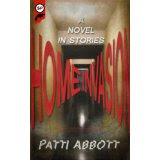
She also authored two ebooks, MONKEY JUSTICE and HOME INVASION and co-edited DISCOUNT NOIR. She won a Derringer award for her story "My Hero." She lives outside Detroit.
Patricia (Patti) Abbott
SHOT IN DETROIT
Edgar Nominee 2017, Anthony nominee 2017
CONCRETE ANGEL
Polis Books, 2015-nominated for the Anthony and Macavity Awards
 First though...