Friday, June 04, 2010

The Summing Up, Friday, June 4, 2010


Parisians reading.

Thanks to Rick Robinson for organizing the last month's worth of choices.


Friday Forgotten Books: The Summing Up

May 14, 2010

Bill Crider: Shoot the President, Are You Mad? by Frank McAuliffe


David Cranmer: Land of Always Night by Kenneth Robeson


Ed Gorman: The American Vein: Directors & Directions in Television By Christopher Wicking & Tise Vahimagi

Evan Lewis: Mr. Strang by Carroll John Daly


George Kelley: How Like an Angel by Margaret Millar

James Reasoner: Outlaw Canyon by Lewis B. Patten

Kerri Smith: Looking for Mr. Goodbar by Judith Rossner


Martin Edwards: Sweet Adelaide by Julian Symons


Paul Bishop: Black Bartlemy’s Treasure by Jeffery Farnol


Randy Johnson: Downtown by Ed McBain


Richard Robinson: The Wolves of Savernake by Edward Marston

Steve Lewis: Lady With the Dice by Joel Townsley Rogers

Thomas Kaufman: The Black Path of Fear by Cornell Woolrich

Todd Mason: Romances by Jack Finney, Kate Wilhelm, Joyce Carol Oates, Joanna Russ, Maggie Gee, Richard Matheson and Margaret Atwood

May 21, 2010

B.V. Lawson: Emily Dickenson is Dead by Jane Langton

Bill Crider: Shoot the President, Are You Mad? by Frank McAuliffe


Ed Gorman: With Folded Hands…and Searching Mind by Jack Williamson

Evan Lewis: Is A Ship Burning? by Richard Sale

George Kelley: The John Thunstone stories by Manly Wade Wellman

James Reasoner: The Star Smasher by Edmund Hamilton

Kerri Smith: Coma by Robin Cook

Le0pard13: Different Seasons by Stephen king

Martin Edwards: Murder at Shots Hall by Maureen Sarsfield


Patrick Lennon: Thumbprint by Friedrich Glauser

Patti Abbott: The Clockmaker by Georges Simenon

Paul Bishop: The Killer Mine by Hammond Innes

Randy Johnson: The Vampire Affair (Man From U.N.C.L.E #9) by David McDaniel

Richard Robinson: The Wall Around he World by Theodore R. Cogswell

Steve Lewis: The Valley of the Creeping Men by Rayburn Crowley


Todd Mason: Best SF, 1971 edited by Harry Harrison and Brian Aldus,

Todd Mason: Best SF, 1971 edited by Harry Harrison and Brian Aldiss: Year’s Finest Fantasy edited by Terry Carr (1978)

May 28, 2010

Bill Crider: 
The Slavers by Richard Telfair

Craig Clarke: The Farm by Scott Nicholson

Evan Lewis: Secret Agent X-9 by Dashiell Hammett and Alex Raymond

George Kelley: Of All the Bloody Cheek by Frank McAuliffe

Irene Fleming: Drink to Yesterday by Manning Coles

James Reasoner: Kingdom of the Blue Corpses by Brant House

Kerrie Smith: The Greenway by Jane Adams

Le0pard13: (film) The Dirty Dozen

Martin Edwards: The Cambridge Murders by Adam Broome

Paul Bishop: This is a Bust by Ed Lin

Paul Brazill: Ritual in the Dark by Colin Wilson

Randy Johnson: Girls on Sin Street by Larry Maddock (Jack Jardine)

Richard Robinson: The Case of the Real Perry Mason by Dorothy B. Hughes

Steve Lewis: Death and the Chapman by Kate Sedley

Terrie Farley Moran – A Nun in the Closet by Dorothy Gilman

Todd Mason: Uncollected Crimes edited by Bill Pronzini and Martin H. Greenberg; Uncollected Stars edited by Barry Malzberg, Piers Anthony, Charles G. Waugh and Martin Harry Greenberg; FINE FRIGHTS: STORIES THAT SCARED ME….edited by Ramsey Campbell

The Summing Up, Friday, June 4, 2010


Lou Alin,
The Thirty-Nine Steps, John Buchan
Joe Barone,
The Shape of Water, Andrea Camilleri
Paul Bishop,
Double Play, Ed McBain
Craig Clarke, The Big Rock Candy Mountain, Wallace Stegner
David Cranmer: The Stonor Case (play) by Conan Doyle
Bill Crider,
A Cool Breeze on the Underground, Don Winslow
Mike Dennis,
Cassidy's Girl, David Goodis
Loren Eaton,
Starman Jones, Robert Heinlein
Martin Edwards,
Julian Symons Remembered, John Walsdorf and Kathleen Symons.
Gar Elliott,
Ladies' Man, Richard Price
Ed Gorman,
Murder Among Children, Tucker Coe (Donald Westlake)
George Kelley,
The Infinite Cage, Keith Laumer
Randy Johnson,
The Sword of Lankor, Howard L. Cory (Jack Jardine)
B.V. Lawson,
A Night at the Cemetery, Anton Chekhov
Le0pard13: Fail-Safe by Eugene Harvey and Burdick Wheeler
Evan Lewis,
77 Sunset Strip, Roy Huggins
Steve Lewis/Edward D. Hoch,
The Big Bow Mystery, Israel Zangwill
Steve Lewis: The Invisible Host by Gwen Bristow and Bruce Manning
Todd Mason,
The Years with Ross, James Thurber
James Reasoner,
Lawless Guns, Dudley Dean
Rick Robinson,
Beginning Operations, James White
Kerrie Smith,
Death in Dreamtime, S. H. Courtier
Andrew Taylor, Caleb Williams, William Godwin

Friday's Forgotten Books, June 4, 2010


Parisian reading.

Many thanks to Mr. George Kelly for anchoring this ship for the past three weeks. I checked in from an internet cafe but the price of rounding the books up was steep so I will get to it soon.


Lou Alin

Born in Toronto, Canada, Lou Allin is a retired professor of English

With a cottage on a meteor-crater lake of sixty-four square miles as her inspiration, she began her Belle Palmer series, featuring a realtor and her German shepherd, Freya: Northern Winters Are Murder, Blackflies Are Murder, Bush Poodles Are Murder, Murder, Eh? and Memories Are Murder.

Lou has now moved to Canada’s Caribbean, Vancouver Island, and lives with Friday the mini-poodle and Shogun and Zia the border collies in Sooke BC, overlooking the Strait of Juan de Fuca.

Recently, she’s begun a new series starring RCMP corporal Holly Martin. And on the Surface Die will be followed by She Felt No Pain. Lou has two standalones: A Little Learning is a Murderous Thing and Man Corn Murders. Lou’s interest in literacy causes won her a contract with Orca books to write That Dog Won’t Hunt, a novella designed to appeal to adults who are reluctant readers.

John Buchan’s The Thirty-Nine Steps

When I moved after thirty years from Northern Ontario to far-off Vancouver Island, I took no fiction except for Nevada Barr and John Buchan. I identify with Barr’s ranger Anna Pigeon and her phenomenal sense of place in America’s national parks.

Buchan would seem a world away. Along with his other novels featuring Richard Hannay, such as Greenmantle and Mr. Standfast, The Thirty-Nine Steps was a thriller before the word was coined (Buchan calls it a “shocker,” an adventure where the events are barely credible). Today when many books have a shelf life of a month, Buchan’s masterpiece stands fast.

It has been made into movies four times, most recently for television. Let’s step back a century. It’s May 1914, and a terrified world is on the verge of war. Any advantage may turn the tide. Hannay has returned from Rhodesia to begin a new life, when a mysterious spy asks him for help. A German plot is being hatched to scuttle British plans once war begins. When the man
is found dead in Hannay’s London flat, a knife in his heart, Hannay grabs the man’s wallet and catches a train to Scotland.

Grabbing sleep where he can, a barn, a cottage, a ditch, he’s on the run, one step ahead of the enemy. Who is this group called The Black Stone? How do they know where he is? Can he trust the new friend who has just saved him? His progress is aided by the most far-fetched coincidences. In the middle of nowhere, a comrade motors by to rescue him. He is forever stealing clothes and identities, dodging airplanes, and making mysterious calls to the Foreign Office. Will they believe his story and act to save England? Or will the Kaiser receive the information to carry out a successful invasion? Therein lies the location of the thirty-nine steps.

Hannay is not only an officer, he’s a man who puts his country’s interests first and tells romance to wait. Amid the shells and mud of the Great War, this book found its way into many an army pack and kept spirits high during dark nights of the soul in the timeless fight between good and evil. This story can be told again and again. Because truth does not change, nor do good men. And though he is guilty of the usual stereotypes, he is wise enough to find something noble in his enemies.

It wasn’t enough that Buchan finished thirty novels. He had a long and illustrious political career, concluding by his tenure as Canada’s Governor-General, the representative of the Monarchy. For this honour, he was titled Lord Tweedsmuir. His years in this post from 1935-40 were as tumultuous as his plots, including the abdication of Edward VIII and the beginning of World War II. One of my favorite poses for his eagle-beaked and craggy face finds him in ful-feathered First Nations regalia.

For a man born in 1875, Buchan had a great prescience about world politics.
In Prester John, he anticipated the rise in Africa of a black Messiah, and in Greenmantle, he foretold the increasing power of Islam. In any age and in any place, Buchan would have been a great storyteller. That is his genius.


Mr. Elliott lives and works in Tucson, Arizona. Recent work has appeared in Plots With Guns, Thuglit, Beat to a Pulp, Out of the Gutter, and a Twist of Noir. You can reach him at garkim@aol.com.
Forgotten Books: Ladies' Man by Richard Price
Back before the president of the U.S. was devoting part of his summer reading to Lush Life, before Freedomland and Clockers, Richard Price wrote a little gem called Ladies' Man.

'Little' because at two hundred and sixty-four pages, the book is trim compared to Price's more contemporary work. There isn't any ink devoted to long-winded police interrogations. Ladies' Man isn't a crime story. You could call it noir, but the book defies easy pigeon-holing. Comparisons have been made to Catcher in the Rye. Kenny Becker, the protagonist and first-person narrator, is a sort of seventy's Holden Caulfield.


Yes, the book is dated. Wonderfully so. The first chapter makes reference to Happy Days, dancersising, and that anthem for a self-obsessed decade, Feelings.

Kenny's a thirty year old door-to-door salesman living in New York. His girlfriend, La Donna, is a wannabe singer. It quickly becomes obvious their relationship's headed for oblivion. Kenny has, as they say, issues about sex:

"I would get swallowed up in that childhood intensity, that self-centered ocean-sized feeling of life and death around sex. And it would happen anytime I was scared or felt hungry or needy around people. Anytime my brain would slip into a survival head the order from Central was STICK IT IN. When in fear, fuck."

He comes home from a depressing day of sales to find La Donna going at it with a vibrator, which he promptly kicks to pieces. La Donna leaves him. His ensuing loneliness drives the rest of the story.
Ladies' Man takes place over the course of a desperate week, a chapter for each day. Kenny obsesses about his abdominal muscles, getting a better job, and how he comes across to his fellow human beings. Most of all, he tries to get laid. Contemporary thinking might dub him a "sex addict," but Price is more concerned with showing the emotions behind Kenny's compulsive behavior than the act itself. When sex does happen in Ladies' Man, the presentation is so stark it makes pornography look sentimental.
We watch Kenny unravel through a tour-de-force of New York nightlife, through quips of Price's trademarked razor dialogue. In one scene, Kenny is reunited with two of his high school buddies. His delight quickly turns to sickening nostalgia, as he realizes none of them have any purpose:
"It was over. It had been the best and now it was over and nothing had ever felt as good. We had peaked back then, and all we'd been doing since was dying."
The book has hilarious moments to offset some of its darkness . La Donna's audition at the Fantasia cabaret had me falling off the couch, it was so funny. So I read it to my wife and she fell off the couch. Ditto for the scene where Kenny gets a phone call from his one-night stand:
"I felt like we made a real connection last night."
"We did! We did!"
"Then why don't you want to see me?"
"I do! I do!" I wanted her dead.
Ladies' Man has its problems. The ending feels abrupt and inconclusive--but this isn't a Hollywood thriller we're talking about here, this is existential literature. Tacking something 'big' onto the final chapter wouldn't have felt right, either. Also, some of Kenny's generalizations about the human condition, the nature of loneliness, slip from profound to banal.
Despite this, Ladies' Man is my favorite work by Richard Price. Forget intricate plotting. This one leaves an emotional residue when you stop reading. And there are parts where you slip right into Kenny Becker's adolescent, manic mindset. Only top-notch writing can do that.
And if you're thinking, "hey, I'll read an early work by Richard Price to see how his prose developed," forget it. He's in peak form in 1978, just as much as he is now.
I guess some authors just stay peaked.

Ed Gorman is the author of THE END OF IT ALL AND OTHER STORIES and THE MIDNIGHT ROOM. You can find him here.

Back in 1967 when Donald Westlake, writing under the name Tucker Coe,published Murder Among Children (second in the series about disgraced cop Mitch Tobin) the Summer of Love had yet to arrive. Hippies were still these strange beings who did little more than fornicate freely and toke on as many joints as they could find. The mainstream press loved them. So did paperback writers, sociologists and people who made their dough standing at pulpits. Hippies were proof positive that this country was disintegrating. Hell, these miscreants wouldn't even go overseas to fight in a war that should never have happened. Billy Graham and Norman Vincent Peale (I preferred the stripper Norma Vincent Peel) made money trashing them.


Donald Westlake, who was not only a master writer but a master observer of our society, wrote a novel in which an older man, the former cop Mitch Tobin, is forced to defend a young hippie girl accused of murder. Tobin's wife insists because the girl is related to them.


In each book we see Tobin building the wall in his back yard. He literally wants to wall himself off from the world. He has good reason to. Tobin had a mistress he couldn't leave alone, He'd sneak up to see her while his squad car buddy covered for him. Then one day his buddy needed back up while Tobin was in bed with his mistress--and his partner got killed without Tobin there to back him up.

So now Tobin is forced back into the world to find out who really killed the charismatic young man who ran the hippie hangout, the young man Tobin's relative was in love with. Westlake takes us on a tour of hippie life in NYC `67. He has the eyes of a good reporter and the constitution of an honest broker. Tobin sees a lot he likes and a lot he doesn't. I especially like the intersection he sees between crimeand the hippie lifestyle. Some very bad people hid out with the somewhat naive hippies.

The book is a pleasure to read just because of those Westlakian sentences. Never a word too many; language that illuminates every situation.
The Mitch Tobin novels are essentially private eye books and flawless examples of the form.

Joe Barone
Paul Bishop
Craig Clarke
Bill Crider
Mike Dennis
Loren Eaton
Martin Edwards
Randy Johnson
George Kelley
B.V. Lawson
Evan Lewis
Steve Lewis/Edward Hoch
Todd Mason
James Reasoner
Rick Robinson
Kerrie Smith
Andrew Taylor

Thursday, June 03, 2010

Your Taste in Books


From Hannah Stoneham's blog :
"Simon at Stuck in a Book, who is the source of many good ideas, has had me wracking my brain for at least two days. His challenge for those who choose to accept it is to find an image which sums up one’s reading taste. If possible, we are to avoid including a picture of a book or a specific character."

Me, too. One of my favorite artists is Reginald Marsh, and this picture sort of embodies what I look for in a book. It's entitled "Merry Go Round" and it's dreamy, a bit out of focus, colorful, sinister, vague, and full of life.

What picture sums up your taste in books? Let me know if you post one.

For Rick, the Paris equivalent. I was waiting for someone to ask for something from the top.

Wednesday, June 02, 2010

First Wednesday's Book Review Club


THE ELEGANCE OF THE HEDGEHOG
, Muriel Barbery

This novel, a selection of my reading group, at first put me off. Who wants to read, or in my case listen, to the philosophical ramblings of a 54 year old French concierge and a rich 12 year old suicidal child in a Paris apartment building. But perhaps because I listened to rather than read this book, I soon became engaged with it. On vacation in Paris, I was also seduced by the setting.
Renee Michel, a fifty-four-year-old woman of humble origins, is concierge in a Parisian apartment building. Renee quit school at age twelve, but throughout her life she has studied philosophy, literature, film and art. She hides her intelligence from the residents of her building. She puts on the mantle of the grumpy, unintelligent concierge for reasons that become clear over time.

Also we hear the diary of Paloma Josse, a twelve-year-old who also lives in the apartment building. Like Renee, Paloma pretends to be average so as to be ignored--to be left alone. Paloma plans to commit suicide on her thirteenth birthday. She sees no reason to continue life with her rich, uninterested family. If her fate is to become like them, she'd sooner die.

Thus the lives of Renee and Paloma are similar and we wait for them to discover this. We wait for them to find and save each other.

One day, Kakuro Ozu, a Japanese businessman, moves in. Both women find their salvation in his interest in them and eventually each other. They create their own salon.

This book won me over due to the acerbic, uncompromising nature of both women. And yet, beneath their cynicism lie hearts eager to be won. Madame Michel asks herself, "What is the purpose of intelligence if it is not to serve others?" If only we all could embrace this sentiment.

Again, this is not an easy book to sink into. But don't be put off by her philosophizing. She's worth your perseverance.

For more reviews, check out Barrie Summy's blog.

Tuesday, June 01, 2010

The Best Villain Ever?


Parisian reading.

Check out my favorite movie of this spring on Crimespree Cinema.

We saw a bunch of old American movies in Paris. One of the many great things about Paris-they love old American movies and have dozens of them showing at any time. And nice new cuts, too.

One of the ones we saw again was Marathon Man-it held up in some spots more than others --but it had many fantastic moments- a few gritty, exciting scenes of New York in the seventies-so different from today.

I still couldn't watch Lawrence Olivier as the demented Nazi dentist. He made a great villain in his later years. Who is your favorite villain?

Sunday, May 30, 2010

Across the Street on Rue Vielle Du Temple, Paris


How can you not be a writer when you see this across the street? Or am I the only one who sees it?

Friday, May 21, 2010

THE CLOCKMAKER, Georges Simenon


From THE PARIS REVIEW.

What are some of the problems you have dealt with often and expect to deal with in the future?

SIMENON
One of them, for example, which will probably haunt me more than any other is the problem of communication. I mean communication between two people. The fact that we are I don’t know how many millions of people, yet communication, complete communication, is completely impossible between two of those people, is to me one of the biggest tragic themes in the world. When I was a young boy I was afraid of it. I would almost scream because of it. It gave me such a sensation of solitude, of loneliness. That is a theme I have taken I don’t know how many times. But I know it will come again. Certainly it will come again.

The Clockmaker, Georges Simenon


Dave Galloway is a watch repairman in Everton, New York. His orderly life is turned upside down when
his 16-year-old son, Ben, runs away from home to elope. Both Ben and the girl are teenagers.
(Dave’s wife had abandoned him as well, when Ben was just one year old.) Ben has been Dave's sole interest in life but now wants nothing to do with his father.

Ben has stolen a gun, robbed his girlfriend's father, and killed a man for his car. While a manhunt goes on, Dave inexplicably poses for news photographers and answers any question put to him. He is ineffectual in his actions until it is too late, not getting the advice he badly needs.

Ben expresses no remorse for his crime, seems proud of his actions, in fact. While the trial is underway, Dave tries to make sense of Ben’s crime. This section of the novel tells the back story of Dave's actions or inactions in the past. He find similarity in what Ben has done and acts of both he and his father. Their actions are those of men who are submissive or whipped until they fight back in a destructive way. Dave's apparent closeness to his son is predicated on such "acting out" rather than on desire for marriage and family.

This book was made into a film where it's setting was change to France, much like Red Light of a few years ago. The New York setting never sat right and I wonder why Simenon felt like he had to set some of his books in the U.S. But other than that, this was a brilliant study of a man swallowed up by the society he lives in and unable to communicate his isolation.


Tuesday, May 18, 2010

Edward Albee: The Master Class on HBO


Something that fails is arbitrary; something that succeeds is inevitable.

Saturday, May 15, 2010

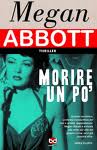
The Italian version

The Runaways at Crimespree Cinema


Megan is at the Turin International Book Fair this weekend. Her very kind Italian publisher has dined her and showed her the sights in Milan and Turn. If you're in Italy, stop by.

Thursday, May 13, 2010

THE SWIMMER


This 1968 film is on TCM Saturday (May 15th) at noon. If you have never seen it, it's a surreal adaptation of the John Cheever story, starring the great Burt Lancaster who wears a swimming suit for the entire film.

It's truly an original, directed by Frank Perry, who made some fantastic movies in the sixties and seventies, and is seldom mentioned today. What studio would make this film today?

Wednesday, May 12, 2010

NOIR CON


So who's going? I am trying to work my nerve up.
Big is scary but so is small. I want to see my hometown again though. Maybe I can offer a tour of my teenage hangouts. Oh, right, I don't drive. I wonder if Vic's Steaks is still there.

We'll have to take the H and S buses and the subway. Or the train. I bet you're getting excited.

Monday, May 10, 2010

What's In a Name?

Some people who write stories spend a lot of time thinking about names for their characters. (Or at least I do, how about the rest of you?)

In my current WIP, about a mother and a daughter-first their names were Iris and Ivy. People said they sounded too much alike, so I changed the mother's name to Lily. But pure as a lily-she wasn't.

So I decided I'd call her Eve but people said Eve and Ivy sounded too much alike.

So now their names are Eve and Christine. These names finally feel right and I am sticking with them.

As a reader, do you give much thought to character names? Do you ever say, I just don't believe in a villainous woman named Mary. Or a saintly woman named Eve. Or do you seldom think about names at all? I can't ever remember thinking a name didn't suit a character as a reader, but I sure think about it all the time as a writer.

What character names were perfect? Lew Archer, surely.

Luke Skywalker was such a great name that I know an attorney who changed his name to it. No kidding!

Saturday, May 08, 2010

Music in TV Shows


Few TV shows have ever foregrounded music like TREME is doing on HBO. But I remember a time when music was nearly absent on TV in dramas and comedies. When did it begin to pick up speed even as background? I remember Cosby using jazz quite a bit. I even remember The Waltons using country music now and then.

But what shows first made you look for the musical credits? When did it become so important in setting the mood? Anyone pinpoint it?

Friday, May 07, 2010

The Summing Up, Friday, May 7, 2010


Check out my review for Mid-August Lunch on Crimespree Cinema.


The Summing Up, Friday, May 7, 2010

Joe Barone, Gideon's Day, J.J. Maric (John Creasey)
Paul Bishop, Modesty Blaise, Peter O'Donnell
Craig Clarke, The Twisted Thing, Mickey Spillane
Bill Crider, Epitaph for a Loser, James T. Doyle
Mike Dennis, Backflash, Richard Stark (Donald Westlake)
Martin Edwards, Released for Death, Henry Wade
Ed Gorman, Bloodmarks, Bill Crider
Naomi Hirahara, Blanche on the Lam, Barbara Neely
Randy Johnson, Mum's the Word for Murder, Brett Halliday
George Kelley, Who Fears the Devil, Manly Wade Wellman
Rob Kitchin, Roseanna, Maj Sjowall and Per Wahloo
Steve Lewis, The Legion of Time, Jack Williamson, Into the Slave Nebula, John Brunner
Masters of the Maze, Avram Davidson
Evan Lewis, The Living Shadow, Maxwell Grant (Walter Gibson)
Brian Lindenmuth, Mall, Eric Bogosian
Todd Mason, The Real People, Algis Budrys, Ghost Breaker, Ron Goulart
James Reasoner, A Great Day for Dying, Jack Dillon
Kerrie Smith, Slight Mourning, Catherine Ayrd
Brian Solomon, The Case of the Yellow Mask, Robert J. Hogan
Hannah Stoneham, Unicorn Sisters, Ursula Holden
Kevin Tipple, Antler Dust, Mark Stevens

Friday's Forgotten Books, May 7, 2010


Brian Solomon is a an editor by day and prolific blogger by night. In between, he somehow manages to be a husband and father, and maintain an idyllic home in suburba
n Connecticut. He is the author of Standard of the Day, a blog/labor of love in which he spotlights different selections from the Great American Songbook. He is particularly fond of the work of Cole Porter and Johnny Mercer.


The Case of the Yellow Mask
By Robert J. Hogan

This was the third of only seven novels published in the pulp series The Mysterious Wu Fang during late 1935 and early 1936. As with all the old-school pulps of the 1920s-1950s, it was released on newsstand in a paperback format slightly larger than the mass market paperbacks of today, yet smaller than a magazine; and printed on cheap, newspaper stock.

The series is also notable for being one of the only ones to ever star a villain, and not a hero like The Shadow or Doc Savage. And although a blatant knock-off of Sax Rohmer's Fu Manchu character, Wu Fang is nevertheless imbued with a tantalizing readability thanks to the snappy, action-packed prose style of Robert J. Hogan, best known for his war series G-8 and His Battle Aces.

The Case of the Yellow Mask tells the story of Wu Fang's sinister plot to acquire a mask that will give him the ability to control men's minds. Only three men, Jerry Hazard, Val Kildare and young Cappy have what it takes to stand in his way and foil his dastardly plot. Along the way, they travel halfway around the world, leaving a trail of dead bodies and near-death experiences in their wake. The cover is rendered by Fu Manchu artist John Richard Flanagan, and epitomizes the coded sexuality so often present in the pulps as well (it also prefigures a scene in that ultimate cinematic pulp tribute, Indiana Jones and the Temple of Doom.)

I first came across The Case of the Yellow Mask in reprinted form as part of Adventure House's High Adventure series, and was immediately cast under the spell of the pulps. I became so fascinated by the Mysterious Wu Fang, in fact, that I even ventured to New York's Chinatown, just to check out the address described in the book as being the crime lord's secret headquarters. (Although the building did look remarkably as described, it was by this point a Chinese fast food restaurant...)

The Case of the Yellow Mask is pure lowbrow fun in the grand pulp fiction tradition, filled with lurid descriptions of politically incorrect henchmen, heavy handed action sequences, lightning fast dialog and a never-ending supply of thrills and adrenaline. Hogan himself was reportedly less than proud of his work on Wu Fang, but I, for one, found it impossible to put down. Not only that, but it sparked a lifelong love affair with pulp novels that continues to this day.

BACKFLASH
by Richard Stark (Donald E Westlake)
(Yes, the cover really does cut off the publisher’s name at the bottom)

Review by Mike Dennis, 2010


"We live and learn." That's what Parker says to an adversary immediately before shooting him point blank in the eye.They don't come much tougher than Parker, and he's his usual hardass self in the muscular 1998 novel, Backflash, by Richard Stark.

After walking away from a heist with $140,000, he plans to take it easy for awhile, laying up with Claire, his longtime lover, in someone else's summer cottage amid the woods of upstate New York. But of course, he can't stay out of action for long, or there would be no series.

He's approached by Hilliard Cathman, former state government employee turned consultant, to do a job. It seems a new gambling boat will soon be unveiled, slated to cruise along the Hudson River. Cathman has the blueprints of the boat, as well as security details, schedules, locations of the safes, and all the things a man would need to hijack a cash-bloated gambling ship. The only thing missing is the team to do it.

Problem is, Parker isn’t sure he wants to take this job. It seems the only way to rob the ship is to do so while it’s cruising. That means getting back to shore with the money, and that means too much exposure in the middle of the river. He’s also suspicious of Cathman himself. Why would this guy, an obscure lifelong bureaucrat, suddenly want to organize a major armed robbery?

Of course, Parker eventually agrees to the job, but not before he figures out an extremely devious solution to the money/exposure problem. He rounds up his usual assortment of criminal types and they set about plotting the robbery in a very matter-of-fact, professional manner. But he’s still plenty uneasy about Cathman. Stark’s pacing in these Parker novels is always letter perfect, with the plot only slowing down long enough for the character to catch his breath or to contemplate his next move. These moments are usually tinged with suspense, as in a tense scene on the ship immediately before the robbery.

The entire novel takes place in Albany and other smaller towns along the Hudson, and Stark gives the reader an excellent sense of place. Although these locales aren’t that far away from New York City, they still feel like the middle of nowhere, which is exactly how Parker wants it. Less of a problem with witnesses that way.

Backflash is an excellent entry in the long-running Parker series. Beneath all the planning and execution of the heist, there’sa convincing unapologetic defense of the code of criminal justice as meted out by criminals.

Ed Gorman is the author of Ticket to Ride, Ghost Town and numerous fine books of fiction. You can find him here.

Blood Ma
rks by Bill Crider

Serial killer novels have to run a close second to vampire novels in popularity. And serial killer novels have been with us at least since the grandaddy break-out of The First Deadly Sin by Lawrence Sanders back in the early Seventies.

Tiresome as the sub-genre can be (though there are always good ones; the John Lutz books for Kensington are particularly notable) one of my favorites was first published in 1991.

Nine women are savagely murdered. They don't seem to have anything in common. Police psychologist Dan Romain teams up with a investigator named Howland to find the connection that will lead them to the killer.

Crider alternates chapters between the killer, the investigators and Casey Bruckner, a newly divorced mother who's moved to Houston seeking a teaching job. They live in an apartment complex that allows Crider to demonstrate his skills with creating people. If you've ever lived in one of these complexes you know the neurotic responses people have to being stacked on top of each other, especially people with dissimilar interests, tastes and values. One of whom just might be the killer. The ying and yang of sitting around the apartment swimming pool allows Crider to shine.

The police procedural aspects of the novel are believable throughout. No Zounds! discoveries. No faux tough guy talk. And a close examination of a type of killing that is almost too violent to contemplate for very long.

Bill Crider has had a long and successful career working primarily in mysteries but also excelling in horror and westerns. This is Crider at the very top of his form and making the serial killer form all his own. It's a book you'll remember for a long, long time.

And if you don't believe me listen to what Kirkus said at the time: "A striking addition to the serial- killer subgenre--gory, repugnant, and gripping to its last ugly reverberation. "

Joe Barone
Paul Bishop
Craig Clarke
Bill Crider
Martin Edwards
Naomi Hirahara
Randy Johnson
George Kelley
Rob Kitchin
Evan Lewis
Steve Lewis
Brian Lindenmuth
Todd Mason
James Reasoner
Kerrie Smith
Hannah Stoneham
Kevin Tipple

Wednesday, May 05, 2010

First Wednesday Book Review Club


You can find more book review right here on Barrie Summy's blog.


ROGUE MALES, Craig McDonald


I actually don't read a lot of non-fiction, but here I am writing about a non-fiction book two months in a row.

Craig McDonald came to my attention when he did an interview with my daughter, Megan, for a mystery magazine (it is now available with other ones on his website, I think). I was impressed with how knowledgeable he was, how much he knew out about her through her writing, how well-prepared he was to respond to her answers and not just pose another unrelated question, how he looked for ways to make his subject shine, how the interview came off like a couple of people chatting in a coffee shop.

McDonald is also the author of several terrific novels himself, most recently PRINT THE LEGEND. His novels have great historical and psychological depth, showing a skill for research that he brings to this project as well. I am hoping he will write another book of interviews called FEMALE OF THE SPECIES or something like that.

(Art of the Blood, 2006) was McDonald's first foray into a collection of interviews.

ROGUE MALES looks at sixteen men who set the bar awfully high: James Crumley, Elmore Leonard, Daniel Woodrell, Alistair MacLeod, Andrew Vachss, James Ellroy, Max Allan Collins, Stephen J. Cannell, Craig Holden, Pete Dexter, Randy Wayne White, Lee Child, Tom Russell, Kinky Friedman, James Sallis, Ken Bruen.

These are some of my very favorite writers and McDonald managed to find the essence of each one. No two interviews are alike because he is able to frame his questions to fit the writer, to find out what makes them the writer they are. There is no standardized set of questions up his sleeve.

You can sense how comfortable each writer is with both him and with what he asks them, how they "get" that McDonald "gets" them. This rapport makes for wonderful interviews. You won't come away liking all of these writers--that isn't the point. But you will understand why they write the books they do, what writing is like for them-the process, the ups and downs, their themes and obsessions. And you will want to read their books if you haven't already. Isn't that the point?

I highly recommend both books of essays and the three novels McDonald has written. You won't be disappointed in any of them.

Tuesday, May 04, 2010

Justified


R.I.P. Georgy Girl.


Watching the best episode so far of JUSTIFIED, I was reminded of Elmore Leonard's ten rules for writing crime fiction.
Justified, based on his work and produced by him, is such a good example of why most of these rules make something work. Not all apply to a television show, but most of them have some equivalent. Last week's episode especially made use of #10.


Ten rules for writing fiction

Elmore Leonard: Using adverbs is a mortal sin

1 Never open a book with weather. If it's only to create atmosphere, and not a charac­ter's reaction to the weather, you don't want to go on too long. The reader is apt to leaf ahead look­ing for people. There are exceptions. If you happen to be Barry Lopez, who has more ways than an Eskimo to describe ice and snow in his book Arctic Dreams, you can do all the weather reporting you want.

2 Avoid prologues: they can be ­annoying, especially a prologue ­following an introduction that comes after a foreword. But these are ordinarily found in non-fiction. A prologue in a novel is backstory, and you can drop it in anywhere you want. There is a prologue in John Steinbeck's Sweet Thursday, but it's OK because a character in the book makes the point of what my rules are all about. He says: "I like a lot of talk in a book and I don't like to have nobody tell me what the guy that's talking looks like. I want to figure out what he looks like from the way he talks."

3 Never use a verb other than "said" to carry dialogue. The line of dialogue belongs to the character; the verb is the writer sticking his nose in. But "said" is far less intrusive than "grumbled", "gasped", "cautioned", "lied". I once noticed Mary McCarthy ending a line of dialogue with "she asseverated" and had to stop reading and go to the dictionary.

4 Never use an adverb to modify the verb "said" . . . he admonished gravely. To use an adverb this way (or almost any way) is a mortal sin. The writer is now exposing himself in earnest, using a word that distracts and can interrupt the rhythm of the exchange. I have a character in one of my books tell how she used to write historical romances "full of rape and adverbs".

5 Keep your exclamation points ­under control. You are allowed no more than two or three per 100,000 words of prose. If you have the knack of playing with exclaimers the way Tom Wolfe does, you can throw them in by the handful.

6 Never use the words "suddenly" or "all hell broke loose". This rule doesn't require an explanation. I have noticed that writers who use "suddenly" tend to exercise less control in the application of exclamation points.

7 Use regional dialect, patois, sparingly. Once you start spelling words in dialogue phonetically and loading the page with apos­trophes, you won't be able to stop. Notice the way Annie Proulx captures the flavour of Wyoming voices in her book of short stories Close Range.

8 Avoid detailed descriptions of characters, which Steinbeck covered. In Ernest Hemingway's "Hills Like White Elephants", what do the "Ameri­can and the girl with him" look like? "She had taken off her hat and put it on the table." That's the only reference to a physical description in the story.

9 Don't go into great detail describing places and things, unless you're ­Margaret Atwood and can paint scenes with language. You don't want descriptions that bring the action, the flow of the story, to a standstill.

10 Try to leave out the part that readers tend to skip. Think of what you skip reading a novel: thick paragraphs of prose you can see have too many words in them.

Monday, May 03, 2010

Flash Fiction Stories: Sweet Dreams


Here are links to the stories of some fine writers who took the challenge to write a flash piece of 1000 words using a redhead in a blue dress, an eatery of some type, and the song Sweet Dreams. Some of these may take a while to go up, but most are as I post this.
Mine and R2's is at the bottom. Thanks to all.

I FORGOT MY PASSWORD FOR POWDER BURN FLASH " but great stories, Jimmy, Randy and Cam."-
Thanks to Aldo and Gerald for their help in this.

These some terrific stories.


Ron Phillips "On the Sly"

Eric Peterson, "Electra Blue"

Cormac Brown, "Type"

Fleur Bradley, "Strapped"

Sandra Seamans, "Repeat Offenders"

Loren Eaton, "Sum"

Gerald So, "Bad Timing"

John Weagly, "Friday Night with a Femme Fatale"

Kieran Shea, "Bulls"

Katherine Tomlinson, "Dude Looks Like a Lady"

Kassandra, "Beadie and the Blesser"

Richard Prosch "A Paradigm is 20 Cents"

Evan Lewis, "Skyler Hobbs and the Sweetest of Dreams"

Paul Brazill, "Close Up"

Cameron Ashley, "Super Enka Redhead Blues"

Zipper "Looking for Somthing"

Deegan Stubbs

R2, "What He Deserved"

Sandra Scoppettone "Yesterday"

Christopher Grant, "Family"

Wellesfan "Cool Blue"

Kathleen A. Ryan "To Go"

Dana King "Lily in Blue"

Steve Weedle "Blue Dress"

Jimmy Callaway "Everyone's Looking for Elisa Ortiz"

Rob Kitchin "Sweet Dreams"

Keith Rawson "Taking Out the Trash"

David Barber "In an Instant"


"A Good Day for Redheads"

by Patricia Abbott


It took me several foggy-headed seconds to realize the redhead standing in the doorway wasn’t my ex. She was a dead ringer for Adeline circa 1985 though: same body type, same spiky hair, identical vague look in her eyes. Dressed in a shimmery blue dress, the girl couldn’t have been more than twenty-five. I turned away quickly, but her eyes had already latched onto mine, zeroing in the same way Adeline once had.


Was it the music that made me think of her? Sweet Dreams. Who was that redhead who sang it? I turned back to my third Bushmills and shook my head. A good day for redheads—always my weakness.


I felt a tap on the shoulder, but smelled her perfume first. Spicy and sharp, a concoction for sirens.


“Hey, Mister.” The scent rushed up my nose, and my pulse quickened. Damn, if I could help myself.


The bartender, hammering at some ice, looked up and frowned. I got the message—the redhead was trouble. I bore down on my drink.


“Mister,” she said again. Her voice was throaty, irresistible.


A tug on my sleeve, and I turned without thinking. Pretty much how I did everything after a few drinks. Up close, she was even younger. I straightened up a little, “Yeah?”


“Wonder if you’d take a look at my car?”


“I’m no mechanic, Miss.” Her eyes looked silvery-green in the dim light. Fox-like.


“Worked fine yesterday, but now it won’t start.”


“Kimmy, call Bud at the Sunoco!” the bartender said. “This guy’s busy.”


“Don’t look busy,” she said, catching my eye again. “You busy, Mister?”


The bartender sighed, a sigh that said I couldn’t handle Kimmy. Made me stand a bit faster. Never could resist a siren call. “Don’t say I didn’t warn you.”


“Name’s Doake if you don’t see me again,” Smiling weakly, I pushed through the door.


“Did you say Dope?” he shouted after me.


Door slammed shut. “Where’s your car, honey?” I asked, blinking in the fierce light. A mosquito buzzed nearby and I slapped on my hat. Seemed to me mosquitoes will hang around all day waiting for a hairless head.


“Out at my house in Shelterville.”


“You walked into town? Why not call a mechanic like the bartender said?”


“I just need a jump.”


I’ll give you a jump alright, I thought to myself. Truth be told, I was thinking of Adeline again—remembering those days when jumping didn’t hurt my knees. But instead I drove Kimmy out to her place. A lop-sided house sat back in the trees, its steps a half-foot off the ground and the door flung open all wild-like. Someone had burned garbage not long ago and my nose stung with it.


“Can see why it won’t start,” I said, peering into the window of an old Escort. A guy heavier than me was slumped over the wheel and dashboard, dressed in a suit that didn’t look like it came from Value City. “Ever seen him before?”


“Sure,” she said. “Mayor Parker. Came out last night for a pick-me-up”


“Looks like he was disappointed.” I opened the door and pried him loose. A hole bullseyed his middle. I looked around. “He walk out here? Lots of people walkin’ in Shelterville, huh?”


She narrowed her foxy eyes in contemplation. “Look, I gotta get to work, Mister. I got a day job at Safeway’s. Can you get him outta there?”


“Well even if I do, Kimmy, I doubt you can just drive off to work. We got us a murder here.” I noticed traces of blood on the gravel. “Looks like someone dragged Mayor Parker from elsewhere.”


I began following the drops. The blood stopped just east of a large hole. I peered down. It was no natural hole. Someone had back-hoed it into being—its sides were sloped, its base cavernous. At that bottom, a huge fellow sat on a stool. At least, I think there was a stool beneath his deep stratums of fat. Had the same red hair as Kimmy—maybe a tad more orange in it. “Who’s that?”


“That’s my brother, Tiny,” Kimmy said. Tiny grinned, showing me his wall-to-wall choppers. Couple or more were missing, but I’d bet it didn’t slow him down much.


“What’s he doing in that hole?”


“Iffin Tiny gets outta there, he does bad things,” she told me. “Stays down there ‘cept when I throw ‘im that chain.” She nodded toward a chain fastened to a huge metal anchor. The links in that chain would circle a bigger neck than Tiny’s.


“You throw that chain down there last night?”


She nodded. “But it wasn’t Tiny killed Mayor Parker. Tiny just tore up his car a little. Drove it into a ditch. Chased him around some. Had hisself some fun.” Tiny roared his approval, and I stepped back from the hole.


“Tiny’s pretty hungry now. Been waiting a long time for his dinner.” She paused. “That’s where you come in, Mister.”


“Who killed the Mayor,” I asked, mesmerized with the chain of events despite my good sense.


“I did. I blew that hole clear through ‘im.”


“Why d’ya kill him, Kimmy?”


“’Cause I needed to get Tiny his dinner.” I felt her hand at the small of my back, no more than a whisper of heft to it. “Seemed like a good way to get some’un out here. Been known to work before.” She shoved, and I slid down into the hole like a Finn on skis.


“Let me get this straight,” I shouted, once I picked myself up. “You murdered that obese mayor so you could put him behind the wheel of your car, come into town, tell me it wouldn’t start, then drag me out here for dinner.” Could this be her reasoning? “Why didn’t you just feed Mayor Parker to Tiny?”


“Tiny’s not overly partial to government handouts. Ain’t that right, Tiny?”


Tiny roared, his mouth two inches from my ear.


Saturday, May 01, 2010

The best first scene in a movie


TREME got me thinking about this.

What was the best first scene you remember in a movie?

I'm going with JAWS. It scared me to death.

P.S. I need titles and places for Monday. I'm missing a lot.