Sunday, April 21, 2013

FIVE YEARS OF FORGOTTEN BOOKS: DAY 21


Quinn Cummings is the author of Notes from the Underwire: Adventures From My Awkward and Lovely Life. She can be ound blogging at quinncummings.com and she can be found on Twitter as Quinncy. Mostly, she can be found driving her daughter to extracurricular activities while also drinking tea. (from 2010)
The Portable Dorothy Parker
I don't know why short stories have withered as an art form. Really, they couldn't be more modern. All the pleasure of eavesdropping on the table behind you, only with a good editor. In the modern arena where we're all gladiators competing to see who has the shortest attention span and the most to do, what could be better than a beginning,a middle and an end in the time it takes the plumber to snake the bathroom drain?
And if you're going to read short stories, you're going to want to read Dorothy Parker. Even if you don't think you know Dorothy Parker, I'll bet you do. Men don't make passes...
If you just thought, ...at girls who wear glasses, you know a little Dorothy Parker. If you're a bookish type (And we know you are; you're reading this) you probably know she wrote for TheNew Yorker and the Constant Reader, was the Clever Girl in Manhattan in the 20's and 30's, was the Hermione Granger at the Algonquin Round Table.
Some of her stories are funny. Some are snorting-into-your-sleeve funny; my mother gave me "The Waltz" to read when I was eleven and I can't think of a better gateway drug to Ms. Parker. "From the Diary of a New York Lady" gleefully exposes the stupidity and lack of self-awareness of a society dame, some primordial Paris Hilton. But while I've never turned down Dorothy in high humor, the stories which have stayed with me were her more serious stories, which inevitably circle around how people, knowingly and unknowingly, hurt one another. Her serious short stories have the precision of Flaubert and the scrupulous attention to detail of an autopsy. I don't wish people pain, so I'm not pleased Ms. Parker had a well-documented difficult romantic life. Having said that, there have been times in my dating life where I thought back to some moment or sentence from a story of hers and thought, "Oh. That's what she was talking about" and felt oddly mollified if not exactly happy. Her stories are clear and bright, very much of their era but also timeless. They are excellent company which fits in your purse.
And here is my copy of her book, which I've had since I was twelve years old. If use=love, this is a most-loved book.
5-2 Poetry: EATING PEARS by Kim Welliver
Kim Welliver

They glowed
moon-pale in the dim barn-light
The Fall River house was weighted,
freighted with heat:
a stale dusty scent
of submission, like wool or beeswax,
like vinegar rubbed
into window panes.
The pears were thin-skinned,
lush. I dug my teeth in.
Father, granite-eyed, said
"Lizzie, there is no problem
one can’t crush, if one
but has the will."
Juice streamed, and dripped,
dappled my face and throat.
The house was a flint cinder
beneath the eyelid.
A constant irritant
broken only
by bright flares
of pain.
The bottleflies, blue black noise,
came, drawn
to the sticky-rich spatter.
Carefully, I bathed,
then went in
to find
Father.
Gee, this is a perfect poem for me. First of all, I have always found the Borden murders fascinating. I remember reading several books about them years ago and watching Elizabeth Montgomery play her in a TV movie. (In the movie, she murdered them naked to prevent blood splatter!).
In Ms. Weller's poem, Lizzie claims to be eating pears when her parents die. In Michigan, it would be hard to find a decent pear in August, but maybe Fall River has some earlier ripening trees. Doesn't this poem capture the idea of pears perfectly? And the pale yellow of a pear would glow in the dark barn. The stickiness of the fruit continues throughout the poem-could it be anymore sensual? Juice streaming, sticky-rich splatter. The bottleflies drawn to it.
But Weller puts the sensuality of these scenes behind when she has Lizzie bathe, almost anointing herself in preparation for her deed, and then goes inside to murders her parents. Perfect.
Here's Kim reading it.
http://www.youtube.com/watch?feature=player_embedded&v=9dX351PpswY
You can check out other stops on the month-long Crime Poetry blog tour here. And don't forget to check out The 5-2 for all your unexpected crime poetry needs...or perhaps even your expected crime poetry needs. For another poem about Lizzie, look here.
Saturday, April 20, 2013
Suzi Quatro
Suzi came home to Detroit last night to be awarded a Detroit Music award. Shouldn't she be the second Q in the Rock and Roll Hall of Fame?
Your Favorite Bill Pronzini Novel?

What is the best one in your opinion?
Friday, April 19, 2013
Five Years of Forgotten Books: Day 19

Jeff Meyerson
Alvin Toffler, Future Shock (Random House, 1970)
The terms "future shock" and "information overload" are commonplace now, but in 1970 when T offler's book came out it had a pretty big impact. As Wikipedia puts it Toffler's shortest definition of future shock is a personal perception of "too much change in too short a period of time".
 offler's book came out it had a pretty big impact. As Wikipedia puts it Toffler's shortest definition of future shock is a personal perception of "too much change in too short a period of time".
Also Toffler argues that society is undergoing an enormous structural change, a revolution from an industrial society to a "super-industrial society".
This change will overwhelm people, the accelerated rate of
technological and social change leaving them disconnected and suffering
from "shattering stress and disorientation."
I don't think any of us who had reached maturity (at least chronologically) by 1970 could argue that the changes
since then have not been disorienting, to say the least. Just think in
terms of popular culture - music going from records to tapes to CDs.
The revolutions brought on by the advent of VCRs, DVDs, DVRs and especially hundreds of channels of television and the "24 hour news cycle" have arguably changed the world.
I
worked at a job in the late 1960's where we often had to go down to the
"computer room" where there was an enormous, room-sized "thing" turning
out computer programs we needed to do our work. In the days where most people seem to have a personal computer the changes are amazing to behold. And please do not even get me started on cell phones.
As I remember it, Future Shock was also one of the first books whose mass market edition came out in six different colored covers, but I can't swear to this.
All in all it would be interesting to reread this book, which had a major impact on me at the time, and see how well Toffler did in predicting where we are now from where we were then.
Friday's Forgotten Books, Friday April 19, 2013
Pardon any gaffes. New computer


(Review by Deb)
Not long ago, on his Pop Culture Magazine blog, Bill Crider posted a link to a list of 50 classic works of science fiction. Not
being an avid science fiction reader, I was pleasantly surprised to see
that I’d read about 20 of the books on the list; but this meant that
there were almost 30 that I had not read. I decided to rectify the situation, if only in part, by reading some of the books that seemed to be the most intriguing. I
started with this 1966 work of futuristic dystopia, which is perhaps
most famous for being the source material for the 1973 Charlton Heston
movie, Soylent
Green.
Oddly enough (or, then again, perhaps not), the book Make Room! Make Room! most reminded me of is Tom Wolfe’s classic of the 1980s, Bonfire of the Vanities. True,
there are lots of differences, but at a basic level both books involve a
group of characters from various social and ethnic backgrounds trying
to get-over in a wild bustling New York City that is forever on the
verge of anarchy. Both books
also feature deaths that are being investigated by law enforcement—and
in both books the reader has the advantage over the police because,
unlike the police, the reader knows immediately how the death occurred
and who caused it.
In
the year 1999, New York City (like the rest of the world) is
overheated, overcrowded, plagued by unemployment, water shortages, and
chronic food instability which leads to frequent protests, and even
riots, by broke, thirsty, hungry, hot, and malnourished citizens, riots
that can only be kept in check by the heavy-handed use of official force
by the police department. One
of the members of this police force is Andrew Rusch, a decent enough guy
but, like everyone else in the book, not above using any advantage he
has—in his case, a police badge—to obtain something others do not have. (I
found it best not to think of the ruggedly handsome and athletic
Charlton Heston as I read Harrison’s descriptions of Rusch’s pasty-white
skin, bowed legs, visible ribs, and starvation-swollen belly.) Rusch
shares a tiny, subdivided apartment with Solomon “Sol” Kahn, an elderly
man whose ability to maintain a small window garden and tinker with
mechanical objects has permitted the two men to live with some moderate
creature comforts. Due to Sol’s
ingenuity in growing herbs and maintaining a working oven, the regular
New Yorker diet of seaweed crackers, oatmeal, and very occasional
soybean and lentil (“soylent”) steaks are transformed into something
flavorful—and his skill with distilling his own alcohol is an added
plus.
Across
town, in a luxury apartment with running water, air conditioning, and
an uninterrupted supply of electricity, Shirl Greene lives with “Big
Mike” O’Brien, a political mover and shaker. In
a world where only the wealthy and well-connected have access to basic
staples and comfortable lives, beautiful women like Shirl do what women
have always done in order to survive (the book’s gender roles and
expectations are solidly mid-20th century).
In
a situation that is the opposite in every way from Shirl’s,
Chinese-American Billy Chung lives on the waterfront in a cluster of
abandoned, disintegrating vessels that function as a forgotten refugee
camp for Taiwanese exiles (like gender roles, the book’s politics are
clearly mid-1960s). It is Billy’s lucky grab of a box of soylent steaks
during a food riot that sets the plot in motion—although for long
periods of time, Billy is an almost forgotten character. Sale
of the steaks on the underground market leaves Billy with enough money
to buy the license he needs to get a job as a message delivery boy (with
paper being another item that is always in short supply, messages are
delivered on chalkboards). On his first day on the
job, Billy delivers a message to Big Mike’s apartment. Billy
observes the luxury in which Mike and Shirl live; his sharp eye also
notes an overlooked open window—the method he later uses to gain access
to the apartment—and the plot kicks into high gear.
The
day after the message delivery, Shirl returns home from shopping to
discover Mike’s corpse on the floor of the apartment, a crowbar lodged
in his temple. Andy Rusch is the cop chosen to investigate the murder and thus comes into Shirl’s orbit. Because
of Mike’s political importance, Andy’s superiors are pushing him to
solve the crime and for a while it’s assumed that Mike’s death was the
result of an organized crime hit. Andy
spends long hours going through fingerprint files (he has found one
good print on the crowbar) and continues to return to Mike’s apartment,
where Shirl is still living. Soon, Andy and Shirl are having an
affair and eventually, when the lease on Big Mike’s apartment runs out, Shirl moves into Andy’s cramped quarters. We
never really learn Shirl’s motivation for moving in with Andy—does she
truly love him? Or is she simply looking for a port in the storm until
she can connect with a richer, more powerful man?
At first, Shirl and Sol don’t get along very well, but eventually they become friends. In
this way, Sol becomes the novel’s version of Austin Powers’s Sir Basil
Exposition: Explaining to Shirl, and thus to the reader, how the world
got into the state it’s in—mainly due to lack of leadership in the area
of birth-control. Take it away, Sol—
“I
blame the stinking politicians and so-called public leaders who have
avoided the issue and covered it up because it was controversial and
what the hell, it will be years before it matters and I’m going to get
mine now. So mankind gobbled in a
century all the world’s resources that had taken millions of years to
store up, and no one on the top gave a damn or listened to all the
voices that were trying to warn them, they just let us overproduce and
overconsume, until now the oil is gone, the topsoil depleted and washed
away, the trees chopped down, the animals extinct, the earth poisoned,
and all we have to show for this is seven billion people fighting over
the scraps that are left, living a miserable existence—and still
breeding
without control.”
Replace
the concept of birth-control with the idea of global warming and this
paragraph is remarkably apt some 46 years after it was written.
And
so the plot moves forward as both water and food get harder to find,
the population continues to explode, and shelter is found in the most
unlikely places—such as inside the rusted hulks of long-abandoned cars. Billy
Cheung moves from one resting spot to another, trying to elude the long
arm of the law; Andy pursues his quarry with Javert-like persistence,
less for his own interest than because of pressure from above. Meanwhile, Sol is seriously injured in a riot and Shirl’s’ relationship with Andy deteriorates.
Incidentally, if you’re waiting for the big reveal from Soylent Green,
with Charlton Heston’s frantic attempts to alert people as to the real
ingredients of the soylent steaks, you’re going to be disappointed; it
doesn’t happen in the book (neither does Edward G. Robinson’s elaborate
assisted-suicide experience, one of the movie’s great set-pieces). The
book is far more downbeat and pessimistic than the movie; deaths
continue, internal politics suddenly makes the solution to a murder a
hot potato that nobody wants to claim, hope dwindles, relationships end,
and the only thing certain is that circumstances will continue to
decline for everyone. Yes, it’s a downer, but an
interesting one. So if you’re looking for a book that got many facts—if not the underlying reasons--about the 21st century absolutely spot-on, Make Room! Make Room! is certainly worth checking out.
Ed Gorman,
Ed Gorman,
Lemons Never Lie, Richard Stark (Donald Westlake)
There are so many twists, turns, starts and stops in Lemons Never Lie by Donald E. Westlake as Richard Stark that the novel becomes a kind of crime picaresque filled with mugs, thugs, killers, victims and Parker's redoutable thespian friend, Alan Grofiled. There's also a lot of notably brutal violence.
The book begins with Grofield visiting Vegas to partake of a robbery that will give him the money to survive one more season in his summer theater. Grofield, in case you didn't know, is a "purist" when it comes to acting, his chosen profession. No movies or television for him. Stage only. But it takes his other profession, robbery, to support his theater. Only his long-supportive wife understands how hard he works at both careers.
A man named Myers has set up a robbery plan and has called in amateurs to help him. With the exception of a man named Caithcart and a dangerous man named Dan Leach, the group is a zero. As is Myers. Now Myers, who speaks with a boarding school accent, is one of the great villains in Westlake's world. He is a true sociopathic murderer; a serial killer of a kind. Grofield and Leach decide against working with him.
This is the set-up. There's an early twist that lets us know just how nasty Myers is. And then the various adventures start. Grofield resembles his friend (and fellow robber) Parker only occasionally. For instance, he loves chit-chat, feels sorry even for a guy who tries to kill him and lets another live that (as reader) you know should be killed on the spot, slowly and joyously.
There's also a lot of witty humor. Grofield gets into the damnedest conversations with people. Once in a while you may even forget you're reading a crime novel. Westlake has a great time riffing on all the cliche exchanges you read in most crime fiction. At a couple of point Grofield starts sounding like a TV shrink.
Lemons Never Lie is Westlake at his very best. While there's a screwball comedy-feel to some of the misadventures, the unrelenting violence reminds readers that the Richard Stark is the master of the hardboiled. The masterful plotting, the wry way the genre cliches are turned inside out, and the earnestness and humanity of Alan Grofield make this a pleasure from page one to the unexpected ending.
Joe Barone, IN THE BLEAK MID-WINTER, Julia Spencer-Fleming
Les Blatt, MAKE NO BONES, Aaron Elkin
Brian Busby, Various works on La Corriveau
Bill Crider, THE GRAVEYARD SHIFT, Harry Patterson
Scott Cupp, HAVE SPACESUIT WILL TRAVEL, Robert Heinlein
Martin Edwards, Antidote to Venom, Freeman Willis Crofts
Curt Evans, A FRAME FOR MURDER, Kirke Field Mecham
Jerry House, MYSTERY SCENE READER
Randy Johnson, CHARLIE CHAN RETURNS, Dennis Lynds
Nick Jones, RIPLEY UNDER WATER, Patricia Highsmith
George Kelley, A KEY TO THE SUITE, John D. Macdonald
Margot Kinberg, THE PRECIPICE, Virginia Duigan
B.V. Lawson, WIDOW CHERRY, Benjamin Leopold Farjeon
Evan Lewis, COME EASY, GO EASY, James Hadley Chase
Steve Lewis/ L.J. Roberts, Billy Boyle, James Benn
Todd Mason. BOOKS BY and ABOUT COMEDIANS
Neer, MAIGRET LOSES HIS TEMPER, Georges Simenon
J.F. Norris, THE DEAD WALK, Gilbert Collins
James Reasoner, MARKHAM, Lawrence Block
Richard Robinson, SPACE TUG, Murray Leinster
Ron Scheer, THE LAND BARON, John Reese
Ron Scheer, STEVE OF THE BAR-G RANCH, Marion Reid-Girandot
Michael Slind, STALKING THE ANGEL, Robert Crais
Kerrie Smith, A MURDER OF QUALITY, John LeCarre
Kevin Tipple, KILLERS, ed, Colin Harvey
Tomcat, OCTAGON HOUSE, Phoebe Atwood Taylor
Rich Westwood, GREENMANTLE, John Buchan
Thursday, April 18, 2013
My Life in the Theater: A WHISTLE IN THE DARK, Tom Murphy
This shows scenes from several of his plays, but we saw A WHISTLE IN THE DARK at the Irish Repertory Theater in New York in 1989.
From Wikipedia because my memory is not good enough here. It does sound an awful lot like THE HOMECOMING.
A Whistle in the Dark is a play by Tom Murphy that premiered in 1961 and went on to be a West End hit. Murphy was twenty-five years old at the time.It tells the story in three acts of the climactic confrontation between Michael, the oldest of the Carney sons, and his father and brothers, a brawling, hard-drinking, criminal gang of Irish immigrants living and working in England. A powerful portrayal of tribal violence and the devastation it brings in its wake in spite of attempts to stand against it, it remains Murphy's best known and most performed play.
Five Years of Forgotten Books; Day 18


DONIS CASEY is the author of the award-winning Alafair Tucker Mysteries. The fifth Alafair Tucker Mystery, Crying Blood, will be published by Poisoned Pen Press in the spring of 2011. You can find her: (bio from 2010)
www.doniscasey.com
www.fatalfoodies.blogspot.com
www.typem4murder.blogspot.com
THE VIRGIN IN THE ICE: THE SIXTH CHRONICLE OF BROTHER CADFAEL by Ellis Peters
I have always loved historical novels. I’ve been a voracious reader since childhood, and would read anything I could get my hands on, but I would always choose a historical novel above any other genre. For me, a historical novel is like a cheap vacation. I love to go to a place and a time and live there for a while.
I discovered English author and scholar Edith Pargeter when I was in my twenties, and she quickly became one of my favorite historical novelists. The day came, of course, when I had read every historical novel of hers that I could find here in this country. Though I’m always happy to reread a good book, I did find myself hungry for any new historical dish by Pargeter. It didn’t take much research on my part to find out that under the pseudonym Ellis Peters, Edith Pargeter had created a fabulous series of historical mysteries featuring a Benedictine monk by the name of Brother Cadfael. The Brother Cadfael mysteries are set in Twelfth Century Shrewsbury, close by the Welsh border, during the long war between King Stephen and the Empress Maud for the English throne. Cadfael may be an elderly monk, but that doesn’t mean he’s innocent of the ways of the world. He gained all the skills necessary to untangle the knottiest mystery during his young manhood and middle age, when he served as a soldier and a sailor in the Crusades. There is little of human nature he hasn’t seen. And since he is also an accomplished herbalist, growing and mixing medicines for the Abbey, he is an expert on the properties of plants and poisons.
Each of the Cadfael novels is a fascinating read, but one of my favorites is the sixth, The Virgin in the Ice. This book stands out not just for its intriguing puzzle and indelible evocation of the Medieval English world, but because the reader learns much about Cadfael’s former life, and how the past has touched the present.
Two noble young people, seventeen-year-old Ermina and thirteen year old Yves, go missing, along with their companion and guardian, Sister Hilaria, following an attack on the city of Worchester by the Empress’ troops. The children’s uncle, newly returned from the Holy Land to serve as an officer in the Empress’ army, asks if he can be allowed to search for them in enemy territory, but the local Sheriff refuses permission.
Brother Cadfael is in the area, at the request of the head of the Priory of Bromfield, tending to a monk who had been seriously wounded in the fighting, and volunteers with several others to search for the children and their Benedictine nun companion. By chance, Cadfael finds the boy, Yves, sheltering from the blizzard with a forester. Yves tells him that they had been safe with a local lord during the battle, but his headstrong sister had run away with a suitor. Equally as impulsive, Yves had left Sister Hilaria at the manor and set out to find Ermina. As Cadfael and the boy are returning to Bromfield, they cross a frozen stream, where Cadfael spots the shadowy form of a woman’s body, frozen in the ice. Fearing that she is Ermina, he keeps his discovery a secret from Yves.
The next morning, Cadfael, his friend Deputy Sheriff Hugh Beringer, and a few other monks, chip out a block of ice containing the body and bring it back to Bromfield Priory, where they lay it in the chapel. As the ice thaws, Cadfael realizes that the young woman doesn’t fit the description of the missing Ermina. The mystery of the woman’s identity is solved when Yves tells Cadfael and Beringer that she is Sister Hilaria, whom he had left safe in their sanctuary. The nun had been raped and murdered, and because of some of the things he said while raving with fever, Cadfael fears that the wounded monk he is tending may have done it.
And where is Ermina? She has left her erstwhile suitor, who she has discovered is a cad, and arrives at Bromfield Priory, saved by an attractive young Syrian-born squire, who her uncle has sent incognito into the king’s territory to find the children.
What follows is a ripping tale of close calls, treachery, and narrow escapes. How seemingly unrelated events eventually weave together to create an amazing, but totally believable tale, is a testament to Peters’ skill as a story teller. She creates haunting images of winter; blizzards and wind like knives, cold stone castles, the beautiful young figure frozen in the ice beneath Cadfael’s feet. Her characters are capable of inhuman cruelty, as well as great acts of kindness and compassion, cowardice and heroism. Actions of a past long gone affect the events of the present, and change Cadfael’s life.
I had never had anything against mysteries, but neither was I a mystery addict in any sense of the word. But Ellis Peters’ Brother Cadfael mysteries rocked my reading world and inspired me to write historical mysteries of my own. Peters’ voice - the very way the books are written - evoke the times and the place with the language she uses. The character of Cadfael himself captured me. He is wise, tolerant, and world-weary, a man of his times. He has a true warmth, and by that, I don’t mean sentimentality or emotion, necessarily. I mean a deep humanity and heart that transcends even his formidable intellect. I want to spend time with him, and that is the secret of a successful fictional character. The setting, 12th Century Shrewsbury, is evoked so strongly that the reader comes away with the sense that she knows what it must have been like to live in that time and place. The Virgin in the Ice contains everything I love about historical novels, as well as a clever, thought-provoking, always surprising mystery.
What book written in the last five years will become a classic?

I am predicting LIFE AFTER LIFE. It has a big theme and it also is stylistically original. The characters are memorable and the writing pristine.
Closer to home for crime fiction fans, I am not so sure. Any favorites?
From Todd Mason: Borgen can be downloaded at various places. It is a Danish political drama that is critically acclaimed.
Meanwhile, MHz Worldview (the small US public tv network and incidentally the home-video label for the US release) streams a number of European crime-drama series on its own ticket:
MHz Worldview's schedule:
Wednesday, April 17, 2013
Five Years Of Forgotten Books, Stuart Neville
Stuart Neville's debut novel The Ghosts of Belfast will be published in
the USA by Soho Crime in October 2009. He will embark on a six city
American tour beginning mid October, so check www.GhostsOfBelfast.com for an
appearance near you. (bio from 2009)

Jack's Return Home by Ted Lewis:
Many a fan of cinematic crime will be familiar with Get Carter, the grim and
gritty Michael Caine vehicle first released in 1971. Jack Carter, the
brutal gangland thug, is perhaps Caine's most iconic role, and the movie is
widely regarded as one of the greatest ever to emerge from Britain. Fewer
will be acquainted with the novel that inspired the film, Jack's Return Home
by Ted Lewis, first published the year before.
While the adaptation by director Mike Hodges takes some liberties with the source, like relocating the action to Newcastle rather than the Doncaster area, it remains true in spirit to Lewis's classic tale of a mob enforcer who travels from London to his home town in the northeast of England to attend his brother's funeral. When he begins to suspect that his brother's
death was not an accident, things get ugly. Very ugly.
I'd been a fan of the movie for years, and when I finally found a copy of the original novel I couldn't wait to immerse myself in this glorious murk. A few pages in, however, and I was a little taken aback. While I was not yet a writer myself, I had dabbled, and had some sense of prose style. Ted Lewis's way with words was, shall we say, distinctive. The language was
angular, lumpen, sometimes awkward in its phrasing, often ungainly as sentences ran on and on, losing shape as they went. But there was something compulsive about the first person narrative; like a car crash, you couldn't look away.
When the violence came, this seemingly clumsy prose took on the shape of the cruelty it described. The act of inflicting injury on another human being became as ugly in print as it is in real life. And that's when it clicked. Ted Lewis's words were planted so firmly in the mind of the ruthless killer through whose eyes we saw this world that everything was filtered through
his perception. The descriptions of the urban landscape, and the people inhabiting it, were hard and unyielding because that was how the protagonist saw it. Soon the jagged sentences and bludgeoning violence took on a kind of brutal poetry as the author dragged me down with him into Carter's own private hell. It's a reading experience I'll never forget, and one that has
profoundly influenced my own writing.
It's a great shame that Ted Lewis's work is now largely forgotten. He was a brilliant crime writer and stylist comparable to the best of American authors, like James Ellroy, Elmore Leonard and James Lee Burke. He created the British school of noir fiction with a string of novels in the 1970s that still stand up today, if you can find them. Billy Rags is a particularly good read, and the two Carter prequels, Jack Carter's Law, and Jack Carter and the Mafia Pigeon, are interesting curiosities for fans of the original, even if they do rather smack of cashing in. If not for his death at the age of 42, Ted Lewis may have become the greatest British crime writer of
his generation. Now we'll never know.
I Get to Be a Star Today Too
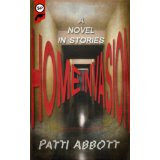
Thanks so much to Ron Scheer for featuring HOME INVASION on his terrific blog BUDDIES IN THE SADDLE today. It is the kindest review, and I am eternally grateful for it. It is much harder to get attention for an ebook than it was two years ago and so I so happy Ron read it and read it with such care.
You can find the review and interview right here.
You can find the review and interview right here.
What is Your Inspiration


A few weeks ago, we were lucky enough to be invited by Heidelberg College in Tiffin, Ohio to come and spend the day and night there where Megan was writer in residence for a day in this charming college town. We got there in late afternoon, after she had already taught a class, met with writers, met with a women's group and had a few meals with the faculty and students.
But we did get to hear her evening talk, which was on the theme of inspiration and how important it is in her writing. In it she traced what had inspired her in each of her novels. In DIE, it was a picture of a woman's back, in SONG it was a fragment of a movie where Jean Spangler had a moment on screen, in QUEENPIN it was her favorite movies from childhood, in BURY, it was the murder house itself, in END, it was pieces of music and a series of murders that happened in Michigan in her youth, and in DARE, it was the first thirty minutes of FULL METAL JACKET where the recruits go through basic training. In all of them, there were other touchstones, of course, but these were the basic jumping off points.
Can you trace a story or novel of yours to a specific inspiration? Many of my stories, especially in HOME INVASION, emanate from a childhood friend, now dead, who had a strange and conflicted life. They aren't exactly her stories but they come from her world--from the kind of incidents and people she attracted. And her face is often with me as I write.
What about you, writers?
Tuesday, April 16, 2013
Five Years of Forgotten Books: Day 16: MIlton Burton


Milton T. Burton was born and raised in East Texas. He has been variously a cattleman, college history teacher, and an aide to the Dean of the Texas House of Representatives. His third crime novel, "Nights of The Red Moon," is due for release from St. Martin's in December. (Milton Burton is now deceased)
Earth Abides
by George R. Stewart
This
magnificent and compelling book is a post-apocalyptic novel that burst
on the American scene to critical acclaim in 1949. No doubt inspired
by concerns over the advent of the atomic bomb and the coming nuclear
energy, it is the story of a small group of survivors trying to
maintain civilization in the wake of a pandemic that has killed off the
vast majority of mankind. Its author, George R . Stewart, was a
longtime English professor at Berkley with a scholar's interest in the etymology of place names. Among other books on the subject, his 1970 A Concise Dictionary of American Place-Names is considered the standard work in the field.
Earth Abides
follows the story of Isherwood "Ish" Williams, Emma, the woman he
takes as his wife after the plague has passed, and a small group of
survivors who gather around them as a community. With the best of
intentions, Ish, a scientist and intellectual, tries to educate the
subsequent generation in order to revive and perpetuate civilization.
Without giving away too much of the plot, I will only say that he meets
with less than success.
This
wonderful but sad work, now largely forgotten, was something of a
cause celebre in its time and garnered much critical praise. James Sallis, writing in the Boston Globe, said:
This is a book, mind you, that I'd place not only among the greatest science fiction but among our very best novels. Each time I read it, I'm profoundly affected, affected in a way only the greatest
art — Ulysses, Matisse or Beethoven symphonies, say — affects me. Epic
in sweep, centering on the person of Isherwood Williams, Earth Abides
proves a kind of antihistory, relating the story of humankind
backwards, from ever-more-abstract civilization to stone-age
primitivism. Everything passes — everything. Writers' reputations. The
ripe experience of a book in which we find ourselves immersed. Star
systems, worlds, states, individual lives. Humankind. Few of us get to
read our own eulogies, but here is mankind's. Making Earth Abides a
novel for which words like elegiac and transcendent come easily to
mind, a novel bearing, in critic Adam-Troy Castro's words, "a great
dark beauty."
One of the most interesting and insightful moments comes when, after many years
of marriage, Ish realizes that Emma is part black. With the vast bulk
of the human race gone, race had ceased to matter even to the point
that it was not noticed.
Also
interesting is that Stephen King cited this work as the inspiration
for his epic novel, The Stand. Indeed, the mood is almost the same in
both books.
At the end of Earth Abides, Ish, now ancient and a figure of legend---"The Last American" the young men call him---dies. But the
earth abides and the human race goes on. Esh's last thought is the
hope that the world young people build is better than the one destroyed
by the pandemic.
Get it and read it. You will not be disappointed.
Forgotten Movies: MEPHISTO WALTZ

I think this was probably a pretty junkie movie, but at the time I sort of liked it. Alan Alda plays a classical piano player who befriends a more famous pianist who's dying. He(Curt Jergens) turns out to be a satanist, who arranges to have their souls switch places at his death, so that he can be young again and continue to play.
Alda's acting style clashes with Jergen's. But I liked the book by Fred Mustard Stewart so I gave it some slack. Barbara Parkins and Jacqueline Bisset were suitably lovely but also lacked the acting chops to put this one across. No doubt inspired by ROSEMARY'S BABY's success, this one kind of flopped. Alda went on to more fame, but I never saw Parkins again.
Monday, April 15, 2013
Five Years of Forgotten Books: Day Fifteen, Derek Nikitas


Derek Nikitas is the Edgar-nominated author of Pyres. He has also published short stories in both literary and crime fiction publications.God is a Bullet, Boston Teran. (bio from 2009)
Never heard of Boston Teran. Nor God is a Bullet. Not till last year after my first novel, Pyres. Random readers made comparisons. I sought the book, saw a plot hauntingly similar to mine, noted further comparisons to Jim Thompson and Cormac McCarthy’s Blood Meridian. I shelved the book a while, afraid. What if it’s too similar? Will mine lose its thin cred, cease to exist?
But I gave in and turned the first page.
I relish mysteries that extend beyond the borders of the book. Who is Boston Teran? Beats me. He’s written four books, but no pictures, no appearances, few if any interviews. Hardboiled Thomas Pynchon. Or is he a Name Author slumming exquisitely under a likely pseudonym? I mean—Boston? Really? Or is he a spirit of the wastelands betwixt California and Mexico where his hardscrabble characters dwell? His prose would have you believe it—distant and biblical, stolen from some past century, yet suddenly intimate, as if it has possessed his characters.
The Teran Myth claims that much of God is a Bullet is based in fact. We are to believe there are real roving bands of psychopathic satanic outlaw drug smugglers razing their way through the So-Cal sand. Can we believe it? Perhaps. After all, this is Manson Land and Meth Heaven, Mojave Desert and Abandoned Route 66(6?). A sunburnt heart of darkness. But Teran will have us believe those devils are still going strong in 1999. I’d recount the plot, but the thrill of this book is the land and the voice that booms out of it. Teran’s.
Legend has it Teran roamed these lands, mining research, came upon a chap called the Ferryman, with all his obvious mythic connotations. Ferryman showed him the lay of the land and all its intricate traps. Ferryman haunts the book, quite literally. There was a search for an ex-cultist, a border crossing, some bad drug double dealing, sick and twisted cult activity. Supposedly Teran’s life remains in danger. Others have died. He’s in hiding, or already vanished like a latter day Ambrose Bierce. He’s left his papers behind for safe keeping—the true story behind the story of God is a Bullet.
Or am I reading this all wrong? Depends on your interpretation. Go to www.bostonteran.com to see for yourself.
Okay, so—plot. Young girl is kidnapped by a sicko band of satanic outlaws called the Left Hand of Darkness, led by Cyrus. Their depravity knows no bounds. Enter the girl’s cop father Bob Hightower, rescue mission ensues. His traveling companion is Case Hardin—young women, ex-junkie, ex-Left Hand cultist, one of the most viscerally compelling characters I’ve ever had to imagine the face of. She’s a force of violence and philosophy, the apotheosis of the noir mentality. Georgeous in her haggard, beat-down way. Plots twist, but the mission is the heart of the tale. No mind-blowing mystery, just humanity at its most desperate, amped up to eleven.
I see the similarities between Teran’s book and mine—but let’s face it, mine pales. I always wanted to write about cultists, but Teran actually did it. I wanted to push the reader to the limit of faith, but Teran pushed beyond. I wanted to bring my characters to life, but Teran’s were real before he first scrawled their names. He walks the line, ring of fire, all that. Takes risks I didn’t dare and pulls them off because he’s got the Prophecy.
His sacrifice? A diverse readership. This is no cozy mystery, no dashing thriller. This is noir with scabs and the whole spectrum of psychological scars. People will read it and say: too dour, too dark, too violent. It’s not a safe series mystery where the iconic detective solves a crime in which he has no personal stake, no lasting repercussions. This is a father on the hunt for his daughter and a woman facing her literal demons. There’s rape and trauma and forced heroin addiction and mutilation and all manner of deprivation and depravity. I don’t mean to say it’s torture porn like Hostel or Saw (which have their own merits, don’t get me wrong). Our allegiances lie with the good guys, and we want to see justice done. We’re not being asked to forget that love exists; quite the opposite. But the path to that destination is through hell.
Call me crass, but that’s how I do. Noir’s not a genre to be trifled with. It ought to have claws. It ought to reflect the true existential horror of some aspects of human existence, not flirt with it and make you feel all warm and fuzzy in the final act. You write real noir, you sacrifice book sales, probably. Lots of folks don’t want to go there, and I don’t blame them. But you write real noir and you write a certain Vital Truth, the kind that can only be found in risk-taking fiction. Boston Teran’s God is a Bullet stands testament.
Subscribe to:
Posts (Atom)