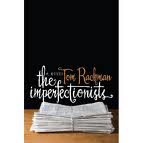
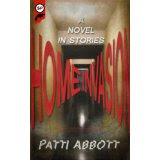
Forgive me for posting a few of Phil's books and this speech, but I wanted to share with you some details of Phil's career. You probably know him as my husband more than someone like this....This is from Dan Geller, the chairman of Phil's department the last decade of Phil's career.
In Memoriam: Distinguished University Professor Emeritus, Philip Abbott
Patti asked that I speak to Phil’s accomplishments as a scholar, and I consider it a privilege to do so.
My
first meeting with Phil was on the initial evening of my interview for
the Chair’s position at Wayne State Political Science in 2004. Although
we both received our doctorates from Rutgers University, Phil was ahead of me in the program and I knew him only by his reputation among
the graduate students. For my interview at WSU, the Dean of Arts and
Sciences invited Phil to the dinner with us at the top of the
Renaissance Center, and the reason was clear: to introduce me to the
most accomplished faculty member in the department. I joined Wayne
State as Chair of the Department of Political Science that August, and
one of the principal reasons for my decision was the opportunity to work
with a scholar of the stature of Philip Abbott.
Permit
me to describe just a portion of the exceptional research under Phil’s
name. Professor Abbott is the author of fourteen books and three edited
volumes. These works are among the most important in the fields of
Political Theory and the American Presidency. His book
Political
Thought in America is the leading text on American political theory.
Professor Abbott’s prodigious scholarly record also includes the
authorship of roughly ten chapters in edited collections. He published
over thirty-five sole-authored articles in such prestigious journals as
Perspectives on Politics, Polity, the Journal of Politics, Political
Research Quarterly, Political Theory, and Presidential Studies
Quarterly. This immense body of exceptional work established Philip
Abbott as one of the leading scholars in the discipline of political
science.
Phil received his Ph.D. from Rutgers in 1971,
began his work as an Assistant Professor at Wayne State in 1970 and was
promoted to Full Professor in 1980. Long recognized as one of the
nation’s foremost political theorists, Phil had a profound appreciation
for the relevance of his subject matter to contemporary life and its
value in illuminating real world ethical dilemmas. His works exhibited
uncommon sensitivity to such issues, setting him apart from others
working in the field of political theory. In the 1990s Professor Abbott
began to receive national recognition for his research in an additional
field -- the American presidency. It was in this area of
specialization that Phil’s reputation achieved even greater heights.
Five of his last eight critically acclaimed books analyzed the office
and role of the presidency, strong and weak presidents, untimely
presidential successions, and a masterwork on Franklin Delano Roosevelt.
In keeping with Philip
Abbott’s extraordinary record of scholarship, he was the recipient of
prestigious external awards, including his appointment by the American
Fulbright Association as the Thomas Jefferson Professor of American
Political Institutions at the University of Amsterdam. Professor Abbott
was also the recipient of every major internal award for scholarship
that Wayne State University confers. He was the first member of the
faculty of the Department of Political Science – and one of the few
faculty members in Liberal Arts – to be inducted into the Academy of
Scholars. He was the recipient of two Board of Governors’ Faculty
Recognition Awards, one for his book
Furious Fancies: American Political
Thought in the Post-Liberal Era , and a second for his two books,
Seeking Many Inventions: The Idea of Community in America and States of
Perfect Freedom: Autobiography and American Political Thought. Among
Philip Abbott’s other awards were a Gershenson Distinguished Faculty
Fellowship, a Distinguished Graduate Faculty Award, and the Michigan
Association of Governing Boards of Higher Education Award. In
recognition of his stellar accomplishments as a scholar, Dr. Abbott was
named Distinguished University Professor in 2005 – the highest academic
honor the University can bestow.
Philip Abbott’s
remarkable record extended as well to his teaching and service. He
directed over ten doctoral dissertations and over twenty-five Master’s
theses. Professor Abbott taught a large number of undergraduate and
graduate courses including the required doctoral seminar in Philosophic
Problems of Social and Political Inquiry. In recognition of the superb
quality of his teaching, Dr. Abbott received both the University’s
Graduate Mentor Award and the President’s Award for Excellence in
Teaching.
Lastly, Phil Abbott made huge contributions to
the governance of the Department, the College, and the University as a
whole. He served as an elected member of the Department’s Policy and
Personnel Committee and as its Chair for nearly twenty years. Professor
Abbott held the role of Assistant Dean and Graduate Officer of the
College of Liberal Arts for three years, served one or more terms on
over half a dozen College Committees, and in 2001 was named President of
the Liberal Arts Faculty Council. Dr. Abbott was an elected member of
the Academic Senate for over a decade, and he chaired the Policy
Committee of that body over a period of multiple years. In Toto, his
service to the University included membership on over thirty different
standing or ad hoc units and committees.
It is difficult to grasp how one man could have accomplished so much, in so many areas, in such a brief time.
In
closing, I wish to note that Philip Abbott’s monumental reputation as a
scholar and the status he conferred on the Department of Political
Science, the College of Liberal Arts and Sciences, and Wayne State
University is without equal. With his passing, the University and the
discipline have lost a great scholar, the Department has lost its
leader, Patti, Megan, Josh and Kevin have lost a husband, father, and
grandfather -- and I have lost a friend. But, for the sake of us all,
his magnificent works live on.
Daniel Geller
Chair
Department of Political Science