Monday, July 25, 2011

"HOW I CAME TO WRITE THIS STORY": Naomi Johnson


HOW I CAME TO WRITE THIS STORY

Naomi Johnson

A CORPSE BY ANY OTHER NAME (From the forthcoming anthology, PULP INK, Nigel Bird and Chris Rhatigan, Editors.)

I'm not a writer by nature. Writing is hard work, and I'm indolent to a shocking degree. I don't often feel compelled to put in long hours at the keyboard. Not even short hours. Ideas don't ever have to elbow each other out of the way to get my attention. When I refer to myself as a dilettante, I'm not being self-effacing; it's all too true.

On the rare occasion that an idea for a story presents itself to me, I turn it over and over, like a numismatist examining a rare coin. I'm not looking for flaws as the coin collector would; I'm just trying to decide if the idea interests me enough to put up with a little ergonomic strain. I'm not a writer who enters many flash challenges or contests; I don't want to face deadlines and word counts. (So those writers who entered the recent Watery Grave Contest should understand how very much I sympathized with them.)

So what the devil possessed me to say yes when Nigel Bird came a-knocking at my email last February, asking if I would contribute to an anthology he and Chris Rhatigan were putting together? Well, the deadline of June 1, seemed so distant, almost like another galaxy, light years away. Pretty sure I could flesh out an idea in three months without stressing myself. Yah, right.

The theme of that anthology was to be the soundtrack from the film, Pulp Fiction. Only there were more contributors than songs so I received a line of dialogue to work from: “Our names don't mean shit.”

Most of the time, my story ideas come in a flash, a vision. I see a scene, more rarely even hear a line of dialogue, and I can work out the story from that scene. To my surprise, I got a terrific flash from that line of dialogue: A young boy, bright green eyes, sitting in a police cruiser, says that line to the cop, who somehow understands that this little boy intends to kill the cop's father.

That's not the story I sent to Nigel and Chris.

That story, tentatively titled Heroes, is not finished. For purposes of the anthology, it was just soaring well beyond double the word count I was allotted. For weeks I was stuck for a new idea. Went back and watch Pulp Fiction again, hoping for some non-copyright-violating inspiration.

Fans of the film have their favorite bits, but for me the darkly hilarious scene of the accidental shooting in the car is standout. From that scene I developed my two main characters, a pair of thugs named Lucian and Mackie. They are not as menacing as the Travolta and Jackson characters in the film. Neither are Mackie and Lucian as smart as Westlake's Dortmunder gang. But they are just as unlucky. Adhering ever so faintly to the “names don't mean shit” line, Lucian and Mackie kidnap the wrong man and instantly things begin falling apart for them.

It would be misleading to say that's all there was to writing the story from that point. No, halfway through I lost all perspective on where the action was leading. I was unsure whether I could finish by deadline or stay on count (I did the first, not the latter). Twice I begged for some oversight and guidance from the editors. I doubt this story would ever have been finished, much less see the light of day, were it not for their repeated readings and sound advice. Whatever about the story doesn't work, mea culpa. If readers see anything in that story to like, Nigel and Chris are the lads to thank.


You can find Naomi at THE DROWNING MACHINE where she exhibits the same humility and niceness every day.

Sunday, July 24, 2011

Sunday Night Music: Janis Joplin

First-Phil has met my challenge to read a book by an author he hadn't read. He read TO THE LIGHTHOUSE by Virginia Woolf and loved it. Go, Phil. (Head hung in shame--not yet).

Our good friend, Milton Burton, should soon be released from the hospital. Good news indeed. Thanks, Kevin, for your updates.


Five Things I Have No Interest In


Yesterday, a friend told me he had no interest in popular culture, that he, in fact, had no idea who James Patterson was, what the TV show Breaking Bad was about, or a single current song. He took pride in this. As if isolating himself from almost everything going on in the world was a good thing. But then I thought hey, there are a number of things, I have no interest in. Here are five of them.

Magic tricks-now I would like magic tricks if they were really magic like in Harry Potter, but trick is the real concept here. If I can learn how to do it by getting book out of the children's section of the library, can it be that good? I especially hate magic on TV. I mean, what's the point? When Copperfield made Los Angeles disappear, I think it was camera work and not magic.

Pirates-just a rowdy group of thieves on the sea to me. Why do they need to be so distinctive? Wouldn't they be more effective if they traveled dressed like a group of regular tourists?


Beauty Contests: with cosmetic surgery, can't we all be beautiful now? And it is not something you earned, is it? I favor contests where learned skills come into play.


Car racing: noisy and can we really afford the gas now. Should we expose the spectators to such a large dose of pollutants. And again, isn't the car the real hero here?


Reality shows-okay I watched Top Chef one season and The Amazing Race a couple, but in the end, why let the networks get away with holding a mirror in front of crazy people instead of producing decent shows.


I could have included volleyball, Paris Hilton and carnivals here but five is enough.

What do you have no interest in?

Saturday, July 23, 2011

HOW I CAME TO WRITE THIS BOOK: Kathe Koja


If It's Fun You're After:

Writing Under the Poppy


Pleasure is paramount for me in fiction, both reading and writing, and the
second pretty much augurs the first: if the writer's not enjoying her own
book, who else in the world will? UNDER THE POPPY has whores, war, puppets,
passion, lies galore and a love unending, and the fun I had writing this
novel was immense.

It began with the image of a character, a young man, a showman not of our
time, on the road with a brace of outré puppets: Istvan. Then another man
beside him on the road, his lover, Rupert. Everything that follows - the
Victorian brothel called Under the Poppy and its icy madam, the maelstrom of
betrayal and flight and war, the pleasures of performance no matter the
venue - comes from these characters whose love and struggles were the heart
of the story. And I followed along on the road.

I never work from outlines; for me, most of the joy of a book is in the
discovery and surprise of the story itself, the way it wants to go, and
UNDER THE POPPY had a narrative will so strong that the momentum drove me,
too, happy and exhilarated to sit down each day and see what was going to
happen next. And the story just kept on going: what I first thought was the
finished book turned out to be only its first half, then the first book of a
pair - I'm finishing the sequel now, called THE MERCURY WALTZ - and then a
stage incarnation, too, an immersive, performative production that's turned
me into a playwright, a collaborator with other artists to bring the story
to 3D life. It's been five years now since I saw Istvan and Rupert on that
road, and the journey continues.

And all of it has been tremendous fun.

Fun is more than just pleasure: it's serious play, it's beautiful escape:
when we read, we enter times and places new to us, live the lives of people
we are not. UNDER THE POPPY drew me into new places - my first historical
novel, my longest fictional work by far, and now the stage - and all I had
to do was play along. As the song in the book trailer puts it, "If it's fun
you're after, companionship and laughter/You can always find it in the
dark." http://www.underthepoppy.com/under-the-poppy-the-trailer

Kathe, a Detroiter, is the author of THE CIPHER, BAD BRAINS, SKIN, KINK and a series of YA novels.

Half-Baked Beans


This is a story in response to Daniel B. O'Shea's challenge to write a flash story concerning a dispute over a will. You can find more stories here.

Half-Baked Beans

Elsa was a year into her position as a mediator when she saw a Mr. Edward and Miss Alice Starkey on the day planner. She assumed there was a dispute over a will or a contract, the areas she mediated after watching colleagues in divorce work go down like torpedoed ships. Will mediation was often contentious, but it was about possessions rather than people and no guns had been drawn as yet in her office.

“Husband and wife?” Elsa asked the clerk.

Doris scrambled through the papers on her desk. “Siblings. Their attorney recommended they seek mediation rather than using a court to settle their dispute.”

“A will then?”

“Yep.” Doris scanned the papers. “Seems to be only one area of contention. The disposition of financial matters, furniture, the house and cars—all that’s complete.”

“So what bequest’s in question?”

Doris paused, scanning the paper. “Alma Starkey’s, collection of—beanie babies. That’s their deceased mother.”

“Her what?”

“Beanie babies.” Doris paused. “Kids collected them in the nineties? My daughter had quite a….”

“I know what they are. But aren’t the Starkeys adults?”

“Edward is 54; Alice, 48.”

“Edward,” Elsa said with a frown. “A grown man wants dolls.” She walked over to her computer and googled “beanie babies.” She looked up. “They aren’t valuable anymore. Not since around 2000.”

“Perhaps our siblings think differently,” Doris said.

Elsa shrugged. “Should be fun meeting these two.”

“Or not,” her clerk said.

“Or not,” Elsa agreed.

The brother and sister who walked into her office a few hours later could have been twins—and twins of the same sex. Both had seen significant declines in the hormones that differentiated them. They were short, nearly the same height, round, and had bobbed hair the color of hay. Their features were soft, their eyes nearly colorless.

Without meaning to, Elsa pulled back from their soft warm hands, a bit repulsed. But the two seemed used to this reaction, or at least didn’t notice it, and slipped into chairs at her table. Almost invariably any group entering her office took seats as far away from each other as possible, but Edward and Alice Starkey sat side by side.

“The major portion of your mother’s estate was settled without dispute,” she began.

Both shrugged. But when it seemed like Elsa was demanding an answer, Alice nodded “The rest of it was just things, you know. We’ve always lived in the house, shared the car, sat on the furniture. It’s always been that way,” she repeated.

Elsa took a cleansing breath as she imagined their life. “So what makes the beanie babies any different?

The siblings looked at each other. Finally Edward said, “We have different intentions for the beanies.”

Perhaps they meant to pass them along to a charity or to younger family members and couldn’t decide, Elsa thought.

“I intend to play with them,” Alice said suddenly. “I want to cut those darn tags off and put them in chairs, beds, a dollhouse. I’ve made clothes for them over the years, collected appropriate furniture.” She paused. “They have been Mother’s prisoners for twenty years. I was never once allowed to handle one.” She looked into her lap and ceased speaking.

“And I plan to keep them just as Mother did. With their swish and tush tags intact, with their fur completely blemishless. That’s what mother expected when she left them to us. That’s what we promised,” Edward added, glaring at his sister.

“How many beanie babies are we talking about?” Elsa asked.

“Over five hundred,” Alice said with a sigh. “Every Beanie that Ty made in triplicate at least.”

“Mother has—had---five Garcia the Bears, for instance. And ten Princesses. She was intuitive about which ones would increase in value,” Edward added.

“Mother even collected the counterfeit ones,” Alice said.

“But they have no value now, right,” Elsa said. “None at all.”

“So why not play with them? I’ve been yearning to hold one in my hands for twenty years.”

“Piffle,” Edward said. “You were far too old even then to play with toys.”

“And you’re off the rails if you just want to just stare at them. They’re worthless, Edward. Mother made the wrong decision in collecting them.”

“But if there’re five hundred beanies, why can’t you both do what you want? Divide them in half.” It seemed pretty simple to Elsa.

“They all need to be played with,” Alice said. “How would we decide which ones to keep encased? Or should I say imprisoned.” She looked at Elsa. “Mother kept them in glass cases. She was their jailer.”

“Very few children were ever allowed to play with their beanies. That’s why so many still have their tags and are pristine. Beanies would be nothing more than a pile of dirty fur otherwise.” Edward’s sniffed. “If playing was all you wanted, ordinary toys would suffice.

“Beanies are ordinary toys now. They always were.”

“Things come back in vogue,” Edward said. “And why does a woman of fifty want to play with stuffed animals.”

“Or why does a man of 54 want to stare through glass at them.”

“Do you have any idea about how to settle this?” Elsa asked. It was suggested in her manual that she put this idea on the table.

“Indeed, we have,” Edward said. “We want you to come to the house, build a bonfire, and burn every last one of them.”

“It’s the only thing to do,” Alice said. “I can’t bear seeing them in those infernal cases and Edward can’t bear seeing me handle them.”

“I’m not sure those beanies can burn. Aren’t the beans inside plastic sacks?” The siblings looked at each other and shrugged. “Look, I’ll send someone to pick them up and dispose of them in an environmentally friendly way. Is that acceptable” Both of the Starkey children nodded.

Three weeks later five hundred beanie babies, their tags cut off by Elsa and Doris, were on their way to Afghanistan where Elsa’s brother handed them out to waiting village children. No one considered putting them behind glass. No one thought to just stare at them.

Friday, July 22, 2011

The Summing Up, Friday July 22, 2011

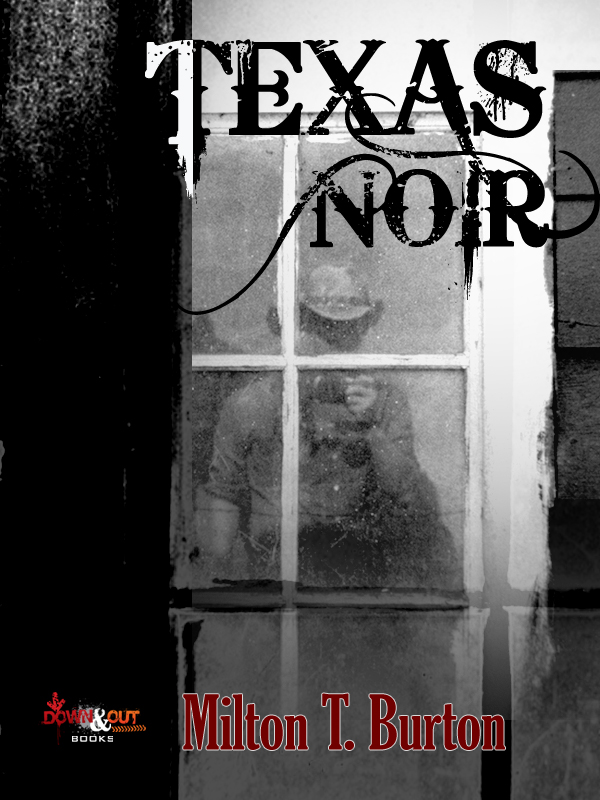
Just five days ago, Milton Burton sent me information about his new book TEXAS NOIR. He has written several book reviews for this site over the years and I have grown so fond of him (as I do all the ladies and gentlemen that come here--and there are a lot of you). Now I have learned that he has been hospitalized for tests. Kevin Tipple tells us that it is not life-threatening. Good!

Please send all of your good wishes to Milton and include a few for Kevin Tipple and his wife too.

We need to huddle together in these hard times for so many.

You can find my mystified review of TREE OF LIFE right here.

And for all of your hard-working reviewers, some appreciation.

SteveHL
has left a new comment on your post "The Summing Up, Friday July 22, 2011":

"I don’t know where else to put this comment. Like everyone else who reads FFB, I often think that I would like a particular book that someone discusses. Most of the time I don’t follow up (who could afford to?), but when I do I usually am very glad. In just the past few months, I have enjoyed books recommended by John Norris (Miss Hargreaves), Yvette Banek (The Baby Game), Ed Gorman (Hard City) and Barry Gardner (Death of a Fantasy Life), as well as quite a few others. I thank you all.

And one more thing…I want to say how much pleasure I have got from the writings of many of the FFB posters themselves. Again, many thanks."

And thanks to Steve for sharing this.


The Summing Up

Patti Abbott, Outsider in Amsterdam, Janwillem van de Wetering
Yvette Banek, Daddy Longlegs, Jean Webster
Paul Bishop, Ringside Jezebel, Kate Nickerson
Michael Carlson, 47th Samurai, Stephen Hunter
Bill Crider, Cain's Woman, O.G. Benson
Scott Cupp, Anita, Keith Roberts
Loren Eaton, House of Stairs, William Sleator
Martin Edwards, Death to the Rescue, Milward Kennedy
Glenn Harper, The Sunday Woman, Carlo Fruttero & Franco Lucentini
Randy Johnson, Star Born, Andre Norton
George Kelley, Double Trouble, Sheldon Jaffery
Margot Kinberg, Indemnity Only, Sara Paretsky
Rob Kitchin, Borkmann's Point, Hakan Nesser
B.V. Lawson, Five Passengers from Lisbon, Mignon Eberhart
Evan Lewis, Seven Samurai, Robert B. Parker
Steve Lewis/Bill Pronzini, Route 13, Ed Lacy
Steve Lewis/William F. Deeck, Quinney's Adventures, Horace A. Vachell
Todd Mason, The Collected Stories of Carol Emshurller, Janet Fox; Mister DA V, Kit Reed; Janet Quiet, K.A. Laity and Elena Steier
J.F. Norris, The Room with the Iron Shutters, Anthony Wynne
Eric Peterson, The 100 Best Movies You've Never Seen, Richard Crouse
David Rachels, Summer, Fireworks and My Corpse, Otsuichi
James Reasoner, The Barn, Glenn Law
Gerard Saylor, Guild, Ed Gorman
Ron Scheer, Two Soldiers, Charles King
Michael Slind, Keep Cool, Mr. Jones, Timothy Fuller
Kerrie Smith, XYZ A Detective Story, Anna Katherine Green
Kevin Tipple/Barry Ergang, Mystery Ranch, Max Brand

Friday's Forgotten Books, Friday, July 22, 2011


Won't be here next week to gather links.

Outsider in Amsterdam, Janwillem van de Wetering
is the first novel in the Gripstra and de Gier mystery series, a series I followed from The Netherlands to Maine over the years. The best element of the series was always Adjutant Gripstra and Sergeant de Gier, our two heroes.

In this first book, you can throw in an interesting hanging victim, the victim's sexy wife, the victim's mother, and a lot of other interesting types.

And, of course, Amsterdam itself, which is my favorite city although when I read this I never thought I would get to spend six months there later. Amsterdam and its wonders and oddities is a welcome presence. Keeping drugs off the streets is a huge concern to the police.

And the series was always full of humor and pithy observations:

(Grijpstra talking to his superior on the phone and looking at his wife's head), says "Yes sir" on the phone and thinks: "Why do curlers have to be pink? Why not brown? If they were brown they would blend with her hair, I wouldn't notice them so much, and I would be less irritated. I wouldn't have such a foul taste in my mouth. My stomach wouldn't cramp. I wouldn't have to worry about ulcers. My wife wouldn't forget to buy medicine for me because I wouldn't need to take medicine. I would be a happier man."

Does anyone use curlers now?

Yvette Banek
Paul Bishop
Michael Carlson
Bill Crider
Scott Cupp
Loren Eaton
Martin Edwards
Glenn Harper
Randy Johnson
George Kelley
Margot Kinberg
Rob Kitchin
B.V. Lawson
Evan Lewis
Steve Lewis/Bill Pronzini
Steve Lewis/William F Deeck
Todd Mason
J.F. Norris
Eric Peterson
David Rachels
James Reasoner
Gerard Saylor
Ron Scheer
Michael Slind
Kerrie Smith
Kevin Tipple/Barry Ergang

Thursday, July 21, 2011

Bat Segundo Show-Megan Abbott


http://www.edrants.com/_mp3/segundo404.mp3

More for the writers out there, an interview with the amazingly insightful and brilliant Ed Champion, the reader every writer wants. Warning: it is long.

My Life at the Theater: Anything Goes


Not a huge Patti Lupone fan, but you get the idea from this clip.
I saw Anything Goes at the Stratford, Canada Festival in 2004. Music by Cole Porter; book by P.G. Wodehouse and Guy Bolton. New book by Timothy Crouse and John Weidman, what's not to love. A terrific cast and stage production.

How I Came to Write This Book: Robert Swartwood


I love a good title. Sometimes—for me at least as a writer—a story begins first by a title and evolves from there. So was the case when, for some strange reason, the title “True Confessions of a Serial Killer’s Wife” entered my head out of nowhere a few years ago. The idea stayed, because I thought it would be interesting to look at the family members of a serial killer and how they’re affected by the killer’s despicable acts. And so I sat down one day and wrote about a woman whose life is suddenly turned upside down when the FBI shows up to arrest her husband of being a serial killer. This woman is a middle school science teacher, has had no idea of her husband’s terrible deeds, but what is worse is she has just given birth to a baby boy. And as the story unfolded, it becomes clear she’s worried about her newborn son. How whatever evil is inside her husband might also be inside her baby, and wouldn’t she be doing the world a favor by putting the baby out of its misery?

This was one of the story’s themes, the idea of nature versus nurture. Throughout the story the woman has only two close friends she can rely on. Her mother is dying of cancer. Her brother is in the Peace Corps, off in another country. She wants nothing more to do with her husband. Her life as she knows it is over. And so she decides to escape, taking her baby boy with her, still uncertain about whether or not he too will bring the same kind of evil as her husband into the world. The story ends with her driving away with her son strapped in the backseat, the early morning sun shining through the rear windshield creating a sort of halo around the baby’s head.

The story was long—maybe 7,000 words—and I knew it needed work, so I set it aside and kind of forgot about it until one day when I was getting together some novel pitches to send to my agent. One of them was picking up with the serial killer’s wife five years after she disappeared and managed to start a new life. It was going to be a straight-up thriller, very fast paced, about a woman whose son gets abducted by someone who knows of her former life. This someone wants her serial killer husband’s trophies—the fingers he cut off each of his victims—and so to save her son she has no choice but to return to the life she once fled.

It was easy starting the novel, seeing as I had already laid out much of the background in the short story. All of the characters who appeared in that story appear again in the novel. Only—and here’s the fun part—much of what I knew about the characters when I wrote the story changed as the novel progressed. Just like my novel’s protagonist, Elizabeth, much of what I thought I knew was merely a lie, and by the time the novel was finished, I was just as shocked as I know many readers will be.

Robert Swartwood’s work has appeared in The Los Angeles Review, The Daily Beast, Postscripts, ChiZine, Space and Time, Wigleaf, and PANK. He is the editor of Hint Fiction: An Anthology of Stories in 25 Words or Fewer, which was chosen by The Nervous Breakdown as one of their favorite books of 2010, and was featured on NPR’s Weekend Edition Saturday with Scott Simon. His latest novel is The Serial Killer’s Wife.

Robert invites you to visit him at his website www.robertswartwood.com on August 1st, at 7:00 pm EST for a live reading.

Wednesday, July 20, 2011

Wednesday Night Music: It's a Perfect Day

END OF EVERYTHING DAY


And I know I will be stressed out over: will people turn out, will we have enough food, will Borders still be there, will Megan's flight from Phoenix be on time, will the books be there, will they have enough chairs, will the map from the store to the party be clear enough, will the three hours sleep she has had be enough, will it be so friggin' hot, none one will venture outside?

Will people show up?

That's always the worst fear for writers and I have seen it happen. Playing to an empty house. Once at our local Borders, a crowd of ten listened to Elmore Leonard. The store only advertised the event inside the store. Of course, Leonard wasn't much bothered and talked for an hour. I love that man.

Oh, and incidentally, thanks to those who came out to hear Megan over the years.

You know how it is. Wish us luck. None of the Abbotts are comfortable in the limelight.

If you have enjoyed a recently written novel, go say so on Amazon. That may be the only place people will learn about books soon. If Amazon is going to be the only place that counts, let's make it count.

Tuesday, July 19, 2011

For Persephone Zieger--the real version


With love to the boy who searched the world for the woman he loves.

Forgotten Movies: Jump Tomorrow


George (Tunde Adelbimpe), a proper Nigerian gentleman, arrives at the Buffalo airport to meet the women his family has arranged for him to marry. He's late, she's gone on to Niagara Falls, so he has two days, traveling slowly and reluctantly, to get to the wedding. At the airport, he meets Alicia (Natalia Verbeke), a lively Latin, going with her boyfriend to see her family. George is smitten. Partly by happenstance, and partly by the designs of Gerard, a romantic and manic Frenchman George meets at the airport, his path crosses Alicia's a few times. As Gerard puts it, George should seize the chance to see what happens with Alicia - he can always jump tomorrow. Can George take on fate and custom?(This synopsis mostly comes from IMDB) What I remember most about this film was how original, unexpected and delightful it was. Not the exact mechanics of the plot-ten years ago now. The lead is just riveting because he plays his part so deadpan.
I will probably only persuade Charlie Stella to see this, but you won't regret it if you do.
(Directed by Joel Hopkins).

Monday, July 18, 2011

Borders

Here is a piece by Ed Champion, which includes a list of indie bookstore near each closing Borders store. Thanks for the footwork, Ed. Let's all do the right thing and buy a book from these stores pronto.

Robin Watson just reminded Detroit folks that there is a indie in Taylor called BOOK NOOK and there is a terrific bookstore near me SECOND STORY BOOKS (used by terrific). Also New Horizons Bookstore in Roseville, MI. And they do offer discounts. These are the stores we let wither when the big boxes came along. Now it's their turn to reclaim the spotlight.

Let's work on building up a list and building up some businesses.

The original Borders Bookstore was an entirely different affair from the pumped-up Thanksgiving turkey it became. It occupied a sizable chunk of a block in Ann Arbor and was magical because it was ALL ABOUT BOOKS.

It was the only store at that time where you were likely to find a book from a university press, for instance. Or books in foreign languages. Or books written ten years earlier.

There was no coffee shop, gifts area, music. Just books. Making the hour trek there was a joy I will never recapture. It was always packed with people holding books in their hands. After a while it added another store closer to us but far less magical.

And then it started adding stores everywhere and its magic continued to dim.

But it was still a Michigan thing. We still found a difference between it and other big box stores even if no one else did.

I wonder after Megan's book talk at a Borders on Wednesday if I will ever step inside one again. I doubt it and I am so sorry for that. I have read a lot of press about all the mistakes Borders made and wonder if sticking to that one store that carried books no one else did was the way to go. Probably not, because everything has changed since then.

Maybe one day, I will go to Ann Arbor and find such a bookstore again. It might not be Borders but it may some new and wondrous store that takes a chance on a fickle public.

Along this line, check out Megan's blog today with emails readera shared with her about what their childhood library experience meant to them. Are we willing to allow the institutions that meant the most to us be gone for our children and grandchildren? There are people that say government should not fund libraries. Or much of anything else. Don't let that happen.