Monday, April 12, 2021

Still Here


 Reading LUSTER, which has to have some of the best reviews of a debut novel I have ever seen. It is the story of a young Black woman who gets drawn into a white family who've adopted a Black child. The writing is extremely sharp, you feel like every word has been honed--perhaps too much at times. But I certainly am in awe of such a prodigy. On her cover picture, she looks about 25. It is not my kind of book exactly. Do you feel like you have a particular kind of book that is likely to speak to you? Maybe she is just too young but Rebecca was very young and that books speaks to me. Maybe she is too much of this time and place. I am not sure but although I certainly admire Leilani's use of the language and her complex thoughts, it is not a book that draws me in. 

Enjoying Happy Hour, a five-hour Japanese movie on Kanopy. They have broken it into three parts and it concerns four 37 year old women in Japan in 2015.I get Kanopy through my library as well as Hoopla.


Finish Shtisel, which I really enjoyed and they were kind enough to provide some happy endings. Also watched This is a Robbery, a 4-part doc on Netflix about the robbery of the Isabel Gardner Museum in the nineties. Somewhat overly long. Three parts probably would have been better. Also the magnificent Ken Burns doc on Ernest Hemingway.

Also plugging away at the Mike Nichols bio, which is very well done. 

We celebrated Josh's birthday this weekend. Nice to be together without masks since we all have had our shots. Interesting learning how gym was conducted in Kevin's virtual school. Virtual gym turns out to be his Mom filming him doing various things like sit-ups and playing catch. How much this generation is losing with this pandemic going on and on. Half of Michigan has just given up on any sort of social distancing. And you can guess who they voted for. 

How about you?

Friday, April 09, 2021

Classic Faces

Kevin at 3, classic look at what I can do with clay.

Kevin at 14, classic teenage exasperation.


FFB: LOSER TAKES ALL, Graham Greene


(From the archives)

Ed Gorman: Loser Takes All, Graham Greene

I mean no disrespect when I say that I imagine Graham Greene conceived of Loser Takes All (one of his self-described "entertainments") as a film before he decided to write it as a short novella. It's big and colorful and hangs on two cunning twists that neatly divide the piece into curtain act one and curtain act two.

The story concerns the honeymoon of Mr. Bertram and his bethrothed, Cary. They are planning to go on a modest short vacation when fate, in the the person of Dreuther, an incalculably rich man for whom Bertram is a lowly assistant accountant, intervenes. Bertram solves an accounting problem that nobody else in the incalculably vast corporation can figure out so Dreuther rewards him with the promise of a honeymoon on his yacht and nights of glamor in the casinos of Monte Carlo... Cary is thrilled.

Well, they go to Monte Carlo but soon learn that Dreuther has forgotten his promise. They are left to make do with their pitiful finances. They can't even pay their bills. Then Bertram, a math whiz, goes to a casino and tries out his own system for winning. And even more than that he begins to see how he can bring down Dreuther...

The rich men of the Fifties are perfect matches for the Wall Streeters of today. Their greed and lust is literally without bounds. Greene creates four distinctive scenes of black comedy when dealing with them. But even more, at the point when Cary sees her new husband change because of his winnings, Greene begins to examine the morality of greed. He also, in the midst of the action, gives us a painful subplot about adultery.

I was re-reading William Goldman's Adventure's In The Screen Trade the other day and found this salute that I'd forgotten: "I think Graham Greene was the greatest novelist in English this century."

If you read Loser Takes All, you'll begin to see what Goldman was talking about.


Wednesday, April 07, 2021

First Wednesday Book Review: REMAINS OF THE DAY Kazua Ishiguro


I read this book when it debuted in 1989 and I also saw the wonderful movie with Anthony Hopkins and Emma Thompson on its release, but I decided to listen to it again on audio. The wonderful Simon Prebble read it and sounded so much like Anthony Hopkins I had to check and recheck. After reading this book in '89 I read NEVER LET ME GO in the early nineties, which is my very favorite of Ishiguro's books and one of my favorite books of all time. His new book KLARA AND THE SUN also sounds wonderful and I may have to buy it right now.

REMAINS OF THE DAY is the story of a butler, one that heads a very large staff for a very prominent English gentleman. He takes his position so seriously that he allows his father to die in an upstairs room alone while he handles an important affair for his employer. Although Stephens seems like a highly intelligent man, he gets most everything wrong in this story. He puts so much faith in his employer that he believes following the lead of Germany in the 20s and 30s is the right step. He fires housemaids because they are Jewish, he allows a possible romance with the housekeeper to go off course. In fact, he often treats her dismissively. And most of all, he doesn't understand that he is not irreplaceable, that he is just a small cog in a wheel that he can never have a hand in turning. The most superficial tasks in running a house become his entire world. And so he misses what he might have had and instead supports a Nazi supporter for the duration. He has constructed his life around performing tasks at the highest level. This gives  him far more pleasure than it should.

This is an unusual book for a young man to have written because it is filled with tips about the life and duties of a butler. You feel sorry for what Stephens has lost but understand that his father, a butler before him, has made the man. But you also despise often his behavior and pomposity. A very complex character.

Highly recommended. 

For more First Wednesday reviews, see Barrie Summy.

Short Story Wednesday: "Snuff" from the 2014 The Best American Mystery Stories ed. by Laura Lippman


 Jodi Angel "Snuff"

 Every once in a while you get a story where the detail is so specific and so well rendered that you feel you are with the characters. In this story a brother calls his sister to give him a ride home. He has been watching a snuff film that he is way too young to have seen. (No one should have seen this one). Begrudgingly she comes to get him, questioning what he is doing way out in the country. On the way home, they hit a deer. They stop the car, not knowing at first what they hit. The deer is already dying but when the sister puts her hand on the animal, she feels something moving around inside. The two try to save the baby but, of course, fail. 

Now this isn't much of a plot, but what makes it really work is how well the writer describes everything they see and do. You not only feel that the author must have experienced this, but you wonder how she was able to take in the details so exactingly. The details of what the night was like, what the road was like, what the car was like, the things they did to try and save the baby. And, of course, that snuff film plays with the brother's emotions as he watches his sister fail.  Excellent. 


Jerry House

Tracy K 

George Kelley


Monday, April 05, 2021

Still Here


 Criterion is running a Dirk Bogarde festival this month and CAST A DARK SHADOW was an eerie start. Ever seen it? Bogarde plays a man who marries and then kills his elderly wife for her money. But none too smart, he misunderstands the terms of her will. A somewhat surprising story line and Bogarde's dark acting made it work. It looks like the other films are just as dark. 

Megan got her first shot and is coming out right after her second. It will have been a year and a half since I saw her. Only for two days, but I will take what I can get gladly. Not too long ago we were figuring it would be July so May looks pretty good.

I saw my first Jerry Lewis film--in maybe ever--this week.It was as goofy as I imagined but it has a kind of charm. Lots of singing. Lots of totally improbably sequences. 

As I am reading the Mike Nichols bio, I watched CARNAL KNOWLEDGE, which held up well. I saw it last in the theater at age 21 and was pretty mystified by it. Still am a bit. The bio is very good btw.


Watching Shtisel on Netflix, which is a good palate cleanser to Carnal Knowledge and the Bogarde movie.

Finally finished the first three seasons of The Handmaid's Tale, which was well done indeed although horrifying most of the time. Elizabeth Moss is such a terrific actress.

So what's new with you?

Sunday, April 04, 2021

Friday, April 02, 2021

FFB

(from the archives)


COMPULSION by Meyer Levin

(Review by Deb)

Meyer Levin's COMPULSION is a lightly-fictionalized account of the sensational Leopold and Loeb murder case that gripped the nation in the mid-1920s.  Meyer's fictionalization (published in 1956) is very light indeed, with much of the dialog being taken verbatim from transcripts of police records and court testimony.  Even so, the novel is more than just a retelling of a senseless and horrific crime, it is a perceptive study of what the French call a folie-a-deux, wherein two people who are utterly toxic for each other are none-the-less hopelessly attracted to each other and, in the thrall of that attraction, commit acts that neither would necessarily have done without the dark-mirror image of the other goading them on.

In Levin's book, Nathan Leopold and Richard Loeb become Judd Steiner and Artie Strauss, neighbors in Chicago's wealthy and close-knit German-Jewish community. (There's a small but telling detail when Judd informs his aunt that he's going out with a girl named Ruth Goldenberg and his aunt sighs, "Oh, Russian-Jewish I suppose.")  Both men were child prodigies who had graduated from university by the time they were 18 years old.  As the book begins, both of them are still in their teens (as is Sid Silver, a newspaperman who narrates part of the book and plays a pivotal role in uncovering some of the evidence).  Adopting the guise of Nietzschean "supermen" who do not need to follow the laws applicable to average beings, Steiner and Strauss plan the "perfect murder."  They eventually kidnap a randomly-selected neighborhood boy on his way home from school.  They kill the boy, pour acid on the corpse, hide the body in a drainage ditch, and then put into motion an elaborate red-herring of a kidnapping-ransom plot.

This perfect murder rapidly unravels, starting with the victim's body being quickly discovered and identified.  Then damning evidence stacks up against the men:  Steiner's glasses--traced to him by their unique hinge mechanism--are found beside the victim, there is blood on the back seat of a car the men have rented, papers typed on Steiner's discarded typewriter match the typing on the bogus ransom notes, and Strauss's attempts to inject himself into the investigation (in order to discover how much the press and police actually know) backfire spectacularly.  Their alibis in shreds, the men confess to the crime, each blaming the other for striking the fatal blow (although, as Sid Silver points out, in that regard, one of them had to be telling the truth).

Considering that the book was written in the 1950s about a crime in the 1920s, one aspect that I found surprising (and rather refreshing) was its refusal to take the "easy" way out and blame the men's actions on the fact that they were closeted lovers, although society at the time certainly did, blaming all manner of depraved behavior on homosexuality.  However, narrator Sid Silver is puzzled by how much stress the authorities place on the men's relationship and asks of it, "In all the history of human behaviour, of the sick and ugly and distorted and careless and sportive and mistaken things that humans did, was this so much more?" 

In fact, Levin does not present the men as sexually "set," but rather most likely bisexual, with Judd being more interested in dominance and submission rather than the gender of his partner, and Artie using his good looks, affable facade, and charisma to attract both men and women.  I was also surprised at the frankness of the book, given the time it was written--Judd's dark fantasies, especially involving rape, are quite explicit.  Levin's book makes us feel if not sympathy then at least some understanding, particularly for the intense and brooding Judd whose infatuation with the manipulative and self-centered Artie is as inexplicable as its dreadful outcome is inevitable.

But I've only covered the first half of the book.  The second half, which centers on the mens' trial, is interesting, although it drags in places due to pages of legal arguments and long-winded explanations of Freudian psychology with which we are now completely familiar.  In order to avoid a jury trial and a sure death penalty, Steiner and Strauss plead guilty in the hopes that arguing before a judge might result in a life, rather than a death, sentence.  Aging lawyer Jonathan Wilk (a fictionalized Clarence Darrow) mounts a brilliant legal defense at their sentencing hearing that saves the men from execution, although they both receive sentences of “Life plus 99 years.”  And, other than a brief coda, there the book abruptly ends, with Steiner and Straus entering prison and fading from public memory. 

But this abruptness works in the book's favor by indicating that there will be other events and other atrocities that will come to overshadow the "crime of the century."  First of all, the rise of "some gangster named Al Capone" (as he is described in an offhand remark by one of Sid's colleagues about a gangland shooting) and the associated violence of Prohibition.  And then the actual "crime of the century"--the Nazi atrocities of World War II and everything the world was to learn about the "Superman" ideal and where it leads.

Meyer Levin wrote this book in part to assist Nathan Leopold in his attempt to be granted parole, which finally happened in 1958. Leopold moved to Puerto Rico, married, worked as an x-ray technician, and died in 1971.  Richard Loeb was not so fortunate: In 1936, he was stabbed multiple times by a fellow inmate who claimed Loeb had made sexual advances toward him.  Although the story was easily discounted, especially since Loeb was covered with defensive wounds and the inmate who killed him was unscathed, no charges were ever filed in his death.


Wednesday, March 31, 2021

Procedure and hiatus delayed

I can't remember if I have even laid out what has been going on with my brain or not. But in any case a routine C-scan last Sept picked up a brain anomaly, which has been with me since birth. It was unknown before this scan and without symptoms. They did a second scan, which confirmed it, and than an MRI. I saw a neurologist but eventually ended up in the hands of an interventional radiologist. 

Now this anomaly is probably a DVA, which is basically harmless. But it could be an AVM (Arterio-venous malformation) which can cause bleeds in the brain. This only happens in 2-4% of people with them but fixing them if if they need fixing varies in technique. 

So my doctor scheduled a cerebral angiogram for yesterday but an emergency called him away. So now I will have to reschedule it. He assured me in a very nice email last night that the angiogram is not dangerous and the information they cull from it will hopefully never need to be used. But they will have it ready if the thing does start to bleed. 

So even if it is the AVM and not the DVA, my chances of it killing me are less than 1 percent and I will probably die from something else entirely. But being alone now and having to go into these procedures alone (because of COVID) has been taking up a lot of my energy. Also it is so helpful to have someone with you to understand what the doctor is telling you and asking the questions your blank mind doesn't ask.
Anyway my hiatus is over for now. Have a good holiday.


Thursday, March 25, 2021

Hiatus


 I am going to take a hiatus here until after Easter. Have a good one all of you. Think good thoughts.

Wednesday, March 24, 2021

Short Story Wednesday: Charlie the Barber, Joe Lansdale


"Charlie the Barber," Joe Lansdale

"Charlie the Barber" is collected in Alive in Shape and Color, the second of Lawrence Block's three anthologies based on famous art work. (Pictured above). This story starts out light-hearted with Charlie enjoying cutting hair, working with his daughter as the only father-daughter barbershop he knows, thinking about his wife and how it was love at first sight for them. He likes his customers, knows how to cut their hair, all is right with the world.

But things begin to deteriorate when his electric clippers give out and he has to go get a new pair stored in a dark closet in the back of the shop. This closet is a place of terror for him because he is reminded both of the closeness and darkness of his captivity in Japan during the war. He manages to find the clippers and is able to squelch his rising PTSD.

Until two young men enter the shop just before closing. At first they are just verbally abusive, but it turns into a robbery and his daughter and one customer get pushed around. I won't tell you the ending in case you want to read it. Charlie does the best he can to live with his terrible experiences although  it is often evoked by things in his daily life. Another fine story from Joe Lansdale.

Kevin Tipple

Jerry House 

TracyK 

George Kelley

Monday, March 22, 2021

Still Here


 Saw Minari at a movie theater on Friday. I think it may be the best movie I saw from 2020 although Nomadland is close. There were seven people in the theater, well spread out but since Michigan's covid is climbing it may be the last time I do this for a while.The acting in Minari was superb.

Also saw Let Him Go on Prime, which was an excellent adaptation of the novel by Larry Watson, which I greatly enjoyed a few years ago. Kevin Costner and Diane Lane played a long-married Montana farm couple to perfection. They cross swords with the worst family imaginable. The name Weeboy perfectly suits their horribleness. 

I am trying to get up the nerve to watch Promising White Female.


Just started Call My Agent on Netflix, which seems like fun. Finished the Allen v. Farrow doc, which was just sickening. I can never watch a Woody Allen movie again. 

Reading THE LOST MAN (Harper) and Buddha in the Attic for my book group. 


Lots of good weather here. How about you?

Friday, March 19, 2021

FFB-LAST BUS TO WISDOM, Ivan Doig

I have read one or two books by Ivan Doig over the years and this was his last one published in 2015. For a city or suburban woman, I like novels set in the West: Larry Watson, Wallace Stegner and others escaping me right now. Doig's books tend to be a little sentimental but just a little and Doig is capable of pulling some scary incidents out of his hat.

Donal is an eleven year old boy who lives with his grandmother in Montana. When she needs a surgery with a long recovered period she sends him to Wisconsin on the train to stay with her sister and her supposed husband, Herman, the German. The bus trip is the thing though and set in 1951 it was a time when kids were collecting autographs, which gives Doig a nice way of introducing a lot of characters. 

This book is filled with incidents on the road, coming and going. Donal is a smart boy but he is also very much an eleven-year old and should not really be on his own. Luckily Herman, the German decides to accompany him back and see the country. A bit too long but a very nice book by a very talented writer.

Wednesday, March 17, 2021

SSW-Big Day in Little Bit, James Sallis


There are few writers I admire more than James Sallis. I have read several novels from his Lew Griffin series and the three novels grouped at the Turner Trilogy. He also writes criticism, poetry and whatever strikes his fancy. Many of his stories are available on his website. 

"Big Day in Little Bit" is the story of a hit man who comes to town and becomes so fond of the sheriff and the town and its people that he turns the job down. But there will always be another who will take the job. This is a short short and I am not entirely sure of its ending. That happens to me sometimes. But it doesn't matter because I don't read James Sallis for his endings. I read him for his gorgeous prose and his ability to make statements about life; to have a piece of a poem, an observation about history, a comment on what people are like woven into a 2500 word story. This is another terrific story with nary a false note from BULLETS AND OTHER HURTING THINGS. I know Bill would be proud to be remembered with these stories and the writers are proud to do their best for him. 

Kevin Tipple

TracyK 

Jerry House

Monday, March 15, 2021

Still Here


Most of my family with the exception of Kevin (14) and Megan have had the vaccine. A big relief as we tick people off. Kevin is soon able to student drive at 14 years and 9 months. That seems crazy to me. I can't believe he now takes a size 12 shoe. He is able to play his guitar very well; it really helped that he used this pandemic to learn how to read music, which they don't normally teach kids at the school of rock for playing guitars. He is also improving his tennis game. But his real love--surprise, surprise is Xbox games. I think it is a way to communicate as much as it is about game playing. 

Josh is back in the office every day now. He has a new boss who beat out a candidate called Scary Mary for Chief Prosecuting Attorney. This is the first time Josh has worked under a Republican. Although his last two bosses were both indicted for crimes so that's not so great either. Josh is the head of the appellate division and is mostly in appeals courts. 

Megan has a book coming out in July (The Turnout) and is working on four TV and film projects. 

Julie, my DIL, is still working from home. She works for Michigan Legal Services which helps people who can't afford a lawyer, especially right now with eviction attempts. 

That is a small family, isn't it? 


I saw Supernova with Stanley Tucci and Colin Firth. I can't believe how many films right now have an Alzheimer's theme. This was set in the Lake District, which almost made up for the grimness of the plot. Great acting. 

Watching Harrow on Hulu about a coroner. The Allen-Farrow doc has been harrowing. So too the Oprah interview with Meghan and Harry. My So-Called Life is on Hulu. We were away for a year when it was on. Very well done. Still working through Handmaid's Tale. Netflix has really crashed and burned lately. 


Those of you who still have traditional cable. What do you pay a month? I am trying to decide if I should cut the cord.


Just started Hamnet by Maggie O'Farrell. Not sure if it's my cup of tea. Of the dozen or so hardbacks I have bought in the last year, I have read few of them. Jo Ann Beard on "By the Book" in the NYT today said she finished any book she started. I would say I finish 25%. I usually finish a short story though. 

What about you? What are you doing? Do you finish every book? What is your cable bill if you have cable tv and Internet?

Friday, March 12, 2021

FFB THE ARMCHAIR DETECTIVE'S BOOK OF LISTS


This was published in 1989 and it looks like a second volume came out in the nineties edited by Kate Stine. Usually I get rid of books like this after a while because the lists, of course, end with books from 1989 or whatever year they were published. But they are still fun to look through and remember the books that won awards or were prominent in that era. It is also fun to see which ones you read and wonder why so many others you never heard of. 

For instance, have you read the Edgar Award winner from 1972, THE LINGALA CODE by Warren Kiefer. Often if you haven't heard of the winner, you don't recognize the other titles either. But some years every book is a winner. Like in 1964 when THE SPY WHO CAME IN FROM THE COLD beat out THE NIGHT OF THE GENERALS, THE FIEND and THIS ROUGH MAGIC. 

Also writers you have underestimated that show up are interesting. I have never read a novel by Dorothy Miles Disney who showed up quite regularly. And in some years only two books were nominated for an Edgar. Did all the others stink that year? 

There are also lists of favorites from critics I no longer remember: Robin Winks, for instance. Readers' surveys are fun to read too. I think there was probably more consensus on the best books then, then now. Then and now Otto Penzler could only name books written by men, except for Christie. 

Even an hour of fun it sometimes worth keeping a book for and I would like to see a 2020 version of this book.

Do you have a favorite book along these lines?

Wednesday, March 10, 2021

Short Story Wednesday: "Smoke Ghost" by Fritz Lieber


I haven't read all that many ghost stories in my life, but this has to be one of the best. The atmosphere is so precisely rendered and the thirtyish protagonist is both sympathetic and yet representative of the modern age. An older man would not have worked so well, I think. This man has not been completely corrupted by his life yet.

SMOKE GHOST takes place in a city and you can feel its darkness in every line. Towering, impersonal buildings, dirt, soot, smoke, faceless strangers, physically dark. (Leiber apparently wrote this after moving from Chicago to California). 

Mr. Wran, a young businessman, father , husband, begins noticing an odd shape on his way home on the train. Gradually it begins to exhibit a human face and as the story continues, it becomes more and more frightening as it haunts his home, office, and other places he travels to. 

Unlike most ghost stories, this ghost does not seem to have come about after a death, but is perhaps composed of the detritus of the city. Maybe even the evil that goes on in those towering towers. 

Some incidents from Wran's childhood figure in interestingly, yet I was not sure his ghost emanated from that period. I don't want to say much more because it is better read than described by me. 

And it is probably better read twice for novices in the genre. 

Kevin Tipple

Steve Lewis 

Jerry House 

TracyK 

George Kelley 

Cullen Gallagher 

Todd Mason

Monday, March 08, 2021

Still Here


 Not a lot to say this week. I went with a friend to the Detroit Institute of Arts, which was so impressive in the things they had done to make it safe and contact-free. You stood on a special circle to check your temp and you reserved your tkts ahead of time and put your phone on an ipad. It was great to feel free for a couple hours. 

Got out to a meal twice this week, both restaurants were almost empty. I am more worried about eating spoiled food in them that anything else. Phil highly disapproved of bringing leftovers home from restaurants so twice I have left food behind. Do you bring leftovers home? No new books this week, no new TV shows. I could use some new ideas, preferably stuff in English because reading movies on a TV makes my eyes hurt after a while. Been trying to write a bit but I still lack focus.

So what's up with you?

Friday, March 05, 2021

FFB: I AM THINKING OF MY DARLING, Vincent McHugh


A fun virus. What a concept.
 

R. Narvaez was born and raised in Williamsburg, Brooklyn. His newest book is HOLLY HERNANDEZ AND THE DEATH OF DISCO (from the archives)


I Am Thinking of My Darling, Vincent McHugh

A virus. The City. Civic chaos. Government collapse. The stuff of zombie flicks and terrorist scenarios in 2010. But back in the ’40s, such a plot could still be light-hearted. In Vincent McHugh’s 1943 novel I Am Thinking of My Darling, a virus infects New York City—but it's a happy virus! The infected follow their bliss, feverishly losing their inhibitions (for you Trekkies, think "The Naked Time" episode). The problem is that no one wants to work. Honestly, who would?

Acting planning commissioner Jim Rowan returns home from a trip to DC to find cheerful chaos quickly spreading across town—and his actress wife Niobe missing. She’s infected and on the lam, looking to live out a succession of character roles in a kind of Method fervor. Meanwhile, in an emergency management meeting (consider what that term evokes today), the mayor announces he has the virus—and would rather play with model trains than lead the City. To avoid panic, Rowan is secretly made acting mayor.

The plots riffs genially from there, with Rowan hot on the trail of his slippery wife, cabbing from City Hall to Harlem across a Cityscape in Mardi Gras mode—all the while consulting with civil services to keep things running and with scientists to find a cure. (The fact that the virus apparently originated in the tropics, implying that people there are inhibition-less, may be another artifact of the past.) A polymath (when being a polymath was simpler), Rowan narrates in sensual, informed detail about now-bygone architectural wonders, regional accents, lab science, and jazz music.

This book, with its glad-rag view of a long-lost era, has been a favorite of mine since it was recommended to me decades ago. (I still have my first copy, bought in the now-bygone Tower Books in the Village). McHugh, a poet and a staff writer for The New Yorker in the ’30s, employs a prose style that winks slyly at Chandler and pulp. (Once Rowan is inevitably infected, he’s like Marlowe on E.) Darling also features a nice amount of sexual frankness that may surprise modern readers who forget that people in the ’40s had sex. The novel was made into the very '60s movie What's So Bad About Feeling Good?, but by then the times had already been a-changed enough that the conceit no longer had the right kind of jazz.


Wednesday, March 03, 2021

Short Story Wednesday


I know a lot of you have ordered this collection and are already reading it, but I promised Rick Ollerman, the editor, that I would try and mention it now and then. Rick is ill and cannot do the events to promote it. So if you guys could talk it up a bit, maybe we can do Bill proud (and Angela and Rick and Down and Out Books).

Both of the two stories I read were excellent. At first I was put off a bit by the ending of William Kent Kruger's Innocence but then I realized he had done something really different with his story. He had made, you, the reader, a mark. Like the woman in his story. A man and his daughter roll into town and seek help from a local waitress, newly widowed. I will say no more. 

Joe Lansdale's, (Promise Me) was more conventional, but just as good. It's about two guys hired to bring down a mild-mannered accountant who inexplicably has stolen money from his boss. Although you see the ending coming, watching it played out in such skillful lands is a pleasure. 

I also enjoyed Angela's words about her father. And I think they are not so different from what my kids would say about their Dad. That he was a bit of an enigma to them. Always available, but he played his cards close to his chest. Shy in a crowd. Kind, and gave more than he took. Stood out in his field. Devoted to his wife. These men don't come along often. That's why they are missed so dreadfully.
 

Kevin Tipple

Jerry House 

George Kelley

Monday, March 01, 2021

Still Here

And it is getting warmer. I let go of the girl who pulls my recycling and garbage down my drive so I hope that means we are done with snow and ice. I paid her $20 a week for a two-minute task so it's a nice saving. I am also trying to get Comcast to lower my cable bill. I called and they gave me three plans but couldn't really explain what I was giving up. So I asked them to email me the plans. Hope they do. Since I never watch any network shows I am paying for a lot I don't use right now. (Over 200 channels, I believe) Not sure if giving up the landline is a good idea but I supposed I can get one outside of this plan. Nobody knows the number anyway. 

This week I also fixed my sink myself and changed the toner on my computer. Baby steps. 

I was so lucky to get a nice email from someone who liked SHOT IN DETROIT. He is a retired psychology professor at WSU but didn't know of my connection with the school. He is ordering two more of my books. It is nice to think a few people out there have read them. COVID has made everything in the past seem remote.

In the NYTBR today there was a full page ad by a guy hawking his short story collections. Now a full-page ad with color costs close to $200,000 so he must expect that this ad is going to sell a lot of books. Or else ego knows no price limit.

Reading these two books. The second (LAST BUS) for my book group. It really seems like a YA book to me, but I have enjoyed other books by Doig so I will stick it out. If the main character is 11 and what happens to him is consistent with what happens to 11 year olds, why is it an adult book? The language certainly isn't sophisticated either. I am also reading some stories from the Bill Crider memorial anthology. I have to say the first one by William Kent Kruger really shocked me. 


Started THE KNICK on HBO MAX, which is almost as unpleasant as the other two series I am watching. So I gave it up. I have troubles with medical shows that actually discuss illness.I watched three episodes from the nineties of Dalziel and Pascoe, where I liked the characters but found the plots overly complicated with far too many characters. I think I used to like this sort of plot but don't know. It seems too much a puzzle where you don't have many clues.

I finished IT'S A SIN, which was absolutely terrific but so sad. It is sickening how many young men died from AIDS, ashamed and alone. How many of their parents abandoned them! 

Funny show on HBO MAX Stath Lets Flats. Funny like the British version of The Office or  Fawlty Towers. Although after three episodes I am not sure I will keep watching it.

Going out to dinner tonight. I can hardly believe I am saying that. I thought it would be May or June before that happened. But if we have all had the shot and wear masks except to eat, it should be okay. (I hope). The restaurants here are opened at 25 % capacity.

So what are you guys up to? 


Friday, February 26, 2021

FFB-SET THE NIGHT ON FIRE-LIbby Fisher Hellmann

 (From the archives,
2010)

Set the Night on Fire by Libby Fischer Hellmann is one of the few books I’ve read in recent years that uses sixties’ radicalism in a crime fiction plot. And uses it to good avail. Hellmann tells an interesting story with just the right amount of attention to the climate of the sixties to anchor it. Her characters are fleshed out well, and we come to care about them in the past and in the present.

Dar Gartner is newly released from jail after serving a long prison sentence for an act of radicalism. In trying to put a new life together in Chicago, he also touches base with some members of his old group of friends. Friends who begin to die after his re-entry into their lives. His life seems in jeopardy as well.

One of the friends who dies is the father of Lila Hilliard. Hilliard, along with Lila's brother, perish in a house fire seemingly caused by faulty Christmas tree lights. Except Lila remembers unplugging the lights before she went out. As she investigates her father’s business affairs and the fire, her own life is threatened and she realizes there were things about her father and his tale of her long-dead mother that never quite added up.

So Lila and Dar begin circling each other, Lila wary at first, until in desperation they collectively put the puzzle together. Both are at risk and neither knows precisely where the threat is coming from, but both eventually conclude it's coming from past activities of the group of friends.

The reader travels back to the late sixties and watches the group of women and men living together, making the decisions that will effect the rest of their life. Through their circle, we're treated to insight into the types of young people drawn to radicalism and what price they were willing to pay to reform society. And also, what lengths they were willing to go to to cover their trail and how that history impacts the present.

The race of Lila and Dar to piece together the plot against them and act swiftly enough to save their lives makes this a thrilling read.


Wednesday, February 24, 2021

Short Story Wednesday: "Cranked, Bill Crider from DAMN NEAR DEAD


"Cranked" was from the first collection of geezer noir from Busted Flush Press. Bill was nominated for an Edgar Award (2007) for it in the best short story category. In "Cranked" we have a meeting of four individuals at a roadside convenience store about to be robbed. Karla has escaped a meth fire and is on the run, Royce and Burl, the two bumbling, giggling robbers, are hopped up on meth, and Lloyd has run away from a hospital while his daughter is getting him a cola. These are four tough characters and yet the story has a lot of humor and grace in it. Few writers can pull off humor and violence (and there is plenty of both) as well as Bill did. Bill went on to write another story about Karla, who he took a liking to. I think you can read both of them on kindle for a few bucks. This first collection was edited by Duane Swierczyncki, who was just starting out then. He did a great job of luring good writers in here.
 

Kevin Tipple 

Jerry House 

TracyK 

George Kelley 

Richard Robinson

Monday, February 22, 2021

Still Here


And two shots to boot. I am sick at heart at the long times some people are having to wait for them though. It was bound to roll out unevenly but it seems too unevenly. And other countries have an even harder time getting the vaccines.

Cannot say enough good things about NOMADLAND. It is really a character study although the reviews don't really say that. There are people who need to wander and suffer the vicissitudes that come with it. And this is Fern. It is a terribly hard life, but she just is meant for the road no matter the cost--as are many of the people she meets in the western states this takes place in. It is not a beautiful landscape to me-I like water, green, flowers. She likes the dusty, rocky desert. I so hope McDormand and the director win Oscars for this film. It is not a crowd-pleaser though.

It's A Sin (HBO-MAX) is even more depressing. It is the story of how AIDS came to the UK. But the acting and the story are terrific. These are good people who were shot down in their prime. Very sad but worth watching.
 
So sad to be finished Ted Lasso, which was pure pleasure on Apple-TV. The Morning Show was pretty dreadful despite great actors. 
 
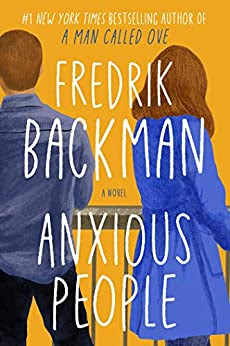
Reading ANXIOUS PEOPLE by Frederick Backman, which is humorous and gentle and also THE LAST BUS TO WISDOM by Ivan Doig. This is Doig's last novel.


We are supposed to hit 40 this week. Hurrah!
What are you up to?