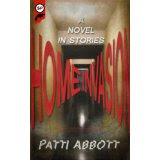
David Cranmer's terrific stories are now collected in this volume.
I suggest you get them hot off the press.
Western noir is the new hot genre. I think Ace Atkins said it somewhere yesterday but I'm stealing the line.

 THE SUMMING UP will come over the weekend. Sorry for the delay.
Ed Lynskey is the author of the newly released Lake Charles among other fine books.
The Bait by Dorothy Uhnak. 1968. Simon & Schuster.
One of the delights I’ve experienced in my writing career was the opportunity to conduct a phone interview with Dorothy Uhnak about a year or so before her tragic suicide in 2006. I’d read all of her novels, so I felt as if I’d had prepared enough. I needn’t have worried. She was a pistol, very friendly and engaging. You can read my interview and essay here: http://tiny.cc/ge08r.
The Bait won the 1969 Edgar Award for the best first novel, and Anthony Boucher praised it in his New York Times review column. It introduced her character Detective Second Grade Christie Opara (the surname is Czech) who went on to appear in two subsequent novels: The Witness (1969) and The Ledger (1970). Christie was based on Ms. Uhnak’s own fourteen-year career as a twice-decorated detective with the New York City Transit Police. Christie is a 26-year-old widow living with her small son Mickey and mother-in-law Nora.
After her husband died two years before in a construction job accident, Christie now works for Casey Reardon of the District Attorney’s Squad. En route to a big LSD drug bust, Christie arrests Murray Rogoff for indecent exposure while riding on the NYC subway. She sets off a chain of events that brings her back to clash with Murray under far darker circumstances. Three young ladies have been strangled, and Murray becomes the prime suspect.
I like Ms. Uhnak’s characterization, the precise mannerisms and pitch perfect dialogue she uses. She also injects enough gritty on-the-job realism to her cop tale without going overboard or bogging it down. The scenes showing the cops’ interactions feel natural and smooth. Banter and humor surface even when setting a trap with Christie offering herself as “the bait” for the murderous psychopath Murray. Christie strikes up a romantic interest with Reardon, a married man with a reputation for having affairs. I don’t remember how all that shakes out through the rest of the Opara trilogy.
Murray also wears special glasses to protect his lashless eyes and keep them moist. Ms. Uhnak told me she based his character on a real life perp she arrested who wore such special glasses. The perp left his lasting impression on her. She said she’d searched the police archives to hunt down his old arrest record.
I bought my paperback copy of The Bait from a used bookstore for $1.50. I thought our library system still shelved most of her books, but my online check just revealed all but one title have been culled. Within five years of her death, her books have disappeared. What a pity. She was a first-rate crime fiction writer and one of the pioneer lady authors working in the police procedural subgenre. At any rate, I suspect her used and ex-libris books are readily available for a mere few bucks.
Ed Gorman is the author of the recent STRANGLEHOLD and editor of ON DANGEROUS GROUND and Other Stories. You can find him here.
 word “picaresque” is taken from a form of satirical prose originating in Spain, depicting realistically and often humorously the adventures of a low-born, roguish hero living by his/her wits in a corrupt society.
 (Matt Letscher)

"How I Came to Write This Book"
BLACK SHADOWS
I have always been a writer. My earliest memories contain the writing of stories. As a child, I had dreams of being a film star, a spy or an author. It was clear that of the three, writing was my real passion, and dreams aside I was never going be cut out to be the next James Bond or Marlon Brando! Every opportunity I got, I would write whether it be stories, poems, reviews and I am sure, quite a lot of nonsense along the way.
For a while, life took over and writing took a back seat to playing the doting husband and father, kicking a football around on a Saturday afternoon, and bettering the lives of young children as a teacher. I suppose during this time I became more of a reader, devouring heaps of great books, from Ellroy's LA Noir to Haruki Murakami's awe-inspiring work. Old detective novels from the likes of Spillane, Chandler, Hammett, Max Allan Collins and Bill Pronzini were constant companions. It was clear, that soon I would return to my own writing, although the writing of Black Shadows was a very slow and steady process...
I started writing Black Shadows many years ago. After University, I embarked on a 12 month odyssey of adventure, travelling the world with my beautiful girlfriend. Alongside the odd pair of clean clothes and a stack of paperbacks, my most treasured possession was the notebook, which contained the chrysalis of my own hardboiled novel.
Upon hearing about Authonomy, a new website for aspiring authors, I gave Black Shadows a thorough edit and decided to upload. Authonomy was a rollercoaster journey, but did introduce me to many great people, some offering invaluable advice. It wasn't all good, but what it did do is give me the opportunity to polish and improve the novel. Black Shadows attained a gold star from authonomy in January 2010, on the way to becoming the all time top ranked crime novel and generating a record of over 1000 reviews.
Whilst waiting for the review, I took a deep breath and decided it was time to start querying agents. The first time I got a request to see the full manuscript my heart leapt. This happened many times and I received a good deal of positive feedback but unfortunately no deal. When the review from HC came through a couple of months later, to my immense relief it was very positive, in places it could even be described as glowing. Although HC were not offering a deal the review carried a clear message that Black Shadows was of publishable standard, but would be more suitable to a small niche press.
After submitting to Wild Wolf Publishing in August 2010, I was offered a contract to publish in January 2011. It was a hell of a long wait, and more than once I felt like it wasn't going to happen. When it did, I have to say, it felt great. The goal was always to get the story out and read and at one point, I had the dilemma of having more than one contract offer. What would normally be a writer's dream actually felt quite burdensome. I had to make the right decision!
Errol, the main character, has been developed over many years. I suppose he was born from a thousand mysteries, encapsulating Sam Spade, Phil Marlowe, Mike Hammer and more recently Max Allan Collins' Nate Heller. And of course with a good dose of Simon Swift mixed in there. I wanted to make him much more three dimensional than the typical wisecracking private eye, but not lose that authenticity and hardboiled grittiness.
Black Shadows is such a labyrinthine mystery, it was a constant worry, ensuring I maintained all the interweaving plotlines, subplots and red herrings. My intention was to steep it in history, the real life death of Dutch Schultz being the inspiration, and to weave the fiction around this.
I am currently putting the finishing touches to the sequel, The Casablanca Case, a much darker novel, which reveals much about the friendship of Errol Black and Hermeez Wentz. This is a crime mystery story, but also a tale about murder, betrayal and love.
Although Black Shadows has only been out a short while, it has already garnered some great online reviews to go with the Harpercollins' one.
Bestselling author and queen of the hardboiled novel, Debbi Mack, gave it the big thumbs up, as did bestselling crime author, Jake Barton. It was also featured on noir legend Alan Guthrie's crime blog and upcoming author Dan Holloway's. As Errol would say, "It is the start of something big!"
Website: http://errolblack.weebly.com/
Publishers website: http://wildwolfpublishing.com/SSwift.aspx
Amazon paperback (UK): http://www.amazon.co.uk/Black-Shadows-Simon-Swift/dp/1907954082/ref=tmm_pap_title_0?ie=UTF8&qid=1301345022&sr=1-11
Amazon paperback (US): http://www.amazon.com/Black-Shadows-Simon-Swift/dp/1907954082/ref=tmm_pap_title_0?ie=UTF8&qid=1301345022&sr=1-11
Amazon kindle: http://www.amazon.co.uk/Black-Shadows-ebook/dp/B004TAFNCM/ref=tmm_kin_title_0?ie=UTF8&m=A3TVV12T0I6NSM&qid=1301345022&sr=1-11
Waterstones online: http://www.waterstones.com/waterstonesweb/products/simon+swift/black+shadows/8542180/


 Two friends, Birdy (Modine) and Al (Cage), become friends at school and serve together in Vietnam. Birdy has a fixation with birds and his Vietnam experiences push him over the edge. Not as bad for a bird as a man.
 -stories/
 story. Needle.


This letter to Norman Court is a novella consisting of 22 sections (each around 1250 words) I am releasing by way of serializing the piece across blogs, by reader request. A little hub site is set up at www.normancourt.wordpress.com that has a listing of the blogs that have featured or will feature sections—please give it a look, get yourself all caught up if the below piques your interest.
It is my simple hope to use this as a casual, unobtrusive way to release this material to parties interested. As of now the 22 slots have all been requested (cheers to everyone for that) but if you enjoy what you read please do get in touch with me via unburiedcomments@gmail.com. I welcome any and all comments on the piece (positive, negative, or ambivalent) or general correspondence about matters literary.
Cheers,
Pablo D’Stair
seventeen
Asked the waitress did they sell cigarettes, tried to not think about she’d said No but there was the gas station across the street. Norman’d gone to the toilet, which time I’d considered slipping out, but as I hadn’t already and Norman seemed tame, if peculiar, figured I’d do best to figure out where his mind was.
Back to the booth, Norman sipped his coffee while I stared at the bourbon I’d not touched, played at the side of the glass with my thumb, tapped my fingernail. Tired of it all, Norman not talking, even looking at me, I told him I appreciated he’d seen fit to do right, get me off the hook with the police, but other than that there was nothing to do with anything me and him, me and Herman, me and Klia—said that name, he gave a look right at me made me slow through the rest of my list, dribbled to a stop, took a sip of drink.
-I could tell you were an awful person the moment I saw you.
-Cleared my throat a bit, leaned back, said Could tell you were a pervert got off reading how other guys’re humping the gal of your dreams second I opened that letter, your name the front.
He casually reached across, took up my glass—I tensed a bit, thought he was going to give it to me in the face, instead he drank it down, set it empty next to his coffee, nothing I could have a word with him about with him the one paying.
-You didn’t have to deliver that letter to Herman, but you did. You’d gotten everything you wanted.
This bit made me think I’d pegged it right early on he was some talk-doctor. Looked around, caught the waitress’ eye, did some pointing gesture she nodded at she’d bring another drink over next free moment she had.
-I was hoping you might kill the man who’d given you that letter.
-I grinned. Can’t think of a reason I’d ever do anything like that, Norman, sorry that’s what brought you out this way.
-I thought perhaps the reason could be you feel indebted to me for realizing that you’re just an awful person, scum beside anything to do with what’s happened, and realizing that I let you go.
-Played that hand a bit silly, didn’t you? Also you’ve got the wrong idea about I’m awful—go kill someone yourself that’s what you’re so interested in.
He shook his head, easing the messenger bag he’d been wearing since the hotel off his shoulder, setting it on the table.
-I couldn’t make myself so dirty. I wish I could. And I’d have no idea how to find someone so ugly as you, again, a person who could do it.
He pushed the bag across, cartoonish in the drama. I got the idea he was someplace else, had a half asleep look inside his eyes for all the intense way he kept them on me—sad look, I believed him about not wanting to be dirty, that he was somewhere inside some story his own and things like that were actual.
-Got the wrong idea about me, that’s the only thing, alright? I’ll take a bit of money get a letter place to place, take a little money don’t take a letter place to place—yeah, then guess I’ll just do what I want. That’s all, though. Don’t want your bag, whatever’s in it.
Soon as the waitress put down the new drink, Norman nodded thanks at her, took it over and downed it between three tilts of it back, cheeks bulged full from the third, first two sort of to build a momentum.
-You don’t have to tell me you’ve done it, I’ll know. All I need is you to tell me you promise.
-I don’t promise. Want me to take some money in some bag, I’ll take the money you don’t need it, that’s all’ll happen here. I’ll be honest with you that far because you did right by me, that’s all you’ll get from me anything like I promise.
He pushed the bag all the way over the lip of the table, my end, fell onto the bench next to me, a little way on top of my leg.
-Look at you, Trevor. You’ll never have anything because you’re nobody.
-I leaned in over the table top, got my head a bit sideways. Look at you, Norman. Never had anything, nothing now, only got someone you think’s nobody to go crying to about it.
His face seemed asleep, like all of this’s just what he’d daydreamed hundred times the ride over from Virginia, felt I was smoothed into his script no trouble, got thinking maybe he knew just what he said he knew about me, that he knew what I knew about him was the truth and didn’t care.
-I don’t promise and your make believe girlfriend is dead for you couldn’t keep her not dead, can’t do anything about it now, so you want your money-bag back you ask it back, otherwise I’ll take it you paid it to me for giving you things straight, then you can go off someplace and die, yourself.
When he stood I went a little bit cold, felt my gut shut in tight like I’d swallowed something heavy enough it’d dropped straight down me, stuck. Not even looking at me, he moved by, gave my shoulder a touch, the hair of my head—I’d not even noticed he’d left money on the table cover the drinks until after he’d gone out the door.
Waitress came around, asked her did what was on the table cover enough her tip and one more drink. She eyeballed it, said it would, so I asked her to leave another for me I get back from the toilet, she could keep whatever else on top.
Both stalls were open, so I closed myself in the wider one, sat sideways on the seat, eyes to the door, not trusting Norman wouldn’t be through any moment some pistol he’d left his car, wherever, still had a spook to me from how he’d just wandered off.
Undid the three buttons the bag, first thing my eyes set on was the pistol then there beneath it however much money it was, rolled in those awkward bundles just like Norman’d thrown at me before. Short little gun, way I always pictured a gun, compact, almost alive like it’d wrap itself around the outsides of someone’s fingers itself. Gun looked so heavy made the money beneath it seem soft, tissues’d been used over and over and waded.
I downed the bourbon waitress’d left without sitting, made my way to the motel office at a trot, waited behind someone checking in, woman from the first day working, giving me a nod.
-Not past check out, is it?
She shook her head.
-Like to get my third day back, then, before I’m charged the week.
While she rolled her eyes, explaining she’d go get some form I’d have to sign, I scanned around the suddenly empty, dust white lot through the glass of the office door, nothing except a snapping from the plastic bag the trash bin over by the newspaper machines, faint shush of the freeway traffic up the hill.
I signed the paper, she gave me back the one day in cash minus some cancelation fee I didn’t bring up my qualms about.
-Hank gave you your message this morning?
-I’d turned to look out the lot while she was talking, slowly turned back making a long M sound before the actual word Message. No. Yesterday. Someone’d left a number, Hank told me, yeah.
-Called again this morning, wants you to call him.
She handed me the number she’d jotted on a card. The lot outside’d just gone grey from white, sun on it now down through stiff line of clouds.
Pablo D’Stair is a writer of novels, shorts stories, and essays. Founder of Brown Paper Publishing (which is closing its doors in 2012) and co-founder of KUBOA (an independent press launching July 2011) he also conducts the book-length dialogue series Predicate. His four existential noir novellas (Kaspar Traulhaine, approximate; i poisoned you; twelve ELEVEN thirteen; man standing behind) will be re-issued through KUBOA as individual novella and in the collection they say the owl was a baker’s daughter: four existential noirs.

Anton lives the second half of the twentieth century as normally as he can, encountering Ploeg's son, and the various neighbors who also lived on his street, Discovering the truth is a slow process and it takes almost half a century to come upon the full truth.
This book perfectly sums up what happens during war: people who have no part in it suffer. And that suffering reverberates over the years.
The book was made into a movie that as far as I know is still not available. Strange since it won awards at the time. Mullisch is a Dutch writer, who died recently.


HOW I CAME TO WRITE HOGDOGGIN’
I did a really stupid thing.
I started writing the second book to feature bad cop Billy Lafitte before we’d sold the first one. And it had been out there for quite a while gathering rejections and silence. I was in that post-novel-writing stage where I wasn’t sure what to go with next. I’d been writing standalone (known outside the publishing world as “novels”) books so far, including a pretty sexually explicit one that went nowhere. So I should’ve headed to “mainstream thriller” territory, right?
Ha. Yeah. You must not know me so well.
The first thing that got me following after Lafitte again was an image. I couldn’t shake it. It was Billy Lafitte, on a Harley, riding back into Minnesota with a thick beard, ’stache, and sunglasses. That was it. Passing through small towns on his way to redemption.
So I tried that. A chapter in first person, Billy pulling up outside the Sheriff’s Department in Pale Falls, the same place he’d been humiliated in Yellow Medicine. And...that was it. It didn’t feel right. I didn’t have a story. I just had the image, and it went nowhere. I put it aside and worked on some other piece of shit for a few weeks.
The other thing was that in Yellow Medicine, some of my earliest readers saw the character of Federal Agent Franklin Rome as a really evil guy. They kept saying, “Why doesn’t Billy kill him at the end? That would be really satisfying.” Shocked the hell out of me. I always saw Rome as a basically good guy, just doing his job. The evidence pointed to Lafitte, and he doggedly pursued the evidence. Maybe he got it wrong and ignored some things because of the feeling in his gut, and maybe he was a bit too zealous in his investigation, which led to real tragedy for Lafitte, but he sure wasn’t evil.
That set up what I really wanted—a novel from both Rome’s and Lafitte’s points of view. Let Rome have a voice so people would be more sympathetic towards him. And since I never write purely good or evil characters, both of these guys would be complicated and tough to root for or against completely. Yes. Tension. Awesome.
Next, how did I get Lafitte back? I already knew he was a biker. Had to be. Felt right. And this was before the Sons of Anarchy had even started airing. (Man, I swear, the biker thing came out of the sky and smacked me in the head...about ten seconds before everyone else got hip to the biker revival). Then, another image. A towering bearded biker giant with followers like a cult. A god. Steel God. Master of life and death in his gang. In fact, the book begins with him passing judgment on a snitch in his club. His first words: “Fuckin’ guilty.”
But the happiest accident that made this the best writing experience of my life (for some reason, every day spent on this book jazzed me more) was the decision to go with third person and bring in a bigger cast of characters. It really made this world come to life in more vivid ways than it ever had before. I had told people that the voice in Yellow Medicine was that of a guy telling stories at a bar, and you’d be glad to keep buying his drinks if he kept up the blather, but you’d get chills when he asked you for a ride home.
For Hogdoggin’, I wanted his confidence stripped away. Seeing him from the outside, through the eyes of others who had different reasons to loathe him, he became more vulnerable, but also more dangerous. A trapped animal. Which is why the title fit perfectly.
I heard about it on the local news: a “sport” (sure) where pitbulls were set on either wild boar or farm pigs and ripped them to shreds. Horrible. The only title I ever considered for this book. Hogdogging.
Yeah, it started as a stupid career move, maybe, but it taught me that the story had to come first. I had to tell this story. It erupted out of me, just kept flowing hot all over the page (man, that sounded filthy). I was lucky to finally find a publisher for Yellow Medicine before I finished, and they wanted Hogdoggin’ on the same contract. But even if they hadn’t, I would’ve finished the book because it felt that right to me. Fuck sales. Fuck publishing. I had told the best story I possibly could, goddamn it.
I’m glad it got out into the world via Bleak House Books. They did a great job and made a handsome product. But I think we missed a lot of readers the first time around. SO I’ve been thrilled to get the rights back in time for the e-reader explosion. So many new readers, new friends, new fans of Lafitte. Not only am I confident that this story will get to people the same way it got to me, but I’m finally able to tell the next story in the Lafitte saga, one that’s been simmering for a few years. I’m starting to feel the same old stirrings of literary lava. So if you like the first two, then hold on tight for what’s to come.
Amazon.com: http://amzn.to/ljaiBi
Nook: http://bit.ly/lJB9ws
Neil Smith is also the author of YELLOW MEDICINE, PSYCHOMSOMATIC, and Choke on Your Lies.
You can find him here.