Sunday, October 04, 2015

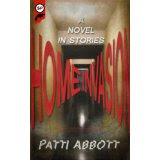
For You Philadelphia-Area Ghost Lovers

Saturday, October 03, 2015
On Hiatus Until After Bouchercon

Todd will do FFB next week. Thanks, Todd.
Oh, and this. Listen to Me Marlin on Crimespree Magazine
Friday, October 02, 2015
Ed McBain Day on FFB, October 2, 2015


Ed McBain Day, October 3, 2015
(From the NYT obituary by Marilyn Stasio)
Evan Hunter, Writer Who Created Police Procedural, Dies at 78
Evan
Hunter, the author who as Ed McBain virtually invented the American
police procedural with his gritty 87th Precinct series featuring an
entire detective squad as its hero, died yesterday at his home in
Weston, Conn. He was 78.
In
a 50-year career, Mr. Hunter, sometimes as Ed McBain and sometimes
using other names, wrote a vast number of best-selling novels, short
stories, plays and film scripts. With the publication of "Cop Hater" in
1956, the first of the 87th Precinct novels, he took police fiction into
a new, more realistic realm, a radical break from a form long dependent
on the educated, aristocratic detective who works alone and takes his
time puzzling out a case.
Set
in a New York-like metropolis named Isola, "Cop Hater" laid down the
formula that would define the urban police novel to this day, including
the big, bad city as a character in the drama; multiple story lines;
swift, cinematic exposition; brutal action scenes and searing images of
ghetto violence; methodical teamwork; authentic forensic procedures; and
tough, cynical yet sympathetic police officers speaking dialogue so
real that it could have been soaked up in a Queens diner between squad
shifts.
Lending
humanity to the grim stories that flood the 87th Precinct is a
revolving ensemble cast that includes Detective Steve Carella, the heart
and conscience of the squad room; his gentle, deaf wife, Teddy; the
rocklike Detective Meyer Meyer, whose father refused to give him a first
name because he didn't want to name him for "some goy"; Bert Kling, the
rookie cop who plays Candide to his hard-bitten elders; and Fat Ollie
Weeks, the equal-opportunity bigot.
For
all the studied muscularity of his style as Ed McBain, Mr. Hunter
considered himself an emotional writer rather than a hard-boiled one. "I
think of myself as a softy," he once said. "I think the 87th Precinct
novels are very sentimental, and the cops are idealistic guys." He was
also a stern moralist, and in many of his novels, this aspect surfaced
as a keening lament for the battered soul of his city.
"This
was a city in decline," he wrote in "Kiss" (1992). "The cabby knew it
because he drove all over this city and saw every part of it. Saw the
strewn garbage and the torn mattresses and the plastic debris littering
the grassy slopes of every highway, saw the bomb-crater potholes on
distant streets, saw the black eyeless windows in the abandoned
tenements, saw public phone booths without phones, saw public parks
without benches, their slats torn up and carried away to burn, heard the
homeless ranting or pleading or crying for mercy, heard the ambulance
sirens and the police sirens day and night but never when you needed
one, heard it all, and saw it all, and knew it all, and just rode on
by."
The
hard, blunt prose could not disguise a sophisticated stylist who hated
to be pigeonholed as a genre writer. "Not procedurals," a character in
"Romance" (1995) protests when someone slaps that label on books he
writes. "Never procedurals. And not mysteries, either. They were simply
novels about cops. The men and women in blue and in mufti, their wives,
girlfriends, boyfriends, lovers, children, their head colds,
stomachaches, menstrual cycles. Novels."
Although
other practitioners adopted the conventions that continue to
distinguish the realistic police procedural from the hard-boiled
American private-eye novel and the genteel British detective mystery,
many critics considered Mr. Hunter's command of the form to be
matchless, an assessment with which he no doubt would have concurred.
"I
feel that there is no other writer of police procedurals in the world
from whom I can learn anything," he told John C. Carr, editor of "The
Craft of Crime," "and in fact they all learn a lot from me." There
wasn't any point in his reading the competition, he said. "That's like
Michelangelo watching an apprentice paint in the white of an eye."
His
peers shared that assessment. The Mystery Writers of America awarded Ed
McBain its Grand Master Award for lifetime achievement in 1986, and in
1998 he was the first American to receive a Cartier Diamond Dagger from
the Crime Writers Association of Great Britain. Though his popularity
with readers never flagged, by the early 1990's his 87th Precinct novels
were particularly in vogue. And while earlier books in the series, like
"Eighty Million Eyes" (1966), "Sadie When She Died" (1972) and "Fuzz"
(1968), continue to be admired as vintage McBain, later, more complex
works like "Widows" (1991), "Mischief" (1993) and "Money, Money, Money"
(2001) racked up more robust sales in the United States and abroad. Ms.
Gelfman, his agent, estimated that in 50 years of writing, he had sold
more than 100 million copies of his work.
Despite
his popularity, Mr. Hunter could give the impression of a literary
talent who felt he had not been given his due, mainly because of the
limited success of film and television adaptations of his books.
Although several of his 87th Precinct novels were turned into films, and
a number of the novels were adapted for television in Japan, it rankled
that an American television series, "87th Precinct," was a failure in
the 1960's.
Instead, the show that revolutionized prime-time crime drama was "Hill Street Blues" in the 1980's.
Mr. Hunter had nothing to do with that series, but
he ruefully held to the conviction that it had drawn its concept,
characters and dramatic style from the McBain novels.
Despite
his renown as Ed McBain, it was as Evan Hunter that the author had his
first taste of literary acclaim, before he was 30. That was in 1954 for
"The Blackboard Jungle," a somewhat autobiographical novel about a young
teacher whose ideals are shattered when he is assigned to an urban
vocational high school with a half-savage student body. The next year it
was turned into a successful movie with Glenn Ford and Sidney Poitier.
Mr. Hunter followed "The Blackboard Jungle" with other best-selling
novels, including "Mothers and Daughters" (1961) and "Last Summer"
(1968).
He
also adapted some of his novels for the movies, including "Fuzz," a
1972 film starring Burt Reynolds, and "Strangers When We Meet" (1960),
starring Kirk Douglas and Kim Novak. But the most acclaimed of his 75 or
so screenplays was the one for "The Birds," the classic 1963 film that
he and Alfred Hitchcock adapted from a story by Daphne du Maurier.
Until
illness sidelined him, Mr. Hunter had been collaborating with the
composer Charles Strouse and the lyricist Susan Birkenhead on a musical
stage version of the 1968 film comedy "The Night They Raided Minsky's,"
about burlesque theater in New York.
For
many years, the Evan Hunter and Ed McBain bylines were strictly
separated to avoid any confusion or shock that readers of Evan Hunter's
"serious" books might feel when exposed to the "mayhem, bloodshed and
violence" that were Ed McBain's meat and drink. The author later
acknowledged a fusion of the literary styles he once considered
distinct. "Evan Hunter and Ed McBain are truly becoming one," he said in
1992, and in 2001 the two wrote the novel "Candyland."
Neither
name was his original one. He was born Salvatore Lombino on Oct. 15,
1926, inNew York City, the only child of a postal employee, Charles
Lombino, and his wife, the former Marie Coppola. He started writing
while serving in the Navy during World War II. He graduated Phi Beta
Kappa from Hunter College and held a teaching job that he would later
draw on for "The Blackboard Jungle."
Though
his Italian immigrant ancestry would inspire him to write a
generational saga, "Streets of Gold" (1974), he changed his name in
1952, believing that "prejudice against writers with foreign names" led
publishers to reject their work. "If you're an Italian-American, you're
not supposed to be a literate person," he said in 1981.
Mr.
Hunter's first two marriages, to Anita Melnick and Mary Vann Hughes,
ended in divorce. He is survived by his wife, Dragica; a son with Ms.
Melnick, Ted, of San Miguel, Mexico; two sons with Ms. Hughes, Mark, of
Paris, and Richard, of Monroe, Conn.; a stepdaughter, Amanda Finley of
New York; and two grandchildren.
Mr.
Hunter's first divorce, in 1973, led to the appearance of a new
character, Matthew Hope, a Florida divorce lawyer. Hope became an Ed
McBain hero in a separate series of novels, all bearing fairy-tale
titles like "Goldilocks," the first, in 1978. After a dozen books, he
quietly retired the series in 1998.
After
a heart attack in the 1980's, Mr. Hunter modified his routine of
writing 10 hours a day just about every day of the week. One result was
fewer, darker, more thoughtful books and a new philosophy: "When it's no
longer fun, I'll stop."
Correction:
July 8, 2005, Friday Because of an editing error, an obituary of the
novelist Evan Hunter yesterday misidentified the mother of two of his
three sons. His first wife, Anita Melnick (not his second, Mary Vann
Hughes) is the mother of Mark Hunter and Richard Hunter, as well as Ted
Hunter.
See also:
January Magazine tribute
Thrilling Detective Tribute

Most mystery readers have their favorite 87th Precinct novels. Mine would include HE WHO HESITATES because McBain has the sly ability to give us an 87th in which the 87th appears only a few times. The other would be GHOSTS because McBain manages to wrap one hell of a ghost story inside a police procedural.
For me the most enriching 87th is BLOOD RELATIVES. This is not to say that it's the finest in storyline or surprises or shock or bravura writing. But for me it is one of the most intriguing takes on romantic love I've ever read.
The opening chapter is a stunner. Muriel Stark, who is seventeen, is savagely slashed to death as her cousin Patricia watches helplessly. The slaughter of a white girl from somewhat privileged family insures both a police and a press frenzy. But Patricia has difficulty picking out a culprit in the line up--indeed she picks out a cop. And the suspects the 87th boys and girls pursue all seem to have some of those damned alibis. (Note: McBain gives us a particularly gaudy cast of low lifes here. But as he frequently does he brings them to full and sometimes sad reality.)
All this is to say that BLOOD RELATIVES is very good and in the tradition of the shorter 87ths. But what makes it remarkable is how, using the dead Muriel's diary as a means of understanding the complicated relationship she had with not only Patricia but also Patricia's brother, McBain is able to write an eloquent commentary on romantic love and sex.
I've reread the diary entires several times because they so perfectly capture the rite of passage many of us go through at some point in our lives. The entries are by turns tender, naive, painful, foolish, wise, mysterious and never less than riveting.
I knew Evan Hunter somewhat (among other things we were both diagnosed with cancer with eight days of each other) and I asked him if he thought most readers would appreciate the remarkable work he'd done with Muriel's voice and experiences. He said he hoped so but probably most readers read for plot and nothing more. I hope he was wrong.
See also:
January Magazine tribute
Thrilling Detective Tribute
BLOOD RELATIVES by Ed McBain (Ed Gorman)

Most mystery readers have their favorite 87th Precinct novels. Mine would include HE WHO HESITATES because McBain has the sly ability to give us an 87th in which the 87th appears only a few times. The other would be GHOSTS because McBain manages to wrap one hell of a ghost story inside a police procedural.
For me the most enriching 87th is BLOOD RELATIVES. This is not to say that it's the finest in storyline or surprises or shock or bravura writing. But for me it is one of the most intriguing takes on romantic love I've ever read.
The opening chapter is a stunner. Muriel Stark, who is seventeen, is savagely slashed to death as her cousin Patricia watches helplessly. The slaughter of a white girl from somewhat privileged family insures both a police and a press frenzy. But Patricia has difficulty picking out a culprit in the line up--indeed she picks out a cop. And the suspects the 87th boys and girls pursue all seem to have some of those damned alibis. (Note: McBain gives us a particularly gaudy cast of low lifes here. But as he frequently does he brings them to full and sometimes sad reality.)
All this is to say that BLOOD RELATIVES is very good and in the tradition of the shorter 87ths. But what makes it remarkable is how, using the dead Muriel's diary as a means of understanding the complicated relationship she had with not only Patricia but also Patricia's brother, McBain is able to write an eloquent commentary on romantic love and sex.
I've reread the diary entires several times because they so perfectly capture the rite of passage many of us go through at some point in our lives. The entries are by turns tender, naive, painful, foolish, wise, mysterious and never less than riveting.
I knew Evan Hunter somewhat (among other things we were both diagnosed with cancer with eight days of each other) and I asked him if he thought most readers would appreciate the remarkable work he'd done with Muriel's voice and experiences. He said he hoped so but probably most readers read for plot and nothing more. I hope he was wrong.
THE GUTTER AND THE GRAVE (1958) by Ed
McBain
Reviewed by Barry Ergang
 Matt Cordell makes it plain
on the first page: “I’m a drunk…I drink because I want to drink. Sometimes I’m
falling-down ossified, and sometimes I’m rosy-glow happy, and sometimes I’m cold
sober—but not very often…I live where being drunk isn’t a sin, though it’s
sometimes a crime when the police go on a purity drive. I live on New York’s
Bowery.”
Matt Cordell makes it plain
on the first page: “I’m a drunk…I drink because I want to drink. Sometimes I’m
falling-down ossified, and sometimes I’m rosy-glow happy, and sometimes I’m cold
sober—but not very often…I live where being drunk isn’t a sin, though it’s
sometimes a crime when the police go on a purity drive. I live on New York’s
Bowery.”
Five years prior to the
events in the novel, Cordell was a private detective who owned an up-and-coming
agency. When he returned home after being away for two weeks on a case and
caught his wife of four months in bed with one of his operatives, he severely
clubbed the man with his gun. “The police were so kind, the bastards. They
understood completely, but they took away my license and my gun and my pride.”
Cordell, who is now divorced
and a self-described bum and drunk, labels he seems to apply with conceit as
much as, if not more than, lamentation, and who lives for his next drink above
all else, is approached by an old acquaintance from their childhood days.
Johnny Bridges has inherited the tailoring shop from his father and has
partnered with a man named Dominic Archese. He wants to hire the detective to
look into cash register thefts, of whom he suspects Archese, that have occurred
over a six-month period. Cordell initially balks at the idea, but eventually consents
to examine the register and shop doors for signs of break-ins. When they
discover Archese shot to death and Bridges apparently framed for his murder,
Cordell advises Bridges to call the police and a good lawyer, but to keep him
out of it. In return, he’ll try to find the real killer.
Cordell subsequently meets Christine
Archese, Dom’s widow; Christine’s sister Laraine Marsh, with whom he becomes
intimately involved; Dave Ryan, who works for Bridges and Archese but who is
actually an aspiring musician; Dennis Knowles, a private detective of dubious
character; and Fran West, who works for Knowles and to whose charms Cordell is
not immune.
Complications arise when
there’s a second murder, and when some of the forenamed folks give conflicting
stories to Cordell, who then must try to determine which of them is telling the
truth and which is lying. Still another complication is police detective
Miskler,
who is neither the
stereotypically stupid nor irreceptive investigator.
Originally published
relatively early in the career of the estimable Evan Hunter (born Salvatore Lombino), who wrote under a number
of pseudonyms, the most famous and important of which was Ed McBain, this novel
first appeared as a Fawcett Gold Medal paperback under the title I’m Cannon—for Hire, bylined Curt
Cannon. (See the Matt Cordell/Curt Cannon article at The
Thrilling Detective website for more information.) It’s a short, fast-paced,
hardboiled novel which is an engrossing—and recommended—read.
© 2015
Barry Ergang
Derringer Award-winner Barry Ergang’s written work has
appeared in numerous publications, print and electronic. Some of it is
available at Amazon and at Smashwords. His
website is http://www.writetrack.yolasite.com/.
ME AND HITCH, Evan Hunter (Patti Abbott)

Hunter was nonplussed about just how he could make a full-feature film, and one that would satisfy Hitch's ambition, from the short story. Every day he would work on it and was called in by Hitch who would ask him to tell him the story so far. More often than not, they disagreed on the parts of the two women, played by Tippi Hedren and Suzanne Pleshette. It was interesting to watch Hitch make Pleshette as dowdy as possible in order to emphasize the brittle beauty of his current blonde, a very inexperienced and thus malleable Hedrin.
More and more, the script became scenes with birds attaching Hedren and other actors. As Hunter says, "The trouble with our story is that nothing in it was real. Hitch has bought a bizarre novella about plain people attached by the gentlest of creatures. He had then hired a realistic novelist from New York to change these characters into the sort of sleek, beautiful people he liked to see on the screen: the Cary Grants and Grace Kellys of the world. Even if the script had worked--which it didn't--Tippi Hedren and Rod Taylor were no Grave Kelly and Cary Grant. But Hitch never gave it an honest shot. He told me that he felt he was entering a Golden Age of his creativity and THE BIRDS would be his crowning achievement."
Not satisfied in the end with Hunter's script, he had other writers add scenes that weakened what was already a weak story.
The book also details the personal relationship that developed between the two families, which was strange too.
When it came to MARNIE, the situation grew worse. "There was no doubt in my mind that he had decided to film the Winston Groom novel only because he saw it as a vehicle for Grace Kelly." His attempts to lure her back went unmet and it was Hedren again. In the end. he fires Hunter.
This was an enjoyable and quick read. For further illumination, you can watch the movie THE GIRL where all of the travails of making the film are detailed.
Mothers and Daughters by Evan Hunter
(Review by Deb)
(Review by Deb)

First published in 1961, Mothers
and Daughters
covers the lives of four women from roughly 1940 through 1960, focusing
on both the social and personal changes they go through and how the
various threads
of their lives intertwine. Amanda Soames is a demure, well-bred
minister’s daughter, very much an “ice princess” from far-away Minnesota
(sometimes the symbolism is a bit obvious). Gillian Burke, the
Bronx-born daughter of Irish immigrants, is her college
roommate, an altogether more boisterous and ambitious woman from a
decidedly less refined background. Amanda and Gillian first meet in
1941 at Talmadge College, Connecticut (a stand-in for Julliard). Amanda
is a promising music student, while Gillian pursues
dramatic studies. Into the mix eventually comes Kate, Amanda’s niece,
adopted by Amanda and her husband because of Kate’s mother’s mental
illness. There’s also Julia Regan, a woman who spends much of her time
dwelling on her great pre-war love affair. Julia
is the mother of David Regan—a man who has experienced such severe
traumas that he cannot overcome them even with Gillian’s love and
support.
Reading the book again, I was struck by some of its insight: There’s a real Mad
Men
vibe to the life Amanda and her husband lead in the 1950s suburbs of
Talmadge. You can also see Amanda—who once dreamed of a life as a
serious composer, reduced to running
errands for the P.T.A. and hosting Boy Scout meetings—struggling with
the “problem” that Betty Freidan would be writing about very soon in The Feminine Mystique:
How
highly-ambitious, capable, educated women were shunted to the suburbs
in post-WWII America, often left with no challenging or meaningful
work. And in Gillian’s thwarted ambition to break into the
upper-echelons of the acting profession (every potential
“big break” eventually peters out), we can see Hunter’s experience in
the entertainment world where he wrote scripts for TV and movies and had
a first-hand view of the humiliations and compromises found there.
Julia
Regan is, to my mind, the most interesting character in the book. The
oldest of the four
main characters, Julia has the most complicated back story and it is she
who is the possessor of the “shocking revelation” (not so shocking by
our standards, but I think it packed quite a punch 55 years ago). Julia
is not a likeable character—she has undoubtedly
caused much heartbreak to her husband and her son—but she is written in a
way that makes the reader understand (if not sympathize with) her.
Admittedly,
some parts of the book have not aged well. Matthew Bridges, Amanda’s
husband, is
the sort of domineering Alpha male (who knows what’s best for Amanda and
campaigns for her until she gives up in an exhaustion that she is
convinced is love) who would be considered toxic in today’s world.
Similarly, Matthew’s flashback to his first sexual
experience, which is described in a way that could only be considered
“date rape,” would never be presented in such a neutral way today. And I
doubt any parent of a teenage girl would be as sanguine as Matthew and
Amanda are about Kate’s relationship with
a man twice her age.
But
there is also much to admire about the book. It is packed with
information about the mid-twentieth
century, everything from methods of treating mental illness to the
development of post-war suburbs to the advance of the automobile culture
to how television sponsors intervened to change controversial material,
no matter how worthy; and all of this information
is woven into the lives and stories of the characters so that it doesn’t
seem forced or superfluous. The book also does a wonderful job of
capturing the post-war zeitgeist in New York and its surrounding
suburbs. If parts now seem dated, other parts could
have been written yesterday. Mothers and Daughters is a worthwhile book that deserves
to be better known as part of Evan Hunter’s/Ed McBain’s canon.
Evan Hunter, Find the Feathered Serpent (1952)
Curt Cannon, I Like 'Em Tough (1958)
by Jeff Meyerson
I've been a fan of Evan Hunter since I read my first 87th Precinct book by "Ed McBain" back in 1973. (For the record, it was Fuzz.
I'd seen the 1972 movie with
Burt Reynolds as Carella, a perfectly cast Jack Weston as Meyer Meyer,
and Yul Brynner as their arch-nemesis The Deaf Man.) Over the years
since I've read a large proportion of his oeuvre under various names,
without coming close to reading them all. I have
half a dozen unread on my shelves, but the total read is currently 93. I
thought I'd try and pick out something different for this week's
reviews, rather than the obvious, and came up with these.
Find the Feathered Serpent was Hunter's first published book, back in 1952 when he was in his mid-twenties, a couple of years before he hit it big with The
Blackboard Jungle. It was in the Winston
Science Fiction series, obviously aimed at teenage boys, and should be
judged in that context, but in any context I quite enjoyed reading it
for the first time this year. As some of you
know I like time travel stories and this is one, even if an even more
than usually unbelievable one. Sixteen year old Neil Falsen gets to go
on the first trip in his father's time machine when the latter breaks
his leg, and he endsup in the Yucatan several
centuries back meeting the ancient Mayans, and teaming up with some
off-course Vikings who show up in time to rescue him and his friend. It
isn't something to take seriously but it was a lot of fun to read this
fast-moving, entertaining book.
I wanted to review one of Hunter's short story collections, but as I don't have a copy of The Last Spin (with its memorable title story) on hand, decided to go
with one I did have, I Like 'Em Tough by Curt Cannon. These six shorts were originally published in Manhunt
in 1953 and 1954, and I believe
the lead character was called Matt Cordell then. Here he is Curt
Cannon, a formerly successful private investigator (he had several men
working for him) who came home one day and found his wife in bed with
his best friend. He beats the guy with his gun butt,
which gets his license revoked (though the charges are dropped) and ends
up, literally, as a Bowery bum. He drinks himself insensible and
sleeps in cheap hotels or flophouses or, when he has no money, in
doorways on the street.
The catch is, however, that
people won't leave him alone. Friends from the old neighborhood keep
seeking him out for help in finding loved ones or helping them, and
despite everything they pull him back in (as Michael
Corleone so memorably said). The one part I found hard to accept is
that several women who you'd think would know better throw themselves as
him, despite the smell of his clothes and breath.
I originally read this one in
1981 and found myself racing through it quickly last week. Hunter was a
great storyteller under whatever name he used, and while not everything
he wrote was a classic (his Matthew Hope book
Mary, Mary was the worst) he was always readable. I hope this week's FFB will encourage people to give him a try.
Jeff Meyerson
Sergio Angelini, EIGHT BLACK HORSES
Bill Crider, FIDDLERS
Ed Gorman, GUNS
Jerry House, "The Intruders"
George Kelley, HAIL, HAIL, THE GANG'S ALL HERE
B.F. Lawson, NOCTURNE
Todd Mason, MALICE IN WONDERLAND
Scott Parker, Three Reviews
Matthew Paust, THE LAST BEST HOPE and WIDOWS
James Reasoner, GOLDILOCKS
Richard Robinson, KILLER'S WEDGE
Kevin Tipple, KING'S RANSOM
TracyK, THE CON MAN
Violent World of Parker, DOWNTOWN,
And other contributors
Joe Barone, ACCUSED, Lisa Scottoline
Brian Busby, THE MAYOR OF COTE ST. PAUL by Ronald J. Cooke and HOT FREEZE, Douglas Sanderson
Scott Cupp, DANGER: DINOSAURS, Richard Marsten
Rich Horton, DORA THORNE, Charlotte Mary Braun
Nick Jones, RIPLEY UNDER WATER, Patricia Highsmith
Margot Kinberg, DEATH'S GOLDEN WHISPER, R.J. Harlick
Evan Lewis, A KILLING IN COMICS, Max Allan Collins
Steve Lewis/David Vineyard, THE CANARY MURDER CASE. S.S. VanDine
Neer, THE GHOST OF FLIGHT 451, John G. Fuller
Gerard Saylor, HYENAS, Joe R. Lansdale
WESTLAKE REVIEW, JIMMY, THE KID, Donald Westlake
A.J. Wright, WYATT BLASSINGAME
Zybahn, IN THE HEAT OF THE NIGHT, John Ball
Tuesday, September 29, 2015
Forgotten Movies: DELIMAN

This documentary focuses on Ziggy Gruber, who co-owns a large deli in Houston and is also the grandson of the original owner of the Rialto Deli, the first Kosher deli to open on Broadway in New York City in the 1920s. The deli is the main love in this man's life. While the film also covers other famous Jewish delis in Manhattan, Queens, Los Angeles and San Francisco and their histories, the emphasis is on the cultural aspects of the food and how the culture and the desire for this food is disappearing. There were once thousands of these delis and now there's fewer than 150 left in the entire U.S. Such luminaries as Larry King, Jerry Stiller, Fyvush Finkel, Freddie Roman and Alan Dershowitz as well as various deli owners express their love for the culture and the food.
This is the description on IMDB and I would add that it sort of spells a death knell for the deli except as a cultural artifact. The food isn't healthy and younger people have not acquired the taste for it that their parents had. Ziggy is a great character and along with the deli, the love of his life is his grandfather who gave him his first apron at eight.
However nothing beats (for me) a corned beef sandwich on rye with coleslaw, swiss cheese and Russian dressing. I grew up in a neighborhood where this was as common as a hamburger. How about you? When was the last time you had lunch in a deli? I bet unless you live in an urban area, it was quite a while ago.
Monday, September 28, 2015
Religious Themes in Crime Fiction

Margot's review last week of FRIDAY THE RABBI SLEPT LATE reminded me that there are crime-solving religious folks in the literature. The Pope's visit also brought this home.
Who are your favorite religious sleuths? Or what novel with such themes do you especially like?
Friday, September 25, 2015
Friday's Forgotten Books, Friday, September 25, 2015

From the archives
Al Tucher is the author of many stories about the delightful Diana. You can find him here.
 LONESOME ROAD
 LONESOME ROAD
By George Harsh.
Since
1986 I have worked as a cataloger at the Newark Public Library, which
has existed since 1883. The library has some very deep collections, and
exploring them is both my job and a perk of my job. A recent project
in the biography section brought me into contact with Lonesome Road, a 1971 memoir by George Harsh.
In
1928 Harsh was a rich, arrogant, idle young college student in
Georgia. He and other rich, arrogant, idle young men spent much of their
time discussing their superiority over the masses and the uses to
which they should put that superiority. This was only four years after
the Leopold and Loeb case, but it seems part of the “superman”
pathology to dismiss possible lessons from anyone else’s experience.
The young men in Harsh’s circle decided that they were able and
therefore obligated to commit the perfect crime.
For
the thrill of it they began a string of armed robberies. When a store
clerk resisted, Harsh was the one holding the gun and the one who fired
the lethal shot.
The police easily caught
the young supermen, and Harsh was sentenced to death. His codefendants
received life sentences, and the prosecutor, troubled by the disparity,
succeeded in having Harsh’s sentence commuted to life. Writing years
later, Harsh is unsparing toward his young self. He deserved to hang,
he says, but he received more mercy than he had shown with the gun in
his hand.
He spent the next several years on
a Georgia chain gang that was brutal even by the standards of the time
and place. Eventually, he became a trusty with a job as an orderly in a
prison hospital.
Here we encounter the
first of several plot twists that only reality can get away with
writing. When an inmate needed an emergency appendectomy, a freak ice
storm kept the staff physicians from reaching the hospital. Harsh, who
had assisted at several such operations, performed the surgery and
saved the man’s life. The governor of Georgia pardoned him.
The
year was 1940. George Harsh felt undeserving of peace and security
while so much of the world was at war. He traveled north and joined the
Royal Canadian Air Force. Harsh flew numerous bombing missions over
Germany. His luck ran out in 1942, when he was shot down. His captors
sent him to Stalag Luft III.
Fiction writers, try getting away with that one. In the 1963 film The Great Escape, the
character called Intelligence, played by Gordon Jackson, is based on
Harsh. He was not one of the 80-plus POWs who made it through the tunnel
before it was discovered, which was just as well. Only a handful made
it to safety. The rest were recaptured, and the Gestapo summarily
executed more than fifty of them.
Harsh survived a brutal forced march westward, away from the advancing Red Army. His narrative ends there.
His
story does not. In 1945 he was in his mid-thirties and had spent mere
days as a grown man neither incarcerated nor at war. In another twist
that in its own way might be the strangest of all, he worked for a
while as a publisher’s traveling sales representative. The experiment
in freedom was not a success. The memory of his crime tormented him,
and he attempted suicide. Later he suffered a stroke, and in 1980 he
died.
No collaborator in the writing of this
book is named. If it is Harsh’s work, it counts as a remarkable
achievement. He knows when and how to make his writing as terse and
urgent as Morse code in the night, and his meditations on freedom,
imprisonment, violence and war come with a hard-earned authority.
Did
George Harsh atone for his crime? It’s a tough call that will vary
from reader to reader. Does his book deserve a place on the shelf? In
my mind, beyond all doubt.
Sergio Angelini, THE WIDOW OF BATH, Margot Bennett
Yvette Banek, BOOK COVERS
Brian Busby, THE DAMNED AND THE DESTROYED, Kenneth Orvis
Bill Crider, THE BOYS FROM GROVER AVENUE, George N. Dove
Martin Edwards, THE MAN WHO KILLED HIMSELF, Julian Symons
Ed Gorman, THE SHORT STORIES OF ERNEST HEMINGWAY
Rick Horton, Another Ace Double: The Sun Saboteurs, by Damon Knight/The Light of Lilith, by G. McDonald Wallis
Jerry House, THEY CAME FROM OUTER SPACE, Jim Wynorski
Nick Jones, CAROL, Patricia Highsmith
George Kelley, THE GONZO PAPERS ANTHOLOGY, Hunter S. Thompson
Margot Kinberg, FRIDAY THE RABBI SLEPT LATE, Harry Kemelman
Rob Kitchin, ROME '44 William Treveleyn
K.A. Laity, THE JAMES BOND DOSSIER, Kingsley Amis
B.V. Lawson, APPLEBY'S END, Michael Innes
Evan Lewis, FEARLESS FOSDICK, Al Capp
Steve Lewis/Dan Stumpf, HANGING JUDGE, Bruce Hamilton
Todd Mason, PUNAHOU BLUES, Kirby Wright
Neer, THREE CASES OF PERRY MASON, Erle Stanley Gardner
J.F. Norris, SEVEN DEAD, Jefferson Farjeon
Prashant Trikannad, The Novels of Jack Higgins
James Reasoner, SUPERMAN IN THE SEVENTIES
Richard Robinson, THE MAMMOTH BOOK OF NEW SHERLOCK HOLMES ADVENTURES, ed. Mike Ashley
Kevin Tipple/Barry Ergang, FAT OLLIE'S BOOK, Ed McBain
TomCat, THE CHINESE MAZE MURDERS, Robert van Gulik
TracyK, ASK FOR ME TOMORROW, Margaret Millar
Westlake Review, HELP, I AM BEING HELD PRISONER, Donald Westlake
Wednesday, September 23, 2015
Network TV

Am I missing something I need to see on the networks? Do you still watch any of them?
Tuesday, September 22, 2015
Twin Sisters
From IMDB)

Lotte fares better. She was a frail girl growing up and her relatives dote on her since they regard her as an invalid. Lotte writes to Anna letters during the first years of being apart, but those letters are never sent.
The other encounter of the sisters occur too late in life. Lotte, who when first visits Anna at the place where she is employed as a maid, by a wealthy Nazi sympathizer, is appalled by the way Anna has turned out to be an anti Semite. This puts a barrier between them not to be broken until both are too old and too stubborn to recognize how wrong they both have been about the past. Their last reunion is a bitter experience, especially for Anna, who is in poor health.
This excellent Dutch film directed by Ben Sombogaart, is based on a novel by Tessa DeLoo, which was published in this country as "Twins", gets a magnificent treatment in a lavish production that covers several decades. The action is set in Holland and in Germany.
The film shows a talented director, Ben Bombogaart, doing an excellent job in this richly layered tale of sisterly love and missed opportunities. Heartbreaking but all too convincing.
Wednesday, September 16, 2015
My Agatha Christie Experience

What to read next? We walked up the steps to the boardwalk and a down a few streets to where a bookstore had put boxes of low-priced books with covers missing that they were selling for a quarter each. Many of them were mysteries. Now I had watched my mother read mysteries for years, but once I got past Nancy Drew eschewed them myself. I was into LITERATURE.
But both Phil and I picked one up that day, figuring we could trade when we were done. If we could manage to read a mystery, that is. By the end of the afternoon, we had already traded. I believe the first one I read was THE MURDER OF ROGER ACKROYD. Because I had so little experience with mysteries, I had no notion of how unusual the ending was. By the end of our two weeks at the shore, we had read every Agatha Christie at that shop. We had done little else, in fact.
And we did not stop hunting them down until we had every one of them.
And then tragedy struck. A friend had a ill grandmother and asked me if I would consider loaning her my Agatha's for her long recovery. I obliged and a few months later, when I asked if she was done with them, was told that she had passed them along to a used book sale. "So many of them didn't even have covers," my friend said.
I never had the heart to buy another but I look at them longingly every once in a while.
Tuesday, September 15, 2015

Forgotten Movies: PROJECT NIM

PROJECT NIM was a documentary made in 2011. It concerns a chimp, taken from his mother shortly after birth, raised for a while by a human family and then the subject of various experiments in the use of sign language by chimps. But what the experiment devolved into was an experiment in how chimps, especially male ones, are far too strong, sexually interested and completely thrown off stride by such experiments. Nim's situations deteriorate until he is finally sent to live in a facility for mistreated animals--which he was although inadvertently.
This is one of the saddest tales I have even seen. There was no way it could have turned out any differently, He was deprived on any sort of normal chimp life-or any kind of human one. Poor Nim.
Monday, September 14, 2015
It's Damn Hard to Think of a New Idea

does not make ma any happier.
What topics are you tired of? Is it possible we have gone to the wells too many times and there is nothing new to mine?Remember those days of yore when finding the heist team was enough? Or proving someone did not commit suicide?
Friday, September 11, 2015
Friday's Forgotten Books, September 11, 2015

MURDER OF A BEAUTY SHOP QUEEN, Bill Crider (Patti Abbott)
Bill Crider makes writing delightful books look easy. In fact, it is not easy to combine a satisfying crime and its solution with great characters, terrific local color, a wry sense of humor and a style of writing easy to digest. Sheriff Dan Rhoades solves crimes and keeps order (and it is not always simple with a domestic animal population that is as troublesome as their owners, and in the case of feral pigs, no owners) down in Blacklin County, Texas.
Bill Crider makes writing delightful books look easy. In fact, it is not easy to combine a satisfying crime and its solution with great characters, terrific local color, a wry sense of humor and a style of writing easy to digest. Sheriff Dan Rhoades solves crimes and keeps order (and it is not always simple with a domestic animal population that is as troublesome as their owners, and in the case of feral pigs, no owners) down in Blacklin County, Texas.
In this outing from 2012, Lynn Ashton, a pretty hair stylist
has been bashed over the head with a hair dryer. Suspects range from scorned
lovers, to jealous wives, to two outsiders who have been scraping the town. Or
maybe Lynn saw something she shouldn't have as she waited for a rendezvous with
one of her clients. The characters, both new and old, all are the beneficiaries
of inventive character development and the conclusion is satisfying and solid.
The Collected Stories of Stephen Crane (Ed Gorman)
The Collected Stories of Stephen Crane (Ed Gorman)
As the prime creator of Realism Stephen
Crane shocked the world of letters both in his writing and his personal
life. His first book was Maggie: A Girl of The Streets and he spent a
good share of his adult life (as much of it as there was--he died at
twenty-eight) living with Cora Taylor, the madame of a brothel. He wrote
dozens of short stories as well as his masterpiece The Red Badge of
Courage.
While he was accepted and praised by the literary critics of the time, he was frequently derided for the pessimism and violence of his stories. He brought "the stink of the streets" into literature as one reviewer said. But his streets could be found all over America, not just in the cities.
The Open Boat, The Blue Hotel, The Bride Comes to Yellow Sky, Shame and The Upturned Face give us portraits of different Americas. As I was rereading them lately I realized that they all have two things in common--their utter sense of social isolation and the intensity of their telling. Hemingway always put up The Blue Hotel as one of the most intense-"bedeviled"--stories in our language and man he was right. The fist fight in the blizzard on the blind side of the barn is one of those most hellish insane scenes I've ever read. And the ironic words at the last honestly gave me chills, even though I knew what was coming. His years as a journalist gave him a compassion for society's discards no matter where they lived or what color they happened to be.
His sense of place changed writing. Whether he was writing about the slums of Brooklyn or the endless ghostly plains of Nebraska in winter, his early years as a poet gave his images true clarity and potency. One critic of the time said his stories were possessed of "a filthy beauty" and that nails it.
Only a few of his stories are taught today; Red Badge is mandatory in schools. But in the many collections available of his stories you find a passion for life and language that few writers have ever equaled. Too many American masters get lost in the shuffle of eras. Crane is not only an artist he's one of the finest storytellers I've ever read.
Sergio Angelini, HEAT, Ed McBain
Yvette Banek. PASTIME, Robert Parker
Mark Baler, B IS FOR BURGLAR, Sue Grafton
Joe Barone, THE PATRIARCH, Martin Walker
Les Blatt, DIVIDEND ON DEATH, Brett Halliday
Brian Busby, MURDER WITHOUT REGRET, E. Louise Cushman
Bill Crider, A STRANGE KIND OF LOVE, Sheldon Lord (Lawrence Block)
Scott Cupp, THE WHISPERING GORILLA and THE RETURN OF THE WHISPERING GORILLA, Don Wilcox
Martin Edwards, KNOCK,MURDER, KNOCK, Harriet Rutland
Curt Evans, DEATH COMES TO TEA, Theodora DuBois
Ed Gorman, SATURDAY GAMES, Brown Meggs
John Hegenberger, TIMESCAPE, Gregory Benford
Rick Horton, TIMES WITHOUT NUMBERS, John Bruner
Jerry House, COME TELL ME HOW YOU LIVE, Agatha Christie Malloran
Nick Jones, THE SCORE, Donald Westlake
George Kelley, TALES OF THE OCCULT, ed. Isaac Asimov et al
Rob Kitchin, Mangrove Squeeze, Laurence Shames
B.V. Lawson. MISTLETOE FROM PURPLE SAGE, Barbara Burnett Smith
Evan Lewis, KILLER IN THE RAIN, Raymond Chandler
Steve Lewis/Barry Gardner, KISSING THE GUNNER'S DAUGHTER, Ruth Rendell
Todd Mason, ALFRED HITCHCOCK, A HANGMAN'S DOZEN, ed. Lisa Belknap
Neer, TALES OF THE UNEXPECTED, Roald Dahl
J.F. Norris, BRING THE BRIDE A SHROUD, D.B. Olsen
James Reasoner, THE EROTICS, Gil Brewer
Richard Robinson, THE MOOR, Laurie R. King
Kevin Tipple/Barry Ergang, A TIME OF PREDATORS, Joe Gores
TomCat, NINE MAN'S MURDER, Eric Keith
TracyK, WHERE MEMORIES LIE, Deborah Crombie
Westlake Review, BUTCHER'S MOON, Part 2
While he was accepted and praised by the literary critics of the time, he was frequently derided for the pessimism and violence of his stories. He brought "the stink of the streets" into literature as one reviewer said. But his streets could be found all over America, not just in the cities.
The Open Boat, The Blue Hotel, The Bride Comes to Yellow Sky, Shame and The Upturned Face give us portraits of different Americas. As I was rereading them lately I realized that they all have two things in common--their utter sense of social isolation and the intensity of their telling. Hemingway always put up The Blue Hotel as one of the most intense-"bedeviled"--stories in our language and man he was right. The fist fight in the blizzard on the blind side of the barn is one of those most hellish insane scenes I've ever read. And the ironic words at the last honestly gave me chills, even though I knew what was coming. His years as a journalist gave him a compassion for society's discards no matter where they lived or what color they happened to be.
His sense of place changed writing. Whether he was writing about the slums of Brooklyn or the endless ghostly plains of Nebraska in winter, his early years as a poet gave his images true clarity and potency. One critic of the time said his stories were possessed of "a filthy beauty" and that nails it.
Only a few of his stories are taught today; Red Badge is mandatory in schools. But in the many collections available of his stories you find a passion for life and language that few writers have ever equaled. Too many American masters get lost in the shuffle of eras. Crane is not only an artist he's one of the finest storytellers I've ever read.
Sergio Angelini, HEAT, Ed McBain
Yvette Banek. PASTIME, Robert Parker
Mark Baler, B IS FOR BURGLAR, Sue Grafton
Joe Barone, THE PATRIARCH, Martin Walker
Les Blatt, DIVIDEND ON DEATH, Brett Halliday
Brian Busby, MURDER WITHOUT REGRET, E. Louise Cushman
Bill Crider, A STRANGE KIND OF LOVE, Sheldon Lord (Lawrence Block)
Scott Cupp, THE WHISPERING GORILLA and THE RETURN OF THE WHISPERING GORILLA, Don Wilcox
Martin Edwards, KNOCK,MURDER, KNOCK, Harriet Rutland
Curt Evans, DEATH COMES TO TEA, Theodora DuBois
Ed Gorman, SATURDAY GAMES, Brown Meggs
John Hegenberger, TIMESCAPE, Gregory Benford
Rick Horton, TIMES WITHOUT NUMBERS, John Bruner
Jerry House, COME TELL ME HOW YOU LIVE, Agatha Christie Malloran
Nick Jones, THE SCORE, Donald Westlake
George Kelley, TALES OF THE OCCULT, ed. Isaac Asimov et al
Rob Kitchin, Mangrove Squeeze, Laurence Shames
B.V. Lawson. MISTLETOE FROM PURPLE SAGE, Barbara Burnett Smith
Evan Lewis, KILLER IN THE RAIN, Raymond Chandler
Steve Lewis/Barry Gardner, KISSING THE GUNNER'S DAUGHTER, Ruth Rendell
Todd Mason, ALFRED HITCHCOCK, A HANGMAN'S DOZEN, ed. Lisa Belknap
Neer, TALES OF THE UNEXPECTED, Roald Dahl
J.F. Norris, BRING THE BRIDE A SHROUD, D.B. Olsen
James Reasoner, THE EROTICS, Gil Brewer
Richard Robinson, THE MOOR, Laurie R. King
Kevin Tipple/Barry Ergang, A TIME OF PREDATORS, Joe Gores
TomCat, NINE MAN'S MURDER, Eric Keith
TracyK, WHERE MEMORIES LIE, Deborah Crombie
Westlake Review, BUTCHER'S MOON, Part 2
Subscribe to:
Posts (Atom)