Thursday, February 24, 2011

"How I Came to Write This Book" Cara Black


"How I Came to Write This Book"
Cara Black

Sometimes I feel like writing a murder mystery isn't that unlike being a detective. At the beginning, you can see the pieces of the puzzle you want to write, but you can't always see how they're going to fit together. My case--that is, the novel I set out to crack--is in some ways a parallel for the case my detective, Parisian private investigator Aimée Leduc, has to solve. We're both discovering what comes next.
Murder in Passy, the eleventh Aimée Leduc novel I've written, started like all the others, with a germ of a story I knew I wanted to write. In this case, the germ was Basque. Years ago, when my son was very small, we did a house exchange in France. My husband is a surfer and was excited to spend a couple weeks on the coast in Basque country, where they're famous for getting great Atlantic waves. This was fine with me--in San Francisco, we'd often go to the Basque cultural center, with their wonderful exhibits, and to eat Basque food. All of the Basques I'd ever met were so kind and welcoming I knew their country would be the same.
Several days into our stay, we decided to go on an excursion over the mountains. As we got into the car and headed off into the Pyrenees, all three of us were giddy with the prospect of driving to Spain and eating tapas. Two hours later, we were totally lost on the one-lane mountain roads. We kept our eyes peeled for clues back to the road we wanted, but the road signs had all been obscured by menacing black graffiti--the work of the ETA, the Basque separatist terrorist group. Although the lush pastoral setting around us was still beautiful, we felt uneasy now. Finally, we came across a group of old farmhouses that had all been reduced to rubble. It looked as though they had been bombed. I've never been able to forget that moment, how surprised and scared we were. I thought of my Basque friends, and could only imagine how they felt about the things that were going on in this country they loved so much.
My Aimée Leduc mysteries are set in mid-90s Paris, and for Murder in Passy, which takes place in November 1997, I had finally reached the perfect place to build a Basque story into my plot. In the fall of 1997, Basque issues and the ETA were very much in the news.
I wasn't certain who my Basque characters would be, though, until I finally caved into the nagging of a good friend of mine who lives in the 16th arrondissement. She'd always urged me to come visit her, but I'd resisted. "It's too boring there," I'd tell her, "so chic chic." She assured me that there were jewels to be found, and that if I came to stay with her, she'd show them to me.
As it turns out, Passy--one of several villages in the very fancy 16th arrondissement--had historically been a home to many Basques, and had once housed the Basque Cultural Center of Paris. That was only the tip of the iceberg; my friend was right that there was plenty to see. The neighborhood is a collection of villages that have been folded into the structure of the metropolis. Modern building fronts screen grassy stretches and old hidden mansions from the streets. Passy wasn't even part of Paris until 1860; it used to be a suburban get-away for the wealthy, among them Napoleon III's wife Eugenie, who would travel to Passy to take in the waters.
As time marched on, the area was a home to factories, and the mews of Passy are lined with two-story houses that once housed Renault and Citroen factory workers and their families. They are long gone, and that formerly affordable housing now comes with a very fancy price tag. Among these buildings are virtuoso architectural pieces by Robert Mallet-Stevens and Corbusier, and fantastic rather over-the-top buildings by Art Nouveau father Hector Guimard. Now this neighborhood is very expensive and exclusive, but you can still catch peeks of the grassy village lying underneath it all.
The final key to unlocking the mystery I wanted to write was learning about Passy's reservoirs--this incredible system of above-ground pools, protected from the streets by buildings you would never think to look behind, and networked by a series of tunnels. Nowadays you can stand over one of these pools and watch the fish swimming around in them below a clear view of the Eiffel Tower, a pretty surreal experience. But the reservoirs have been the scene of much more sinister happenings through history, including functioning as French Gestapo torture chambers during the Occupation.
I was desperate to get a tour of the tunnels and reservoirs, but during my stay the area had been completely closed off for a documentary film crew. Channeling a little Aimée Leduc, I invented a little alter-ego to get myself admitted. I'm not going to shame myself by going into details here, but let's just say I managed to pass myself off as a journalist working for a major established publication, and they bought it. I signed my release form and was whisked off on a very informative tour of the tunnels and pools.
I admit that I felt guilty about my little fable later, but I was able to quash that guilt. After all, anything in the name of research, right? I'm certain Aimée would have approved.

Cara
Murder in Passy - an Aimée Leduc Investigation in Paris
http://www.carablack.com

http://twitter.com/#!/carablack

http://www.facebook.com/cara.black1


Cara Black lives in Noe Valley with her bookseller husband, Jun, owner of Foto-Graphix Books, and her son, Tate. She's a San Francisco Library Laureate, Macavity and three time Anthony award-nominee for her series, Aimée Leduc Investigations, set in Paris

Wednesday, February 23, 2011

HOW I CAME TO WRITE THIS STORY: Chris Holm


"HOW I CAME TO WRITE THIS STORY":

“THE TOLL COLLECTORS"

CHRIS F. HOLM

When Patti asked me to contribute the story behind one of my short stories for her How I Came to Write This series, I confess, I didn’t know which one to pick. So I did what any Distinguished Man of Letters would do: I asked folks on Twitter. Said folks chose “The Toll Collectors” (which first appeared in Beat to a Pulp http://www.beattoapulp.com/stor/2009/0215_cfh_TheTollCollectors.cfm and is also featured in my Kindle collection 8 POUNDS http://www.amazon.com/Pounds-Eight-Horror-Suspense-ebook/dp/B0047742P6/ref=sr_1_1?ie=UTF8&m=AG56TWVU5XWC2&s=digital-text&qid=1287097456&sr=8-1) and so it is “The Toll Collectors” upon which I shall expound.

Ahem: “The Toll Collectors” was written by accident. It popped into my head fully formed, and poured out of me as fast as I could type.

How’s that, Patti? Am I done? No? Sigh.

I guess the question is, “From whence did the idea come?” (Sub-question: who the hell still uses the word “whence”?) The answer is, “From my meandering, inefficient, ooh-look-something-shiny method of research.” See, I was working on a story called “The World Behind,” which features an abandoned rail line, and I’d taken to the interwebs for inspiration. I swear, I did so with the best of intentions – all I wanted was to find a pic or two to lend some texture to my descriptions – but once I disappeared down the rabbit-hole that is Google Image Search, I stumbled upon something that knocked me back, and derailed any progress on “The World Behind” (ugh – sorry for the accidental railroad pun): photos of an abandoned stretch of Pennsylvania turnpike, long ago bypassed when the need for more lanes arose and left to rot. I was particularly taken with the images of the three tunnels that stretch of road contained. Highway tunnels are claustrophobic in the best of circumstances, but these decrepit, crumbling portals looked as if they led to hell itself.

I began to wonder at what would drive a man to set out down that road. At what might await him if he did, in this strange, decaying place where the past is not so far away as it may seem. And so was borne the story of Ray McDaniel, a hitman who, while fleeing from a job, wrecks his car and, rather than waiting for the cops to arrive, opts instead to strike out on this broken, lonely stretch of road – where he soon discovers he’s not so alone as he may seem.

It seems fitting Ray’s tale is one of an unintended detour; after all, the writing of it was a detour of sorts for me. Though, not to spoil the ending, I think I fared better in my detour than did Ray in his…

Tuesday, February 22, 2011

FIRST READS


Charlie Stella is offering a reading service you can find more about here. I took immediate advantage of it.

I've had this book, RAISING THE DEAD, knocking around for three years. Clair Dickson read it and offered some great suggestions. So did James Reasoner and Elaine Ash. And I thank them all immensely. Also my writing group and especially Anca Vlasopolos, who immediately told me this was not a crime novel--but I didn't listen.


It took me until now, after I took advantage of Charlie's new service, to finally realize once and for all that it is not a crime story. It's dark all right but what isn't dark in Detroit.

Charlie found all the typos and unclear sentence--the usual stuff--but he also wrote a three-page single spaced analysis of what it was and what is wasn't. What worked for him and what didn't. This was amazingly helpful. It is now in the first person POV, which makes a quirky woman less irritating. I get inside her head more and I eliminated some of the clues, which said, "Well I am trying, but not so successfully, to write a crime novel."

He pointed out to be that he was nearly halfway through before it even occurred to him that it might be a crime novel.

I am now ready to re-pitch it as a straight novel. Period. I will not seek out agents who specialize in crime. They will only be disappointed.

Charlie didn't like the title RAISING THE DEAD, which I had used for it as a short story. Other people have said the same thing. If anyone else can come up with a better title that uses the word Detroit in it, I'd love to hear it. It's about a woman photographing the dead of Detroit.

Does THE DEAD IN DETROIT work for you? I just don't know. That still sounds too much like a crime story. Someone already used DETROIT NOIR. See how easily I drift back to packaging it incorrectly.

But do take advantage of Charlie's new reading service if you need some help. You won't regret it.

Forgotten Movies-THAT CERTAIN SUMMER


Back in the sixties and seventies, the networks turned out some pretty good TV movies and mini series. I just read the list and of TV movies from the seventies and I had forgotten some of the movies on there were even made just for TV. In many ways, they eclipse the movies HBO has turned out since and certainly a lot of feature films. I could have chosen many, but I chose THAT CERTAIN SUMMER (ABC, 1972) because it was the first TV movie to deal with homosexuality and it did so with elegance and a first-rate cast.

Hal Holbrook plays a father who has left his wife and son to live with his lover, Martin Sheen, in California. His son (Scott Jacoby) has no knowledge of his father's sexual preference until a summer visit. Martin Sheen plays the lover, Hope Lange, the wife. Now a lot of the movie concerns locating the missing son (who runs off on learning the news) but it also examines their relationship in a thoughtful, respectful way.

The movie was directed by Lamont Johnson, the script written by Richard Levinson and William Link.

Take a look at the list of made for TV movies from the seventies and marvel. Now we just have LIFETIME movies. Not that there's anything wrong with that.

For a list of all forgotten movies this week, please see Todd Mason's blog.

Monday, February 21, 2011

Best Lyricists


Naturally if we go back to the days of Porter, Gershwin and Berlin, there are some might fine lyricists-many I am missing here but if we stick to the post-big band music era, who are your favorites?

I am picking Leonard Cohen on the basis of three songs, which read like poetry to me. Dance Me to the End of Love; Everybody Knows, and Tower of Song. It would be easy to come up with many more of his songs, but these came to mind quickly.

Who are your favorite LYRIC writers, if you can separate the music from the lyrics, which is hard. And which of their lyrics do you like most.

"HOW I CAME TO WRITE THE BOOK"; Craig McDonald


Craig McDonald is the author of HEAD GAMES, TORO AND TORSOES, PRINT THE LEGEND, and ROGUE MALES.

"How I Came To Write This Book": ONE TRUE SENTENCE, By Craig McDonald

My new novel, ONE TRUE SENTENCE, is the fourth in a series centered on a crime novelist and sometimes screenwriter named Hector Lassiter.

Hector first appeared in long form in my debut novel HEAD GAMES (2007). Despite what might appear on surface to be a pretty definitive end in HEAD GAMES, I decided to revisit Hector for a novel called TOROS & TORSOS.
At the time that T&T was freshly completed, HEAD GAMES wasn’t yet published…wasn’t even sold — dwelling in a kind of limbo, stubbornly unread by its eventual publisher Ben LeRoy.
Despite that fact, when the manuscript for Lassiter #2 was completed, my then-agent and I agreed T&T, written in a pulp-frenzy style of less than three months, represented a kind of artistic corner-turning and leap forward: it demanded a follow up novel with Hector that would build on the mood and dark literary undertow established in T&T.

Looking for ideas, I took a week and dusted off a manuscript about the suicide of Ernest Hemingway I was then calling PAPA’S LAST WIFE. With my agent’s blessing and encouragement, I quickly rewrote what was then a novel about a young writer named Hannah Paulson to insert Hector Lassiter into the book (a novel subsequently published in 2010 under the title PRINT THE LEGEND). To my mind, PTL was a novel I’d publish toward the end of any Hector Lassiter series, if we ever got that far. For me, PTL didn’t seem quite the proper follow up to T&T.

With New Year’s Day looming, I continued to cast around for what I could regard as the one true follow up to TOROS & TORSOS. I spent those closing days of the year revisiting favorite books and biographies; listening to music and surfing the net for odd scraps of history nobody had yet plundered for plot lines. Call it prospecting for inspiration: I needed a muse for this new, still unthought-of novel.

On TV, in the background, Country Music Television was playing. Typically that channel just pours out videos by the usual suspects who’ve made contemporary country music feel a lot like a wasteland. But that hour’s program was something different — a fleeting leap into cutting edge music in which up-and-coming or avant-garde folksingers and country musicians, quirky singer-songwriters, were showcased.

This particular music video bounced for me: The song was entitled “Passenger 24.” It opens with a driving piano…quickly brings in some drum work. Then its story unfolds: A rider on a bus with a bag stuffed with cocaine who’s “Left a girl in Amarillo, about as sweet as rum.”
The singer/songwriter was a woman named Melissa McClelland. As her song unreeled against images of Old Route 66 — a tune rife with noir undercurrents — I swung by Melissa’s website. Seemed she’d trucked with Sarah McLachlan for several years. The tune that so engaged me was from Melissa’s new album called, “Thumbelina’s One Night Stand.”
I grabbed that album; took the plunge.

HEAD GAMES grew out of obsessive listening to select Tom Russell songs and albums — an influence so key to that novel’s creation I ended up dedicating HG to Russell for “providing its soundtrack.”
“Thumbelina’s One Night Stand” fulfilled the same function for me. What I regarded as Hector Lassiter number 3, a book I was then calling CITY OF LIGHTS, grew directly out of the inspiration of Melissa’s album — a cycle of songs about unrequited love, self-destructive passion and, ahem…suicide.
Song’s like “Solitary Life,” sung from the perspective of a woman in her coffin (“brooding just beneath the varnished pine/wicked smell of death and turpentine”) and “You Know I Love You Baby” (“You look like me/I look like hell”) suggested characters and motivations that wove their way into the plot of a book I saw as a study of 1920s Paris and artistic nihilism… a novel in which we would observe Hector Lassiter move from aspiring literary writer to crime novelist; a novel in which Hector would engage the most compelling and influential woman in his life.
Some writers are inspired by other writer’s books.
Some find their muse in movies.

For me, music has always been the touchstone for my own creation.
Novelists have certainly influenced me, even inspired me, but forced to point to those who truly shaped my own writer’s voice, I’d point in directions other than the usual crime and mystery fiction suspects.
I learned more about the craft and strategy of putting words together from Kris Kristofferson, Mickey Newbury and Jimmy Webb than Hammett and Chandler.
Hemingway certainly left his mark on me as a writer, but to an arguably greater degree, so did Kristofferson.

ONE TRUE SENTENCE may read like A MOVEABLE FEAST recast as a crime novel, and in a way, that’s true so far as it goes. But OTS wouldn’t exist without the inspiration of a certain Chicago-born singer songwriter sometimes likened to a “female Tom Waits.”
Gracias, Melissa.

Sunday, February 20, 2011

FLASH FICTION CHALLENGE: SCARRY NIGHT

The original post from two weeks ago:

On Saturday night, we passed a young woman on the street who was talking to her male companion and said, "I really don't mind the scars." A good start-up line for a little challenge perhaps.

So how about a 800 or so word story that contains that line in it with an end date of February 28th?

If you don't have a blog to post it on, I'll post it here with mine. Just give me a few days' notice.

Now: Here's the names I have for stories to be posted on February 28, 2010.

Still not too late to join in.

If I am not familiar with where your story will be posted, please advise by February 26th so we don't have a mess on our (my) hands.

? indicates a possibility.

I know I am posting stories for Glenn Gray, Grant Jerkins, Michel Williams, , Jimmy Callaway, Stephen D. Rogers and myself on my blog. I feel like I am missing someone. Anyone else?

The List:
Evan Lewis, Loren Eaton, Fleur Bradley, Eric Beetner, Chad Eagleton, Dana King, Keith Rawson, Charles Gramlich (?), Eric Peterson, Kieran Shea, M.C. Funk, Toastmaster General, Dan Fleming, John Kenyon, David Barber, K.A. Laity (?), D.B. deClerq, Christopher Grant, Brian Lindenmuth (?), Cormac Brown, Dani Amore, Katherine Tomlinson, Rob Kitchin, Grant Jerkins, Alan Griffiths, R.L. Kelstrom, Dana Kabel, Matt McBride, Sandra Scoppettone (?), Kathleen Ryan, Fiona Glass, Absolutely Kate, Salvatore Buttaci, Al Tucher, Cameron Ashley, R2, Gerald So, Heath Lowrance, Paul D. Brazill, Al Leverone, Chris Deal, Jack Bates, Julia Madeleine, Richard Robinson, Gary Stevens, Liam Sweeney, Michel Williams, Jimmy Callaway, Wellesfan, Anthony Policastro, Glenn Gray, Jo Neace Krause, Kevin Barker, Rosemarie Keenan, Ron Earl Phillips, Chad Rohrbacher, Anita Page, John Weagly, Patricia Abbott.


I may have omitted some people because they came through multiple sources. And don't worry if you are on here and don't get to it--just let me know. Wow, some serious reading on the 28th.

Saturday, February 19, 2011

Best Actress

Oscar Nominations for 2011
  • Annette Benning in “The Kids Are All Right”
  • Nicole Kidman in “Rabbit Hole”
  • Jennifer Lawrence in “Winter's Bone”
  • Natalie Portman in “Black Swan”
  • Michelle Williams in “Blue Valentine”
I think this is one of the strongest categories in this year's Oscar race and the strongest rosters in many years. A case can be made for each of these actors. Annette Bening was very good in TKAAR, but the part wasn't such a big one and I thought she was better in MOTHER AND CHILD And Julianne Moore was equally good and should have been nominated, so I will eliminate Benning. If she'd been nominated for the other movie, I might have chosen her.

I didn't see RABBIT HOLE-but I'm sure Kidman was good.

The other three women were all outstanding too. None of the movies they starred in would have been the same without their performance. To me that is a key question, can you imagine anyone playing the role better. Which is why Maggie Smith will always be Jean Brodie to me and Vivien Leigh, Scarlet O'Hara.

I loved BLACK SWAN but playing someone going mad seems easier than playing the quieter role of someone trying to save her family or someone falling out of love. Did you ever see a movie about insanity where the actor didn't impress you?

Jennifer Lawrence was terrific in WINTER'S BONE, which was my favorite movie of the year, but her part did not call for the emotional resonance of Michelle Williams' in BLUE VALENTINE. It was a flat, straight forward performance, which suited the tone of the book however.

Williams in BLUE VALENTINE had to fall in and out of love and show you why this happened with subtlety. She had to age five years without any physical change. She did these things expertly and although I doubt she will win, she would be my choice. (It is a crime Ryan Gosling, in an equally great performance, was denied a nomination).

I know I am the only one who sees a movie a week so let's go backwards. Who was the best pick ever for the Best Actress Oscar? My vote goes to Meryl Streep for SOPHIE'S CHOICE.

Here's a list to save you time.

Friday, February 18, 2011

THE SUMMING UP, Friday, February 18, 2011

Excuse me for not stopping by today. My eyes seem to be affected by the return to forced air heating and I can't see very well.

Check out my review of Barney's Version on Crimespree Cinema.


THE SUMMING UP, Friday, February 18, 2011


Joe Barone, The Way Through the Woods, Colin Dexter

Paul Bishop, The Sinners, Edward Aarons

Paul Brazill, The Long Firm, Jake Arnott

Bill Crider, The Mechanic, Lew John Carlino

Scott Cupp, Fifty Years of Playboy Cartoons, Gahan Wilson

Martin Edwards, Three a Penny, Anthony Gilbert

Randy Johnson, Mayenne, E.C. Tubb

George Kelley, The Eustace Diamond, Anthony Trollope

B. V. Lawson, The Edgar Winners, edited by Bill Pronzini

Evan Lewis, Mike Hammer: The Comic Book, Volume 2, Mickey Spillane

Steve Lewis/ William Deeck, The Man in My Grave, Wilson Tucker
Steve Lewis.Barry Gardner, An Uncommon Murder, Anabel Donald

Julia Madeleine, Street Raised by Pearce Hansen,

Todd Mason: Short Stories: The Second Coming, Joe Gores; Pacifist, Mack Reynolds, The Genius, Donald Barthelme, The Meeting, Frederik Pohl and C. M Kornbluth (and others by Joanna Russ and others) and various stories from THE MAGAZINE OF FANTASY AND SCIENCE FICTION, FANTASTIC, BEYOND, and FANTASTIC UNIVERSE...

John Norris, The Fifth Tumbler, Clyde Classon

Richard Pangborn, The Eye of the Tiger, Wilbur Smith

Eric Peterson, Dead Skip, Joe Gores

David Rachels, Sinner Take All, Wade Miller

James Reasoner, The Pirate of Panama, William MacLeod Rains

Richard Robinson, Sherlock Holmes and the Case of the Raleigh Legacy, L.B. Greenwood

Kerrie Smith, Scene of the Crime, John Creasey

Kevin Tipple, The Rogue's Game, Milton T. Burton

FRIDAY'S FORGOTTEN BOOKS, Friday, February 18, 2011

If the unrest abates in Libya, I may need two guest hosts in March. March 18th and 25th.

Also if you know someone who might like to post a book review on here, I have run out of new people to ask. Otherwise we will just go with Ed and links from now on.

Third. We haven't done a topical forgotten books in a while. How about forgotten coffee table books. In other words, books that are mostly pictorial or informational but on any topic. How about the first Friday in April?


Ed Gorman is the author of STRANGLEHOLD, TICKET TO RIDE and other fine novels and short stories. You can find him here.

HOW LIKE AN ANGEL, Margaret Millar


I've always held the opinion that some writers are just too good for the mass market. This is a true of a number of literary writers but it's also true of at least one writer of crime fiction, the late Margret Millar. For all her many deserved awards, she never became the enormous commercial success she deserved to be.
For me she's the single most elegant stylist who ever shaped a mystery story. You revel in her sentences. She used wit and black humor in the direst of novels long before it was fashionable in the genre. And she was a better (and much fairer) bamboozler than Agatha Christie.
I recently reread her How Like and Angel and its richness, its darkness, its perverse wit make me repeat what I've said many times before--if this isn't the perfect mystery novel, it comes damned close.
The story, complex as it becomes is simple in its set-up. Private eye Joe Quinn, having gambled away all his money, begins hitchhiking from Reno to California. Along the way he sees the Tower, the symbol of a religious cult that eventually offers him not only shelter but a chance to put his skills to use. Sister Blessing asks him to find a man named Patrick O'Gorman. The man is dead. Which makes Quinn suspicious of why she wants him located.
Among its many pleasures is the way this novel, published in the early sixties, anticipates some of the fringe cults that would grow out of the flower power days. There's more than a touch of ole Charlie Manson in the Tower. Millar does world building here--not unlike a science fiction writer at work--giving us a look at a group of varied individuals who have been driven here because they could not cope with the world and its cruelty and deceits. Some are insane, some are sweet and pathetic and a few are diabolical. There is great strangeness here and Millar presents it with poetic force and humor.
The mystery itself is truly baffling. In following it down Quinn goes into a nearby town reconstruct the curious history of O`Gorman. Who was he really? The daylight town scenes contrast with the shadowy ones at the Tower but it is in the daylight that the true darkness of Quinn’s journey is exposed. It always puts me in mind of the end of Whatever Happened To Baby Jane—when Jane escapes the gloom of their house to reach the beach—the searing sunlight crueler to her than anything her sister did. Night suddenly seems a blessing.
Just about everybody who’s ever read Margaret Millar has wondered why she isn’t known at least half as well as her husband Ken Millar/Ross Macdonald. In her own way she was certainly his equal.


Joe Barone
Paul Bishop

Paul Brazill
Bill Crider
Scott Cupp
Martin Edwards
Randy Johnson
George Kelley
B.V. Lawson
Evan Lewis
Steve Lewis/William Deeck
Steve Lewis/Barry Gardner
Julia Madeleine
Todd Mason
John Norris
Richard Pangborn
Eric Peterson
David Rachels
James Reasoner
Richard Robinson
Kerrie Smith
Kevin Tipple

Thursday, February 17, 2011

"HOW I CAME TO WRITE THIS BOOK" Mike Dennis


HOW I CAME TO WRITE THIS BOOK

THE TAKE


by Mike Dennis

This novel approached me from two angles, many years apart.

The first one came to me back when I was playing music for a living. One night, while I was playing in this rock & roll piano bar, a couple in their late thirties came in and sat at the piano. The guy was a dead ringer for a young Jack Palance. Dark hair, wiry build, angular features, the whole deal. The girl was a bottle blonde, no stranger to either good-looking guys or bars.

Anyway, the guy tried and tried to impress her. He bought her drinks, he cooed in her ear, he danced with her, he tried to make snappy conversation…it got him nowhere. She was stifling yawns the whole time. After a couple of hours, she let him know she was ready to leave, and believe me, her plans didn't include him.

I witnessed this entire affair up close. The guy had the looks but he didn't have one ounce of charisma. He looked like a high school kid trying to score with a college girl. It just wasn't going to happen.

I said, "I can write a book about this guy."

So I filed it under "L" for Later. Years later.

I'm driving across country and it's late at night. I'm in the big, empty land of far West Texas. Nothing but a lonely strip of highway in front of me and a million stars overhead. And what comes on the radio but Marty Robbins' classic tune, El Paso.

I've always loved that song--I even used to do it in my musician days--so I turned up the radio and sang along. The second verse dropped my jaw and stopped me cold.


Blacker than night were the eyes of Felina,

Wicked and evil while casting a spell.

My love was deep for this Mexican maiden.

I was in love, but in vain I could tell.


Bang! There's my femme fatale to lure my Jack Palance lookalike from so many years earlier into a web of depravity and desperation. I started the book as soon as I got to a computer, and even named the girl Felina. The Take is the result.

You can find Mike Dennis on his blog right here.

Wednesday, February 16, 2011

Wrting Styles


I began this, the first of McMurtry's three books of memoirs, and I was immediately put off by its 2 page chapters. It's as if he said to himself, I will write 250 words a day on this book-no more, no less. It makes the book feel choppy and simple. Doesn't he ever have more to say on a subject? Sometimes he repeats information because he feels we need reiteration. I don't know.

Does this sort of writing style bother you? I have noticed more and more that writers use very short chapters. Like a machine gun firing at me. I think it leads to writing barren of depth and complexity in many cases. But I especially found it annoying here--like an assignment for a writing class.

Camouflage or protective coloration, Kevin. As you tell me.

Tuesday, February 15, 2011

Strange Things About Southern California (and me in it)

There are snowflakes on the school windows here. I wonder if the kids think real snowflakes are that big and that you can really see the shapes as they fall.

There is a very big difference between 65 and 70. I can now tell the difference and I need a different coat for each degree and a half.

The average surfer spends 95% of his time waiting for that perfect wave and then falling off of it in seconds. I spend 95% of my time on the beach watching them. Why are all wet suits black? It must have something to do with not attracting sharks and other predatory fish.


Two lanes turning left or right off a twisting road is insane. The drivers here are more anxious to beep their horns than anywhere except NYC.

I never adjusted to it being warm and dark. Warm means the sun should be out until nine not five.

It would be hard to find an unorganic food here.

People here are a lot happier than in Michigan. Sad but true.

Skateboarders are annoying anywhere but more skilled here.

You know you've been in California too long when you see Chris Matthews on TV and wonder why the hell he is wearing a wool jacket.

After a while, nothing seems more important than sitting on the beach. How do these people ever get anything done?

This amazes me most. I am from the north but sitting on the beach here at 65 degrees I always needed a jacket. The natives frolicked in bikinis, never seeming to be cold. Explain that.

You do feel out of the loop here when things like the Grammys are over before they begin here. The US is set to EST with NY and DC being on the east coast.

Back home tonight!

Monday, February 14, 2011

Book Buying on Vacation


Of course, now we are packing and realize that we will have to pay the $90 overage fee if we don't do something. So we buy a $35 extra bag to carry on, thinking we can put our smaller bag inside it. However the hardback books the library sold us for almost nothing weight about 2 pounds each so now we decide we need to mail some of them. So we have to buy boxes and pay freight and figure the $90 would have about covered all of it. And this doesn't include the six or seven we read and passed on to a friend here.

Why do we buy books on vacations when we know we can get the same books at home? We are sick people. This is what a kindle is for.

"HOW I CAME TO WRITE THIS BOOK" Brad Parks


This is a book that began with discarded mattresses.
As a reporter with The Newark Star-Ledger in the winter of 2008, making daily drives
through Newark, I felt like I was suddenly seeing mattresses everywhere – leaning up against porches, discarded on sidewalks, tossed near dumpsters. Finally, I asked the question: What’s with the mattresses?
Foreclosures, I was told. People were defaulting on their loans and being ordered out of
their houses. They tended to be folks who didn’t have cars, or only owned small ones, and
therefore couldn’t take along their mattresses. So they were left behind.
Little did we guess, but those mattresses foretold a worldwide economic collapse – and,
as it turned out, also led to my next book, Eyes of the Innocent.
The first part of that story is, by now, well known. We began learning about something
called “mortgage-backed securities” – mortgages, many of them of the subprime variety, that had been packaged, sliced into pieces, and sold to investors who were assured they were ultrasafe.
Except they weren’t. Not even close. Mortgage-backed securitization was really just a pretty
ribbon on a bunch of ugly loans, given to borrowers who couldn’t afford them. In Newark, it
wasn’t unusual to find applicants making $35,000 a year being approved to buy houses that,
with prices inflated by speculators and flippers, were going for $350,000 or more. The math
didn’t work. And as soon as the global credit crunch hit, depriving the housing market of the
easy money that had fueled the insanity, it all got bad in a hurry.
The wave of foreclosures that first pounded Newark in 2008 – which I covered in some
depth for The Star-Ledger – soon spread across the country. Many mortgage-backed securities became worthless, a blow from which some of the world’s largest financial institutions never recovered.
For Newark, the pain has been no less acute. Houses left empty by foreclosure are magnets
for trouble. And all those years of speculation and house-flipping left a messy legacy,
especially for the people who dove in it over their heads and were left standing when the music stopped and the market crashed.
Those two elements – what happens to the houses and the people victimized by the
subprime mortgage scandal – helped inform and inspire Eyes of the Innocent, fictional reporter Carter Ross’s latest romp into urban America.

Brad Parks is also the author of FACES OF THE GONE.

Saturday, February 12, 2011

Mentor?

George Kelley was talking about heroes the other day, which sort of goes along with this post.

Do you have a mentor or role model--or did you have one in your youth?

I idolized Margaret Mead for years. Exotic locations, serious research, an almost missionary zeal to her work, a life of the mind. I was half-finished an anthropology major when the department self-destructed and I switched to history.

What about you? Was there someone you emulated other than your parents? Who led you in the path you took?

Friday, February 11, 2011

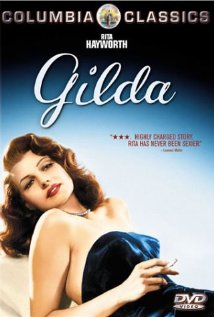
Gilda, at ten, twenty, thirty-something


http://abbottgran.wordpress.com/2011/02/11/bar-nothing/

"Research?"


While here in CA., we have gone to a number of author talks. We heard a marvelous one on the nude by a professor earlier in the week. But last night we heard one from an author--and it's going to be hard avoiding her name or the title--but I must-- who wrote a book of short pieces on a topic-let's say her theme was "last words." (It wasn't)

The book was obviously a light one, and her third on such topics, but I was stunned when someone asked about her research method and she told them that since she had a day job she didn't have much time so she relied COMPLETELY on the Internet. (I had to sit on my husband to keep him for rising).

She went on to say that her publisher, a notable one, had fact-checkers so she relied on them to make sure she got it right. She also admitted people had questioned her scholarship, but what could she do when she had this day job and only so many hours. So not only was her research not original, it wasn't even secondary. She was doing what my husband forbids his students from doing-using sites like Wikipedia for their source.

She does not even know her actual source so obviously can't cite it. She doesn't read a single biography to find out what Clara Bow said on her death bed. Wikipedia or similar sites provide her with a quick answer. And perhaps the saddest thing of all--I don't think she had a clue that this wasn't a legitimate way to write a book. Why go any farther than Wikipedia when the answers were all there. (Her day job was a high school English teacher)

Am I naive to think this is preposterous? That a well known publisher would allow an author to take all her information from unnamed sources. What do you think? Am I living in the dark ages to expect more?