The Collected Stories of Ernest Hemingway (reviewed by Ed Gorman)
He loved it. He carefully crafted the public persona of adventurer and man's man the press and the people loved. Novels such as A Farewell To Arms and For Whom The Bell Tolls outsold the books of his contemporaries.
But time and taste caught up with him and we now see that Hemingway's novels weren't quite as good as we once thought. He certainly had no Gatsby to brag of nor even a Grapes of Wrath by the despised Steinbeck; Papa believed he was a terrible writer. For me the only novel of his worth reading now is The Sun Also Rises. It's not a great novel but it's fascinating one and much truer to the real Hemingway than the novels he wrote afterward.
But then there are the short stories. Back in the day his collected stories were referred to with great reverence as The First Forty-Nine. Many of them were reprinted dozens if not hundreds of times around the world, textbooks included. They still deserve the reverence paid them back then.
From his story of death and dying ("A Clean, Well-Lighted Place") to his sad and ironic tale of a soldier who came back from the First World War too late for the parades ("Soldier's Home:) to the stories set in Upper Michigan this is American literature at its finest. This was Hemingway before he became Papa--the confused boy-man who went to war and then set himself up in Paris to write.
In numerous stories here he proves himself the equal of Faulkner (whom he saw as his main competition--he'd already arrogantly written off his old friend (and the guy who got him his Scribner contract) Fitzgerald) in experimenting with point of view. The line, as several critics
mentioned at the time, went from Stephen Crane to Mark Twain to Hemingway, that pure American voice. If you read Crane's The Blue Hotel before you reading Hemingway's Collected Stories you'll hear the echoes throughout start the book.
For readers and writers alike, this is one book that should be in every serious collection. There was no more vital and powerful voice than Hemingway's in his early stories (and I don't include The Old Man And The Sea which I never much liked; way too self-consciously Important). Today they're just as pure and perfect as they were when first published. All hail Hemingway.


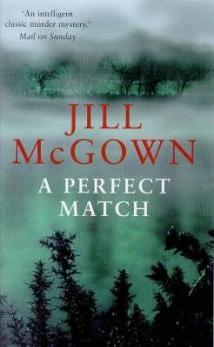 A Perfect Match by Jill McGown, Fawcett Crest 1983 mass market paperback, mystery, first in Detective Inspector Lloyd & Judy Hill series.


 Megan Abbott